-
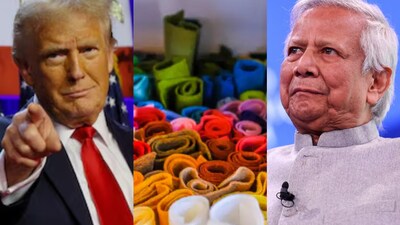
The tariff math behind Bangladesh’s zero-duty access for US cotton garments
To be sure, the arrangement could still give Bangladesh a limited edge given that the overall gap in reciprocal tariffs with India is just one percentage point.
-

Will the new US-Bangladesh trade deal punch a hole in Indian textile designs?
From cotton and yarn to garments, India’s competitiveness in the American market faces a renewed stress test
-
Bangladesh’s zero-duty US access poses fresh challenge to Indian textile exporters
The US–Bangladesh Agreement on Reciprocal Trade, signed on February 9, cuts the reciprocal tariff on Bangladeshi goods to 19% and provides duty‑free access to certain garments made with US‑produced cotton
-
Customs duty changes in Budget part of ongoing reforms, not linked to US tariffs, says FM Sitharaman
The finance minister also said the government did not assess the potential impact of US tariff actions while framing Budget proposals.
-
Budget 2026 fiscally prudent, private sector must lead growth, says Amitabh Kant
Calling the Budget ‘on course for Viksit Bharat 2047’, Kant said that the private sector needs to invest in infrastructure and pointed out the need for higher Foreign Direct Investments (FDI).
-
KPR Mill, Arvind, textile stocks rally after FM unveils mega textile park plan, capital support
Union Budget 2026: The finance minister announced an integrated push for the textile sector, proposing mega textile parks, skilling initiatives, labour incentives, and machinery support.
-
With no tariff break, textile mills grapple with falling fortunes
Reinstating 11% import duty on raw cotton has seen local prices move up in tandem, eroding profitability of cotton spinning mills already reeling under steep US tariffs
-
Weaker rupee offers some respite to tariff-hit textile exporters
The rupee crossed the 90-mark against the US dollar on persistent outflows and uncertainty around the India-US trade deal
-
SP Apparels: Q2 numbers buck the industry trend
The garment exporter delivered quietly when the entire sector was facing the US tariff impact
-
Smaller textile firms brace for heavier compliance burden under new rules
Exporters say that international brands are increasingly probing environmental, social and labour safeguards while placing orders, and labour code clarity could eventually strengthen India’s credibility with ESG-focused foreign buyers.
-
Labour Codes 2025: Key provisions for mining, hazardous industries, textile sector including migrant workers
While the Codes overhaul 29 separate laws into a single structure, their provisions carry specific implications for mine workers, employees in hazardous environments, and textile-sector labourers, including migrants.
-
Urging India Inc to buy from exporters, talking to 50 nations to diversify market: Goyal
We will soon be mounting delegations of Indian seafood exporters to Singapore and the UAE. Besides, Latin America and the Gulf region have huge potential for our products, Union minister for commerce and industry Piyush Goyal said.
-
GST Reforms: Who wins big in the textile market shake-up?
The rate cut should lower procurement costs, improve cost efficiency, and enhance operating margins
-
Pearl Global Industries: Tariff worries put pressure on this garment exporter
Comprehensive business model offering multi-country, multi-product solutions may reduce the impact of tariffs
-
Extension of export obligation period to provide key relief for textile exporters: Govt
The Advance Authorisation Scheme allows duty-free imports of inputs for use in physical exports, without the mandatory requirement of compliance with QCOs for such imports.
-
GST Council may discuss uniform 12% rate for textile sector by September
Move aims to fix duty inversion, rationalise rates across the value chain – from cotton to garments – to reduce compliance burden and attract investments
-
Centre meets bank chiefs today to address credit woes of textile sector
Finance and textiles secretaries to chair meeting with managing directors of SBI, PNB, BoB and others to focus on green financing, MSME credit ratings and subsidy bottlenecks
-
Pearl Global Industries: Will the growth pattern remain intact amid macro uncertainty?
Comprehensive business model offering multi-country, multi-product solutions to global retailers
-
India's textile exports to UK to jump from $1.5bn to $5bn after FTA: Union Minister Giriraj Singh
When asked if US President Donald Trump's threatened tariffs may affect India's textile industry, Singh said, 'Every third or fourth bedsheet and towel in US is made in India.'
-
India-UK FTA could create $1-bn incremental opportunity for Indian apparel exporters, says Gokaldas Exports MD
Stocks of textile majors including Vardhman Textiles, Welspun Living, Arvind, and Raymond Lifestyles among others gained ground and closed in positive territory. While Welspun Living gained nearly 12 percent, Raymond Lifestyle was up more than six percent on Wednesday.
-
UK-India FTA: Sectoral shake up – who gains, who loses?
Key Indian export sectors to benefit are, textiles, leather, footwear, marine products, gems & jewellery, auto parts, engineering goods, and organic chemicals.
-
Raymond ready for export growth as global firms diversify away from China, says Gautam Singhania
At 59, Gautam Singhania is taking a pragmatic view of succession, balancing professional management with his daughters' dreams even as he lays the foundation of a trusted, enduring Raymond for the next generation
-
Trump tariff wars: Home textile orders worth $ 2 bn in limbo
A growing worry within the textile industry is also about consumption declining in America due to higher prices of imported products which would directly impact India's export growth despite having a competitive edge on tariffs over other countries.
-
Trump’s tariffs threaten over $350 million of exports, force Indian MSMEs to de-risk from US
The levies have hit small and medium Indian shipments of textiles, carpets, automobile parts, marine products, furniture, and steel and aluminium particularly hard, nearly a dozen Indian exporters, companies and port operators told Moneycontrol.
-
Indian equities: Sectors & stocks to watch as Trump hits the pause button
Policy uncertainty will remain elevated and enterprises are likely to delay discretionary spending till clarity emerges