-
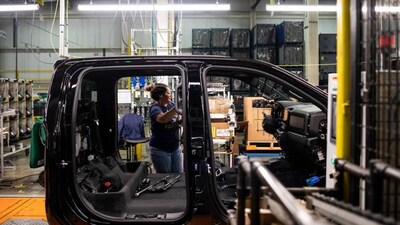
Can Budget 2026 fuel the auto sector’s growth journey?
After the GST cut, focus on infrastructure and green mobility remains central to industry expectations
-

FinMin pushes welfare ministries to accelerate capex to improve quality of spending
Despite overall capex utilisation reaching 51.8 percent by end-September, the Centre has asked ministries such as Social Justice, Minority Affairs and Labour & Employment to accelerate spending in the second half, after their H1 utilisation remained at 35–40 percent.
-
MSMEs seek Covid-era relief to beat Trump tariffs in pre-Budget meet with FM Sitharaman
They also urged to make it compulsory for all loans below Rs 50 lakh or Rs 1 crore to be covered under the collateral-free guarantee mechanism for MSMEs.
-
Industry body pushes for faster tax dispute resolution; calls for clearing high-value appeals within a year
CII calls for a trust-based, technology-enabled tax system; proposes simplified TDS regime, statutory taxpayers’ charter, and paper-free customs roadmap in pre-Budget 2026-27 proposals
-
Assocham seeks tax simplification to enhance ease of doing business
In the pre-Budget memorandum shared with the Revenue Secretary Arvind Shrivastava, Assocham said the direct and indirect tax systems need procedural clarity, consistency and reduced compliance costs to make India’s manufacturing globally competitive.
-
Industry body PHDCCI seeks tariff tweaks for steel, paper, gold, medtech in Budget wishlist
The industry body’s delegation met Revenue Secretary Arvind Shrivastava on October 29 to present the industry body’s pre-budget proposals and discuss tax and tariff-related issues impacting businesses.
-
Tax litigation: FICCI flags Rs 18 lakh crore stuck in appeals, seeks overhaul of faceless system
Industry body urges filling vacancies, simplifying TDS structure, and granting tax neutrality for fast-track demergers to reduce litigation and improve ease of doing business
-
In pre-Budget meet, EEPC suggests new income tax slab of 25% for MSMEs
Among other proposals, EEPC India recommended establishing a transparent and effective mechanism to ensure MSMEs can access steel at affordable price amid speculations that the government may introduce a safeguard duty on the metal.
-
Ahead of Union Budget, PM Modi discusses ways to enhance employment among youth with economists
The economists shared insights on the challenges of youth unemployment and the need for policies to align education and training programs with the evolving job market.
-
How to crank up the manufacturing engine?
A compressive package that goes beyond industrial incentives is needed to make Indian goods more globally competitive
-
India Inc seeks wider PLI ambit, independent tax dispute resolution forum in pre-budget discussion
Union Budget 2025-26 is an opportunity to reinforce India’s stability and create a blueprint for a prosperous, equitable, and technologically advanced country, the industry bodies told revenue secretary.
-
India Inc seeks higher capex, tax reforms in Budget
An upward revision of MNREGA minimum wages and increase in Direct Benefit Transfer amount in schemes such as PM KISAN was also suggested.
-
Cut in income tax, schemes to generate jobs among demands in pre-Budget meetings with Finance Minister
Sitharaman held eight rounds of discussions starting with India Inc on November 21 and ending with a round of consultation with economists on Monday.
-
Pre-Budger meet: Farmers' bodies ask govt to lift export ban on wheat, other agri items
They also demanded that the government should focus on increasing domestic output of local oilseeds such as soyabean, mustard, groundnut and sunflower, instead of palm.
-
At a pre-Budget meet, here's what market players asked from Nirmala Sitharaman
The key areas discussed included issues relating to the capital markets, the financial sector, non-banking financial companies (NBFCs) and alternative investment funds, among others.
-
Economic Survey asks govt to be vigilant to prevent price rise
The Economic Survey 2016-17 pegged agriculture and allied sector growth at 4.1 percent this fiscal on account of good monsoon from 1.2 percent last year but said there is less chance for the sector to give an extra boost to GDP growth next year.
-
Poll: Here's what India Inc expects from Budget 2017
Ahead of the Budget, CNBC-TV18, Forbes India and BMR Advisors conducted pre-budget poll of select CEOs to ascertain the expectations of India Inc from Budget 2017.
-
Jaitley to hold pre-budget consultations with states on Jan 4
Finance Minister Arun Jaitley will hold pre-budget consultation with states on January 4, after the meeting of the GST Council gets over.
-
Farmer bodies' pre-Budget consultation with FinMin kicks off
Farmer bodies' pre-Budget consultation with Finance Minister Arun Jaitley has commenced and CNBC-TV18 learns the issue of impact of demonetisation on the agri sector is also on the agenda.
-
Pre-Budget talks: FM to meet state counterparts tomorrow
The minister, according to sources, may also discuss the preparatory work for roll out of the Goods and Services Tax (GST), though currently the Constitution Amendment Bill for GST is stuck in Rajya Sabha.
-
RoadMin seeks Rs 2,500-cr annual grant for state road corps
The proposal has been mooted by Road Transport and Highways Ministry to Ministry of Finance against the backdrop of less number of state transport buses and 'hue and cry' over old polluting vehicles which have to be phased out.
-
India Inc to pitch for simple IT laws in pre-Budget meet with FM
They will also press for effective steps and policy actions to improve ease of doing business with a view to promote growth.
-
Economic Survey: Food subsidy bill rises by 20% to Rs 1.07 lakh cr in FY15
The pre-budget economic document also pointed that the "food subsidy bill has increased substantially in the past few years putting severe strain on the public exchequer".
-
Union Budget 2015: Need clarity on weighted deduction on R&D spend for IT:Care
In addition, Care expects the inclusion of IT/ITES in the list of specified services for availing 150 percent deduction on expenditure incurred on skill development projects. This, according to the agency, will encourage investment in skill development.
-
Budget should boost domestic capex & infrastructure spends
Expectations of a dream budget are misplaced and it is high time that the government increases spending on domestic capital expenditure and on infrastructure.