-
Political pressure in response to public anxiety will demand policy responses
-

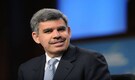
The President of Queens College was giving his prediction before the announcement of the policy rates expected at noon (London Time) on May 9
-
After the disappointing US growth numbers for the first quarter, the leading economist said, low growth and high inflation is "problematic" for the economy and markets.
-
The focus of investors is now going to shift towards the federal reserve’s policy decision on the most recent rate hike and the commentary of the chairman Jerome Powell on the way forward for the US economy.
-
A firmer anchor is required to deal with the policy trilemma over the US economy
-
“Not only does it have to overcome inflation, but it has to restore its credibility,” El-Erian said of the US central bank in a CBS News interview Sunday. “So yes, I fear we risk a very high probability of a damaging recession that was totally avoidable.”
-
The global economy is now facing growth disruptions, harmful inflation, greater inequality, and unsettling financial market volatility
-
Questioned about his prediction for the “darkest and most optimistic outcomes”, E-Erian said the darkest scenario would be “if inflation continues and we end up in recession” and it would be the most vulnerable who get hit hard
-
The CPI for April rose 8.3%, down from 8.5% the prior month, but still close to the biggest increase in four decades. Annual inflation likely climbed at an 8.2% pace in May, according to the median projection in a Bloomberg survey ahead of the release Friday. That’s still more than four times the levels seen before the pandemic.
-
Investors need strong stomachs to deal with large swings in asset prices
-
Responding to Republican lawmakers' concern about spiking inflation, Federal Reserve Chair Jerome Powell had earlier reiterated that the current price increases would likely prove temporary.
-
The US central bank and markets face tricky pivots to avoid damage from a policy mistake
-
New US President must combine agile political manoeuvring with smart economic policy
-
Zombie companies are those that require bailouts to operate. In many instances, they continue to borrow money even though they are unable to pay off their debts.
-
The Barclays Asia Forum underway in Singapore. A special conversation with Former Reserve Bank of India (RBI) Governor Raghuram Rajan and Mohamed El-Erian, Chief Economic Advisor at Allianz in which they shared their views on global economy and who the next Federal Reserve Chairman will be.
-
India has been able to successfully dodge itself from the global disruption led by negative rates in advanced economies, he says. EMs would look forward to a Federal Reserve rate hike in December.
-
On Wednesday, the central bank opted to keep rates steady at its November meeting, and made no direct reference to a hike coming at its December gathering.
-
El-Erian said he was heartened by three Fed officials recently warning about the threats of low rates, which inflate asset prices and push investors into higher riskier vehicles in search of yield, on the financial markets.
-
That's because "ultra-low rates have distorted the system [and] have encouraged too much risk-taking," the chief economic advisor at Allianz said in an interview with "Closing Bell."
-
"What makes that probability go a lot higher a Friday report that has three things: job creation in excess of 180,000, wage growth going up and no significant move in the participation rate that pushes the unemployment rate up," El-Erian said in an interview on CNBC's "Fast Money" on Tuesday.
-
The Fed's release of its April meeting minutes showed the Fed's discussion reflected more of the recent comments from Fed regional presidents, who have also been warning markets were not reflecting its intention to hike interest rates.
-
The S&P 500 has fallen more than 6 percent this year, while the CBOE Volatility Index has climbed nearly 13 percent. However, stocks ended Friday with their best week of the year, as major US averages rose more than 2.5 percent each.
-
"Either we validate the financial asset prices and growth faster, or alternatively we will slip into a global recession with financial disorder," El-Erian said
-
The bigger issue for financial markets is that central banks are running out of ammo, the Allianz chief economic adviser told CNBC
-
El-Erian added that Wall Street has yet to price in increased political uncertainty stemming from the rise of protest politics in the US and Europe