Scientists have discovered a meteorite older than Earth, offering the earliest clues to how the Solar System formed and how the first solid materials took shape.
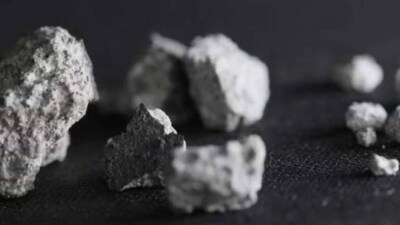
China’s Chang’e-6 mission discovered rare CI chondrite meteorite fragments on the Moon’s far side, revealing new clues about water and organic origins in space.
NASA estimates around 44 tonnes of meteoritic material fall towards Earth each day. Almost all of it is vaporised in the atmosphere, leaving glowing streaks visible across the night sky.
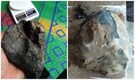
With dimensions of roughly 15 inches by 11 inches by 6 inches, NWA 16788 is said to be 70 per cent larger than the next-largest Martian meteorite ever found.
The meteorite was classified as a CM1/2 carbonaceous Chondrite, an extremely rare variety, and it carried a hefty price tag.
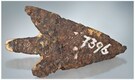
While previous instances of tools made from space rocks have been found, they remain exceptionally uncommon.
A woman in France was enjoying coffee with a friend when she was struck by a meteorite in an incredibly rare event.
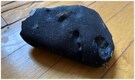
A metallic object believed to be a meteorite punched a hole in the roof of a central New Jersey home this week, smashing into a hardwood floor and bouncing around a bedroom.
"We suspect it to be a meteorite…. might be lightning", a senior police officer told PTI. Investigations are on.
The discovery of this mineral is crucial as it wasn’t known to mankind until now that this form of iron carbide mineral can occur in nature.
The material found in the meteorite is like what certain iron-oxidizing microbes produce on Earth.
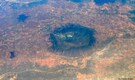
A four-member team from the Geological Survey of India and other organisations visited the site to collect evidence related to the origin of the crater in Ramgarh village of the district.
US weather has been lousy this year, with droughts, heat and killer storms. But a solar superstorm could be far worse.