-
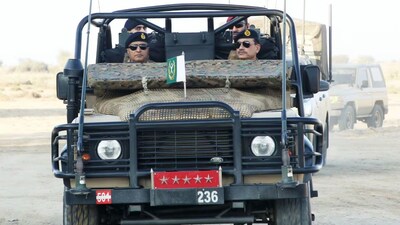
Asim Munir chooses Bahawalpur for his latest show of force: Why India sees a dangerous terror link | Explained
The timing, location and optics of Munir’s presence have raised serious red flags in New Delhi, especially given Bahawalpur’s central role in jihadist infrastructure and its recent targeting by India during Operation Sindoor.
-

Operation Sindoor fallout: Pakistan's terror twins are regrouping under ISI protection. Why India need to watch closely
Lashkar and Jaish, once competing outfits, are closing ranks in what officials describe as a dangerous and ISI-driven fusion aimed at reviving jihad against India.
-
Masood Azhar admits failed tunnel escape from Jammu prison, says thrashing still haunts him
Azhar’s latest admission once again reinforces India’s long-standing charge that Pakistan has used terrorism as a formal state policy to target India, offering shelter and impunity to globally wanted terrorists.
-
Asim Munir revives Musharraf’s old playbook: How Pakistan plans to ‘bleed India’ through terror proxies
The strategy aims to destabilise India through proxy terror networks, even as Pakistan itself sinks deeper into political and economic chaos.
-
Two doctors behind Red Fort blast linked to Jaish-e-Mohammed, had travelled to Turkey in 2022, reveals initial probe
The main suspect, 35-year-old Dr. Umar Un-Nabi, was reportedly driving the i20 car that exploded at around 6.50 pm, killing at least 10 people and injuring 21 others.
-
Saharanpur doctor denies rumours of arrest, says cooperating in Delhi blast probe
Speaking to PTI, Dr Babar said he was "very much present" at the hospital and available to meet anyone. "I am cooperating fully with the investigating agencies, but people should not spread false rumours," he said.
-
Messaging app turns terror tool: How Telegram helped Jaish-linked terror module plan the Red Fort blast | Explained
As per reports, investigators say Dr. Umar Mohammad and his associates used encrypted Telegram groups to plan the Red Fort attack and communicate with handlers abroad.
-
Red Fort blast: Jaish-e-Mohammed’s women’s wing, led by Sadiya Azhar, emerges as key player
Delhi Red Fort Blast: Indian investigators have reportedly identified two possible links connecting the Red Fort car bomb to the Jaish network in Pakistan.
-
Inside Jaish’s new ‘female jihad’: How Masood Azhar is radicalising Pakistani women to fight its ‘enemies’ in India
Azhar’s promise that women will be trained like men and taught to see violence as a path to paradise is deeply dangerous. It signals a widening pool of potential operatives and supporters.
-
Explained: Why Jaish-e-Mohammed is launching a women’s wing
Pakistan-based terror group Jaish-e-Mohammed has launched Jamat ul-Muminat, a new women’s wing led by Masood Azhar’s sisters, offering online “jihadi” courses to recruit and indoctrinate women.
-
Jamaat al-Mu’minaat: Inside JeM's new women wing for psychological operations, grassroots recruitment
The move aims to expand JeM's reach through encrypted networks in Jammu and Kashmir, Uttar Pradesh and several southern states, the report said.
-
From Bahawalpur to Muridke: After Jaish admission, Lashkar confirms its terror camp destroyed in Operation Sindoor | VIDEO
Qaasim’s statements leave little doubt that Pakistan continues to provide shelter, funding, and operational support to groups actively training for attacks in India.
-
'PKR 21,000 per supporter': Jaish’s digital wallet scheme to rebuild 313 terror hubs across Pakistan
India’s Operation Sindoor had targeted several major Jaish-linked facilities in Pakistan-occupied Kashmir. Yet within months, the group appears to be openly rebuilding under Islamabad’s nose.
-
From Balakot camps to Bahawalpur funerals: Jaish commander's bombshell puts spotlight on Asim Munir’s role in Pakistan’s terror nexus
By naming Masood Azhar’s safe haven in Pakistan and exposing generals at terrorist funerals, the Jaish commander has provided the clearest evidence yet of the Pakistan Army’s direct sponsorship of terrorism.
-
Jaish plots PKR 3.9 billion fundraising to build 313 new 'markaz': How Masood Azhar is using digital wallets to evade FATF
Jaish-e-Mohammed's comeback plan reportedly includes opening 313 new camps, making it harder for Indian intelligence agencies to track their movements.
-
Jaish plans to rebuild terror infra after Op Sindoor, eyes 3.91 billion rupees to establish 313 new ‘Markaz’ across Pakistan
The fundraising drive is being personally spearheaded by Azhar -- the mastermind of several major attacks on Indian soil -- along with his brother Talha Al Saif, who has been publicly urging followers to contribute.
-
Intel, funding and military support: CIA eyes return to Pakistan as US pledges 'counterterrorism' support
The US has pledged full support to Pakistan in its fight against terror groups, despite Islamabad’s long-standing failures to rein in terrorism on its soil.
-
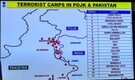
15 terror camps return in PoK in just 90 days: How ISI-backed groups are going smaller, smarter and deadlier
To evade mass casualties and evade surveillance, the terror groups are splitting large camps into smaller, mobile setups, housing about 20–25 terrorists per location.
-
'They have missiles, we have 10,000 fidayeen': Jaish chief Masood Azhar heard bragging in audio played at Bahawalpur mosque
Intelligence sources view Masood Azhar’s reference to funding for Mujahideen as a coded call for financing upcoming attacks, potentially involving foreign sympathizers and hawala routes
-
Decimated in Op Sindoor strikes, how Jaish’s Bahawalpur terror camp is alive and recruiting again
The JeM-run madrassa in Bahawalpur has not only resumed operations with 600 students but has also reopened a swimming pool once used by the Pulwama attackers.
-
Masood Azhar’s brothers-in-law among top 5 LeT, Jaish terrorists killed in Operation Sindoor: Full List
Early on May 7, India hit nine terror targets, including the Jaish-e-Mohammed stronghold of Bahawalpur and Lashkar-e-Taiba's base in Muridke, in Pakistan and PoK.
-
PM Modi, Rahul Gandhi, and Top Leaders Pay Tribute to Martyrs of Parliament Attack 2001
On the 23rd anniversary of the 2001 Parliament Attack, top leaders including PM Modi, Rahul Gandhi, Vice President Dhankhar, and others paid tribute to the brave martyrs who sacrificed their lives to protect the nation. Watch the leaders' solemn remembrance at Parliament in this emotional tribute
-
China says it needs more time to assess US, India proposal to blacklist JeM chief Masood Azhar's brother by UN
-
10 'overground workers' of Jaish-e-Mohammed terror group arrested in J-K: Police
-
3 JeM militants gunned down in J-K's Anantnag; 1 Army jawan loses life