-
How infrastructure became India’s key weapon against Maoism
Sanghnomics: Roads, telecom and banking infrastructure are changing Maoist-affected regions. They reduce isolation and strengthen the state’s presence. They enable development and create opportunities. This also weakens insurgency
-

Edelweiss Alternatives to raise third infra fund of over $1 billion amid rising investor appetite
The third fund will double down on acquiring renewables, roads and transmission sector assets and may even expand to digital infrastructure
-
Eversource Capital in talks to raise $700 million for second green fund
Through its first fund, Eversource Capital has built a portfolio of platforms across renewable energy and sustainability segments
-
Afcons Infra Consolidated December 2025 Net Sales at Rs 2,975.77 crore, down 7.33% Y-o-Y
-
Afcons Infra Standalone December 2025 Net Sales at Rs 2,973.74 crore, down 7.22% Y-o-Y
-
Union Budget’s Rs 5,000 crore City Economic Regions plan to boost real estate beyond metros
Each City Economic Region will receive Rs 5,000 crore over five years, with funds released through a challenge mode and a reform-cum-results based financing mechanism, encouraging states and urban local bodies to accelerate infrastructure creation, connectivity and civic upgrades.
-
India Inc backs budget 2026’s infrastructure push and demand revival
Industry leaders across cement, logistics, energy, manufacturing, consumer goods and pharmaceuticals said the budget’s emphasis on infrastructure-led growth, technology adoption, tax rationalisation, supply-chain resilience and healthcare innovation provides policy visibility and confidence at a time of global uncertainty.
-
Budget 2026 fiscally prudent, private sector must lead growth, says Amitabh Kant
Calling the Budget ‘on course for Viksit Bharat 2047’, Kant said that the private sector needs to invest in infrastructure and pointed out the need for higher Foreign Direct Investments (FDI).
-
Centre keeps foot on capex pedal, provides incentives for private sector to step up
With few signs of animal spirits reviving in private sector capex, the Budget spelt out innovative financing measures and new areas of growth to sustain momentum
-
Union Budget 2026 | Ports and shipping sector gets Rs 5,164.8 crore push
The Finance Minister also announced seaplane viability gap funding scheme to to provide support for operations.
-
Budget 2026 doubles down on public capex, widens infra pipeline
Finance minister Nirmala Sitharaman raised capital expenditure to Rs 12.2 lakh crore in FY27, up from Rs 11.2 lakh crore in the previous year
-
Union Budget proposes Infra Risk Guarantee Fund to de-risk real estate, construction projects
Experts say that the proposed fund aims to reduce risk perception among lenders and private developers, a key hurdle that has constrained funding for large real estate, urban infrastructure and construction projects.
-
OPINION | Economic Survey: Focus on industry and infrastructure for 7% potential growth
Three aspects need more attention: growth enhancing reforms, employment intensity of industrialisation and domestic saving
-
Economic Survey pushes for capex-led growth, flags risks from state-level populism
The survey contrasts capital spending with transfer-heavy expenditure, warning that the latter offers only transient welfare gains, while capex delivers durable improvements in productivity, incomes and competitiveness
-
India plans 100 GW pumped hydro energy storage by 2035-36: Power Ministry
Maharashtra, Odisha and Andhra Pradesh emerge as key hubs as states drive India’s pumped hydro expansion.
-
Budget 2026: More capex, support for flagship programmes essential for infra sector, say analysts
The Union government had allocated Rs 11.21 lakh crore (budgetary estimates) towards capital expenditure in last year's Union Budget, a growth of around 10% over that of FY25
-
Union Budget 2026 may refocus power sector reforms with discom privatisation, RDSS Phase-II and smart meters
Centre looks to deepen power distribution reforms despite early financial turnaround at discoms.
-
Thermal share in India’s power generation to fall below 70% in FY27: Crisil Ratings
India’s thermal share set to fall below 70% as demand cools, renewables surge.
-
Cement sector banks on infra push in Budget as pricing pressure looms
The weakness in cement prices, amid input cost pressures and rupee depreciation, is a challenge for expansion in profit margins
-
NPCIL to target state government joint ventures as SHANTI Act clears key hurdle
State partnerships are expected to ease land and other clearances, as well as ensure power offtake, as NPCIL eyes faster execution of its 50-GW share in India’s 100-GW nuclear plan.
-
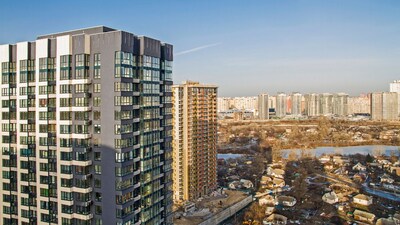
Navi Mumbai housing prices jump 22% in 4 years as infra growth drives demand
Navi Mumbai’s pricing growth remains closely tied to infrastructural projects such as the airport and metro, experts say. As these projects progress, analysts expect steady price growth
-
OPINION | From Infrastructure Scale to Reliability: Budget 2026’s real test
India has built infrastructure at scale; Budget 2026 must now ensure reliable execution, stronger transmission networks, and system readiness so public investment delivers consistent outcomes for citizens and industry
-
Centre fast tracks hydropower in J&K; Ratle project to be ready by 2028-end, Dulhasti clears green hurdle
With Indus Waters Treaty in abeyance, the Centre reviews Salal, Ratle and Dulhasti projects, as it looks to unlock hydropower potential across the Indus basin
-
India's cement industry to grow 6-7% in FY27, aided by housing and infra sector: ICRA
ICRA expects India's cement industry to grow about 6 to 7 per cent in FY27, and touch 6.5 to 7.5 per cent growth in the current fiscal year FY26.
-
Year Ahead: Private capex seen taking the baton in 2026 as public-led infra spend peaks
The growth outlook for 2026 for public and private capex appears to be more balanced, say economists. Private capex would be supported by continuing low levels of global crude prices, likely easing of global supply situations, and India’s FTA push.