The Economic Survey: 2025-26 was released at the back of unpredictable global economic order. With major countries becoming increasingly inward looking and breaking the global value chains, countries like India trying to navigate through this changing global order and becoming, as per Chief Economic Advisor V Anantha Nageswaran’s words, increasingly ‘strategically indispensable’.
In this context, apart from making macro assessments for FY27, the Survey brings out many micro and process related reforms to overcome the global shocks that we have witnessed since beginning of 2025.
Growth will be sustained only through reforms
Two chapters that highlight the medium to long-term strategy in the Survey are one on industry and infrastructure investments. The Survey argues that for reviving domestic drivers of growth there is a need to focus on structural transformation, productivity and competitiveness. While Indian industry has witnessed greater momentum with the growth rate of 6.2 per cent in 2025-26, with strong acceleration in manufacturing at 7 per cent., sustaining such high growth needs sustained reforms in many areas.
The Survey positions the industry sector as the one ready for its next big leap, with the backing of the continued thrust placed on infrastructure and logistics by the government. In addition to this the support through Production Linked Incentives (PLI) schemes and other interventions such as the India Semiconductor Mission, combined by the focused approach towards strengthening the MSMEs changing the face of Indian industry. All these measures are expected to reduce the cost of production.
However, the Survey could have looked at this aspect little more in-depth whether these reforms have led to reduction in cost of production.
A tech orientation to the diversification of industrial base
The Survey also highlights the developments in the Research & Development where government has taken a number of initiatives leading to a shift towards high technology manufacturing, as medium and high technology activities accounted for over 46 per cent of India’s total manufacturing value added. The Survey highlights that the most significant change in the recent period is the diversification of the industrial base to include tech-intensive segments.
Swadeshi dimension
The Survey argues that India needs to strengthen its backward linkages in the global value chains that will also improve export growth. As we navigate this path, strengthening export competitiveness along with reducing the excessive reliance on imports becomes crucial. In the changing global environment, the Survey argues, strategically placing oneself in the global value chain requires Swadeshi path. The Survey deals the Swadeshi issue little more in-depth and argues that it is inevitable for India to adopt Swadeshi for four reasons: global order has changed, trade is no longer fair, markets no longer neutral, and supply chains have become state instruments. Further, it provides a number of examples of how so many countries already adopting swadeshi.
Employment-intensity of industrialization needed more focus
Last Union Budget, while assessing the PLI scheme, it has shifted its focus to Employment Linked Incentive (ELI) scheme as any growth in industry should also need to be employment generating. However, the Survey, although there is a separate chapter on employment, doesn’t delve enough on this aspect in the context of industrialisation. This is especially so as the transition that the industry undergoing it needs to generate more employment. One of the special themes of the Survey is Artificial Intelligence (AI). However, the Survey could have engaged analytically on the impact of AI on employment.
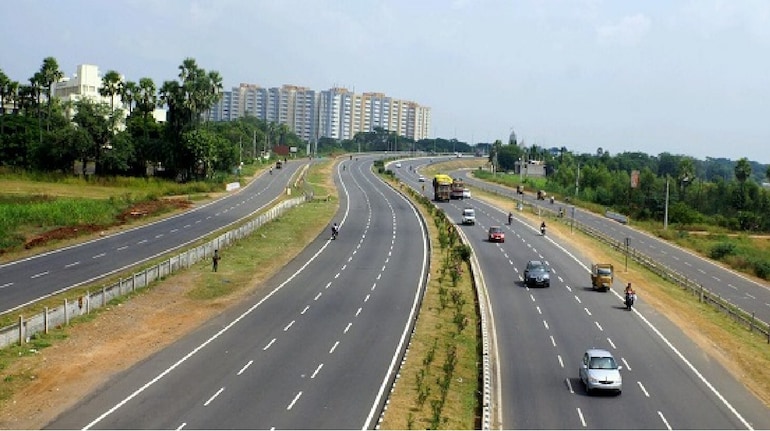
On the infrastructure, the Survey extensively discusses the consistent push given by the Union government towards infrastructure, which has significantly strengthened connectivity. However, one must study more on its broad spillovers to completely understand its outcome. Investments in infrastructure which has been a continued priority of the Union government has harnessed its benefits through better connectivity among the urban centres, through shorter travel time, particularly helping quicker freight movements along with the last mile connectivity taking on board the rural centres. The Survey suggest that with improvement in ease of doing business, there has been a better participation from the private sector under the Public-Private Partnership (PPP) models. However, the Survey could have highlighted that success of PPP model is limited only to few and not across all the infrastructure sectors.
Domestic savings needs attention
The Survey, while arguing that the India’s potential GDP growth has improved from 6.5 to 7 per cent, suggest that key reforms that encompass industry and infrastructure have played a major role in enhancing potential growth. And this could be through larger multiplier effect expected from public investments. Here it highlights three aspects for this improvement: improvement in capital accumulation; labor market reforms; and improvement in productivity.
With an investment rate of 30 per cent, potential growth of 7 per cent requires substantial productivity improvement. The Survey argues that with digital public infrastructure and with increased focus on regulatory simplifications as well as with efficiency gains, the productivity is expected to improve.
In the case of capital accumulation, as it is largely dependent on domestic savings and is declining over the years, there is need to focus on measures to revive the domestic savings. Many studies have suggested that India need to enhance its investment rate atleast by 2 to 3 per cent to achieve 7 to 8 per cent growth for Viksit Bharat. This needs more domestic savings. Else, this would also have implications on the external account as well as rupee value. Bearing this limitation on the external account, in all, the Survey presents an optimistic picture about the Indian economy and backs with very convincing arguments as well as policy initiatives.
(Blessy Augustine is an Assistant Professor and N R Bhanumurthy is Director of the Madras School of Economics.)
Views are personal and do not represent the stand of this publication.
Discover the latest Business News, Sensex, and Nifty updates. Obtain Personal Finance insights, tax queries, and expert opinions on Moneycontrol or download the Moneycontrol App to stay updated!
Find the best of Al News in one place, specially curated for you every weekend.
Stay on top of the latest tech trends and biggest startup news.