






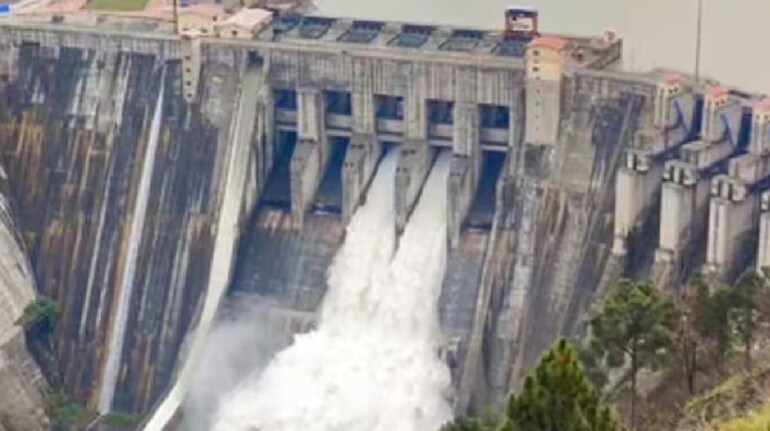

India plans to develop 100 gigawatts (GW) of pumped hydro storage capacity by 2035-36 as part of a broader push to build long-duration energy storage to support a renewable-heavy power grid, according to a roadmap released by the Ministry of Power on January 23.
The roadmap, prepared by the Central Electricity Authority (CEA) of the Union government, estimates India’s total pumped storage potential at 266.85 GW, of which around 209 GW comes from off-river, closed-loop projects that do not depend on river flows and have lower environmental and rehabilitation impacts.
As of now, India has 7.18 GW of pumped storage capacity in operation, while 11.62 GW is under construction and over 9.5 GW has received CEA concurrence but is yet to be taken up for construction, the report said. Projects at various stages of survey, investigation and DPR preparation account for another 74.9 GW of potential capacity.
Storage demand to rise sharply after 2030
The CEA’s report projects that India’s total energy storage requirement will rise to 161 GW by 2034-35, increasing sharply to 476 GW by 2046-47 as renewable penetration deepens and peak demand grows.
Long-duration storage — typically six hours or more — will become increasingly critical beyond 2030, when variable renewable energy such as solar and wind forms a much larger share of the generation mix. Pumped hydro storage, the report notes, offers large-scale, long-life storage along with grid services such as frequency regulation, spinning reserve and black-start capability.
Regional concentration of pumped storage potential
The roadmap shows a strong regional skew in pumped storage potential. The Western and Southern regions together account for the largest share, driven by favourable topography and existing hydro infrastructure.
At the state level, Maharashtra has the highest assessed potential at over 56 GW, followed by Odisha (over 41 GW), Andhra Pradesh, Karnataka and Gujarat. Andhra Pradesh currently leads in projects under construction, while Odisha and Maharashtra dominate the pipeline of projects under development.
Policy support and faster clearances proposed
To accelerate capacity addition, the roadmap calls for faster statutory and environmental clearances, simplified land acquisition for off-river projects, and tariff-based competitive bidding frameworks for procurement of storage services. It also recommends waiver of inter-state transmission charges, budgetary support for enabling infrastructure, and higher thresholds for mandatory CEA concurrence to speed up project execution.
The pumped storage push is aligned with India’s target of 500 GW of non-fossil fuel capacity by 2030 and the need to ensure grid stability as coal-based generation gradually plays a balancing role.
The power ministry said large-scale energy storage — with pumped hydro as a central pillar — will be essential to ensure reliability, flexibility and cost efficiency in India’s evolving power system.
Discover the latest Business News, Sensex, and Nifty updates. Obtain Personal Finance insights, tax queries, and expert opinions on Moneycontrol or download the Moneycontrol App to stay updated!
Find the best of Al News in one place, specially curated for you every weekend.
Stay on top of the latest tech trends and biggest startup news.





