

co-presented by
ASSOCIATE SPONSORS
co-presented by

ASSOCIATE SPONSORS


The government is keen to finish the project before the 2029 Lok Sabha elections

At a weekly press briefing in Islamabad, Foreign Office spokesperson Shafqat Ali Khan called on India to fully comply with the Indus Water Treaty (IWT).

Citing official sources, Pakistan based media outlet The News reported that India has contacted Pakistan to share information about possible flooding.

India on Friday strongly rejected the ruling, saying it has never recognised the so-called framework for dispute resolution with Pakistan.

India put in abeyance the 1960 agreement soon after the April 22 Pahalgam terrorist attack that killed 26 people.

India formally suspended the Indus Waters Treaty after relations with Pakistan deteriorated further in the wake of the April 22 terror attack in Pahalgam, Jammu and Kashmir.
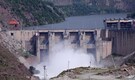
Delhi 'put in abeyance' its participation in the Indus Waters Treaty of 1960, which governs usage of the Indus river system, shortly after 26 civilians in Kashmir were killed

On Saturday, the Director Generals of Military Operations (DGMOs) from India and Pakistan agreed that both sides would cease all firing and military actions on land, air, and sea, effective from 5:00 PM Indian Standard Time. This agreement was initiated by Pakistan.

India opened floodgates of the Uri dam on April 26, after it suspended routine water data sharing with Pakistan, in the aftermath of the Pahalgam massacre.
Abbasi stated that if India were to halt the water supply to Pakistan by suspending the Indus Waters Treaty, which has already been partially suspended, India should brace itself for war, as Islamabad is prepared to strike if provoked.

More than controlling water supply to Pakistan, India needs mega infrastructure on the larger western rivers for its own water consumption and agricultural activities.
India’s Suspension of the Indus Waters Treaty is a diplomatic dagger aimed at Pak after Pahalgam’s tragedy

Due to the treaty, India's plan to build dams to regulate waters from the western rivers to Pakistan have remained constrained but the latest developments offer a window of opportunity to fast-track projects.

India has also cited the impact of persistent cross-border terrorism as one of the reasons for demanding the review.

This is the first visit by a Pakistani delegation to Jammu and Kashmir in more than five years under the dispute settlement mechanism of the 1960 Treaty.

The MEA said the meeting was convened by the neutral expert appointed on India's request under the aegis of the Indus Waters Treaty and was attended by representatives of India and Pakistan.

A unilateral withdrawal by India would provoke an international campaign by Pakistan, which is likely to evoke sympathy among influential countries because of the precious resource involved, says Sharat Sabharwal.
Asked about India's standpoint on current developments in Pakistan and what would be the implications of India's decisions regarding the IWT, Jaishankar said it would not be appropriate for him to comment in public about the happenings in that country.

In a first since the signing of the Indus Water Treaty between the two countries, three female officers will also be part of the Indian delegation, which will be advising the Indian Commissioner on various issues during the meeting.
Despite sharing hostile relations with the neighbour every now and then, none of the previous governments ever discontinued water supply to Pakistan.

"It's a legal issue now. And it can be resolved within the context of the agreement," Abbasi said on Wednesday at an event organised here by the Council on Foreign Relations, a top American think-tank.

"The parties have agreed to continue discussions and reconvene in September in Washington, DC," the World Bank said in a brief statement issued at the conclusion of the Indus Water Treaty (IWT).
"Water, peace and security are inextricably linked," said Guterres during a meeting here yesterday on preventive diplomacy and trans-boundary waters, which was chaired by Evo Morales, President of Bolivia, which holds the Security Council's presidency for the month.

External Affairs Ministry Spokesperson Vikas Swarup said India remains fully conscious of its international obligations and is ready to engage in further consultations on the matter of resolving current differences regarding these two projects.

Last week, during a Security Council debate on water, peace and security, Ban had cited the Indus Water Treaty signed by India and Pakistan as well as other similar agreements "as instruments promoting stability and peace" and said "shared water resources often generated cooperation".


