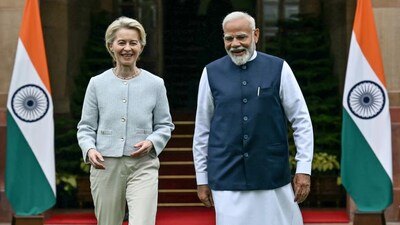
Earlier in 2023, the two countries had resolved all seven trade disputes between them at the World Trade Organisation.
India and the US have agreed to discuss New Delhi's demand for restoration of Generalized System of Preferences (GSP) benefits to domestic exporters and now both sides will commence discussions to find a solution.
The end of trade disputes will be truly meaningful if it leads to India getting back the GSP status and winning the TAA-nation recognition from the US
The previous Trump administration in the US revoked the Generalized System of Preferences (GSP) from India in 2019.
upGrad, which has been growing through acquisitions and has earmarked an M&A war chest of USD 250 million, has entered into an acquisition agreement to buy 100 per cent of GSP for AUD 16 million with a commitment of a further AUD 10 million in future, the Ronnie Screwvala-promoted firm said in a statement on Monday.
The United States US is currently negotiating with India for it, he added. “We're in negotiations with India, we took away their GSP, and we're in the process of restoring it if we can get an adequate counterbalancing proposal from them,” US Trade Representative Robert Lighthizer told members of the Senate Finance Committee.
Moneycontrol's Sakshi Batra talks to Gaurav Choudhury to understand if there is a possibility of a limited India-US trade deal.
The two countries need to keep engaging and not let the momentum fizzle out. A successful conclusion of the trade package can be a harbinger of how deftly the two sides can tackle bigger issues in the future.
Moneycontrol Deputy Executive Editor Gaurav Choudhury explains the repercussions of the GSP withdrawal and what impact it would have on the export sector.
In 2018-19 fiscal, the engineering exports to the Land of Liberty stood at USD 331 billion.
Trump’s biggest objection is the growing trade imbalance. India enjoys a trade surplus with the US, which he wants reversed
US had notified in March that India did not qualify for the Generalized System of Preferences benefits under their updated eligibility criteria.
The Generalized System of Preference (GSP) is the largest and oldest US trade preference programme and is designed to promote economic development by allowing duty-free entry for thousands of products from designated beneficiary countries.
Trump this month informed the US Congress about his intent to terminate the designation of India as a beneficiary developing country under Generalized System of Preferences(GSP) programme that facilitates duty free import of certain products from underdeveloped countries to help grow their economies.
Watch the video to know what does the withdrawal of tariff concessions available to India under the Generalized System of Preferences means for both countries.
Sakshi Batra is in conversation with Gaurav Choudhury to find out what's next for India.
GSP is just a band-aid; we need surgery to get exports back on their feet.
Providing fiscal support to domestic exporters of those sectors hit by the US decision and imposing retaliatory duties are also among the options considered by India, they said.
It is important to recognise that with rising protectionism and trade tension, it will not be easy for India to find alternative markets.
A quick check of the numbers show that all Indian products satisfy the Competitive Need Limitations criteria.
On the eve of every monetary policy CNBC-TV18's Citizens' Monetary Policy Committee meets to shadow the Reserve Bank of India's (RBI) Monetary Policy Committee (MPC).
Crisil sees advance GDP estimates released Friday as having an upward bias especially in terms of government consumption growth (23.8 percent) and government services growth (12.8 percent). Agriculture and industrial sector growth estimates are, however, in line with their forecasts, a report by the rating agency says.
Europe‘s GSP scheme gives a preference to exports from developing countries like India and goods are sent to the European Union at lower duties.
The Supreme Court on Thursday issued notice Petroleum and Natural Gas Regulatory Board (PNGRB) to over a plea filed by state-run gas utility firm GAIL against the petroleum and gas sector regulator for issuing licence to Gujarat State Petronet (GSP) for Rs 5,000 crore Mehasana Bahatinda Natural Gas Pipelines (MBPL).