-
ECB will keep inflation target on track: Draghi
Consumer prices in the 19-country euro zone slipped by 0.1 percent in September - far from the bank's aim of just below 2 percent - prompting calls for the ECB to expand or extend its 60 billion euros a month of asset purchases.
-

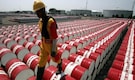
Oil prices edge up, but glut fears cap gains
US benchmark West Texas Intermediate for August delivery rose 19 cents to USD 51.10 a barrel and Brent crude for September, a new contract, advanced 20 cents to USD 57.12.
-
Oil slides on Greek default fears
Asian equity markets and the euro were facing sell-offs at the start of the week after cash-strapped Greece broke off deadlocked talks with creditors over the weekend, despite a June 30 due date of a massive repayment to the International Monetary Fund.
-
Greece's creditors draft deal to unlock aid, Athens resists
The joint effort by the European Commission, the European Central Bank and the International Monetary Fund to set out the terms for a cash-for-reforms deal came after the leaders of Germany and France held emergency talks with those institutions in Berlin on Monday night to press the lenders to bridge their own differences and find a solution.
-
Wall Street week ahead: Volatility set to return to stocks
After a holiday-shortened trading week that pinned stocks in a tight trading range, equities are poised for a bout of renewed volatility as investors watch the economy and the Federal Reserve for signs of policy changes and economic strength.
-
Desperate for bailout, Cyprus plays risky geopolitical game
As it tries to play Russia off against Europe to salvage its economy, Cyprus has embarked on a high-stakes poker game that could see almost everyone lose.
-
In Europe, everyone will worry about 'default'
The key word of 2013 will not be debt, growth or recession—it will be default. No one will want to use that word and will instead use terms like "forgiveness" and "realignment of future commitments." Here are five predictions for how this story will play out.
-
Gold extends losses as investors eye US fiscal talks
Gold edged lower on Wednesday, extending its losses to a third day, as the euphoria over a Greek debt deal fizzled and investors shifted their focus to US negotiations to avert a looming fiscal disaster in the world's largest economy.
-
Market firm, Sensex up 107 pts; wary of Parl logjam
The market has opened stable following firm Asian cues as Greece's international lenders agreed an urgently needed tranche of loans to the rescue the near-bankrupt economy.
-
Markets may react well if Greece exits Euro: Richard Harris
Richard Harris, chief executive, Port Shelter Investment Management talks about the escalating eurozone situation and how global markets are reacting to the possibility of Greece exiting the region with which it shares a common currency.
-
Traders worked up over Greece's exit from Euro: IG Markets
Risk aversion is heightening at this point in time and can be seen across the global screen. Greece exiting the euro zone is the talk of the town right now and is almost a given, something that markets seem to have priced in.
-
Greece faces big debt payment Tuesday: Now what?
As if the Greek situation wasn't messy enough, a missing paragraph from a key legal document is throwing a wrench into a debt deadline.
-
Bailout can make Greek debt sustainable,but risks remain
The package of new financing, debt restructuring and reforms can put Greek debt on a sustainable path, but Athens will have to stick to good policies until 2030 to make it work, an updated debt sustainability analysis by international lenders showed.
-
BNP Paribas expects Re to trade in 49-49.50/$ in near-term
In an interview to CNBC-TV18, Chin Loo, senior currency strategist at BNP Paribas looks at the global currency space and gives her outlook on where she sees the rupee, euro and dollar in the near-term.
-
Green screen in Europe? Not due to Greece: Nautilus Invest
Bruno Verstrate of Nautilus Invest tells CNBC-TV18 that the green seen across the board is not due to investors betting on a resolution on Greek debt.
-
Greek solution close; room for global liquidity rally: HSBC
Philip Poole, global head of emerging markets at HSBC spoke to CNBC-0TV18 about the situation in Greece and the way ahead for global markets that are rallying on liquidity injection.
-
FIIs may find India a risky bet post 2G verdict: IG Markets
Analysts would agree that it has been an excellent start to 2012 for equities and risky assets, says Jason Hughes, head of premium client management at IG Markets.
-
Oil dips to $111, focus on EU and Iran
Oil prices dipped to near USD 111 a barrel on Monday as fears over an immediate cessation of Iranian crude exports to Europe eased, and markets awaited a deal on Greek debt.
-
New threat to bailout as Greek right rejects more austerity
Greece's conservatives vowed on Monday to reject any new austerity measures in return for the aid that is keeping Athens from bankruptcy, signalling a new coalition government may not enjoy the kind of cross-party support its lenders demand.
-
Holes in the latest deal to save the euro zone
Leaders of the 17-nation euro zone agreed on a plan in the early hours of October 27 to slash Greek debt, strengthen European banks and try to stop the crisis spreading to Italy and Spain.
-
Euro bailout fund head: No quick China deal
The head of Europe's 440 billion euro bailout fund played down hopes of a quick deal with China to throw its support behind efforts to resolve the bloc's debt crisis but said he expects Beijing to continue to buy bonds issued by the fund.
-
Eurozone leaders, banks close to deal on Greek debt: Source
Eurozone leaders and banks are close to reaching a deal on a 50%writedown for private bondholders on their Greek debt, an EU source said on Thursday.
-
Europe issues to get worse before getting better: JPMorgan
The newsflow emanating out of Europe is likely to disappoint markets, says Adrian Mowat, Chief Asian and Emerging Equity Strategist, JPMorgan.
-
Expect to see eurozone game plan by Nov 4: Macquarie
Richard Gibbs, global head of Macquarie Securities is confident of the resolve of European policymakers to solve the issues there, and expects to see some clarity during the November 4 Cannes meet.
-
S&P 500 enters bear market
The S&P 500 entered a bear market after the open on Tuesday, down over 20% from its 2011 high.