The embryo had been cryopreserved in May 1994, when its adoptive mother Lindsey Pierce was four and father was three. 'We didn’t care about the age or ethnicity of the embryo,' she said. 'We just wanted to give a baby a chance.'
Scientists from the United States and England shared their work in two studies published in the journal Nature. Other scientists in Israel and China published studies on their work earlier this month that have not yet been reviewed by peers.
The current embryo-like structures were grown from single human embryonic stem cells that were guided to differentiate into three distinct tissue layers.
On October 31, 2022, a pair of twins were born from what may be the longest-frozen embryos to ever result in a live birth.
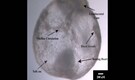
The lab-created embryos mirror a natural mouse embryo up to 8.5 days after fertilization, containing the same structures.
Scientists at the Weizmann Institute of Science in Israel said they found a way to have mouse stem cells self-assemble into embryo-like structures in the lab.
Experts not directly involved in the work - due to be published in the journal Nature on Thursday - said it was an important step towards deepening understanding of human life.