Time for CAAR 2.0: Revolutionising India’s customs rulings for global efficiency
India’s Customs Authority for Advance Rulings (CAAR) has improved timelines since 2021. However, procedural delays persist. A shift to CAAR 2.0, with internal technical units and digital reforms, can achieve rulings within 30 days, enhancing global trade efficiency
Shah Bano moment for Congress in Kerala
Kerala’s Latin Christians have been the bulwark of the Congress’ support base in the state. However, a bitter dispute between Waqf bodies and Christians over land holdings in the Munambam fishing hamlet found the grand old party unable to reconcile differences. Following the passage of the amendments to the Waqf law by Parliament, which Congress opposed, Kerala’s principal opposition party is on the back foot just when its prospects seemed bright for the 2026 Assembly election
Metamorphosis: How Uncle Sam became Uncle Scrooge
What is Trump’s strategy behind the global trade disruption?
Why a new Waqf law was needed to protect India’s Scheduled Tribes
RSSFACTS: The Waqf (Amendment) Bill, 2025, addresses tribal land rights, with ABVKA highlighting misuse of the 1995 Waqf Act. The bill includes provisions to protect tribal lands from unlawful usurpation by Waqf Boards, benefiting Scheduled Tribes
Tariff Tensions: Textiles & electronics sectors eye gains, auto & jewellery await relief
India’s gems and jewellery industry is bracing for impact and so is the agriculture sector in the near-term, with the possibility of re-routing.
Oilfield (Regulatory and Development) Amendment Bill gives CCUS a Real Shot
Is Bihar politics on the cusp of a huge change where caste is losing its potency?
Caste isn’t going away overnight but there are signs of change. The most persuasive evidence is from both the increasing participation of women voters and their priorities. Civic, social and economic issues matter to them. Close to a million youth will cast a vote for the first time in the 2025 Assembly election. Will they add impetus to the move away from caste?
Rajasthan vs. coaching industry: One step forward, half-a-step back
In a bid to protect students from the pressure cooker atmosphere of the coaching ecosystem, Rajasthan government tabled a bill in the Assembly. Criticised by both treasury benches and opposition for bending backwards to satisfy the coaching industry, the proposed law falls short of adequately safeguarding vulnerable students
Can IMEC compete with the Belt and Road Initiative?
Positioned as an alternative to China’s BRI, IMEC has been challenged by a dramatic geopolitical shock soon after its announcement. So far, only India and the UAE have taken initial steps by signing MoUs. The extent to which US President Donald Trump prioritizes the corridor will be crucial in determining its long-term relevance and success
Waqf (Amendment) Bill 2024 – Reform or religious transgression?
The Amendment Bill raises pertinent questions about the intent of the legislature behind the Bill. Many provisions may be deemed to be deliberate interference into the religious matters, potentially infringing the fundamental right for religious communities to administer and manage their own affairs guaranteed under Article 26 of the Constitution of India
Raisina Dialogue: A huge global geopolitical churn pushes India to be more agile
Speculation about Mamata Banerjee skipping delimitation meet is much ado about nothing
West Bengal, which has recorded a sharp decline in fertility rate, has a stake in the contours of a future delimitation of parliamentary constituencies. So, why did the state’s CM skip the Stalin-anchored meeting on delimitation in Chennai? It’s only because it overlapped with Mamata’s trip to the UK. If anything, Mamata and Stalin are on the same page of federalism
What RSS means when it seeks ‘One Nation, One Culture’
RSSFACTS: ‘Chiti’ is the national spirit or the natural character of the nation. A Nation cannot be simply created artificially, while a State can be so created. After World War II, a number of such states appear to have been formed. Man can create systems but a nation is born with a Chiti
The ugly aftermath of West Bengal’s ‘Dalit emancipation’
State administration and judiciary helped Dalits overcome barriers to worship in temples in Gidhagram and Debogram, leading to praise. The story didn’t end there. Subsequent economic boycotts and harassment of Dalits there show West Bengal’s long invisibilisation of caste stems from deep-rooted prejudice. Socially, it’s no different from other states
India would need over 1,600 parliamentarians if size of a constituency is limited to 1 million people: MC Analysis
Uttar Pradesh, Bihar, Rajasthan would only witness a slight gain in their seat share if constituencies are decided per the 1 million limit
Operation Searchlight: The genocide that propelled the Bangladesh Liberation War
Operation Searchlight, launched on March 25, 1971, marked the brutal military crackdown by West Pakistan on East Pakistan, triggering the Bangladesh Liberation War. Rooted in political, economic, and linguistic oppression, this genocide ultimately led to Bangladesh’s independence after nine months of struggle
The Eastern Window | India’s Neighbourhood First policy might need tweaking if Bangladesh wins China’s heart
Bangladeshi leader Mohammad Yunus is not only trying to seek China’s assistance but is also engaging in a bigger diplomatic game to put pressure on India. The move comes when China has named areas in Ladakh as its own counties
Four takeaways from Raisina Dialogue on contemporary geopolitics
From Ukraine to information warfare, discussions at the Raisina Dialogue revealed insights about the shifts in contemporary geopolitics that India would do well to adapt to
Matter of pride that Mamata Banerjee is going to Oxford University, says governor
Asked about the shifting of an IPL match on April 6 from Kolkata to Guwahati, he said that it was the decision of the organisers and it had not come to his attention
Ministers, MLAs in Karnataka allege 'honey trap' attempts, Home Minister promises probe
State Home Minister G Parameshwara supported the opposition’s claims and assured a high-level inquiry into such cases
‘Freebie’ road to chaos
History is replete with states imploding on the heels of overspending. From ancient Rome to Sri Lanka, we have seen fiscal recklessness led to instability and shook the very foundation of a state. India’s political parties clearly haven’t learnt any lessons. Recent elections have seen parties win on the back extravagant welfare promises which are followed by a fiscal struggle. It’s time for pragmatism
President’s Rule in Manipur gives BJP a chance to retrieve the situation
The “free movement” day announced by the Centre this month backfired, highlighting how deep the animosity is between Meiteis and Kukis. Notwithstanding the reversal, direct administration of the state by the Centre should be underpinned by a determined effort to recover looted weapons by militias. Time’s short for Governor Bhalla as the next assembly election is due in 2027
Observing China through Western lens
China’s actual defence spending remains a mystery, with Western estimates placing it within an unusually wide range. Indians fall into a cognitive information trap by relying on these sources. India needs to enhance it capabilities to understand China, which should lead to knowledge production that caters to India’s strategic interests
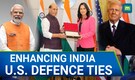
Rajnath Singh meets Tulsi Gabbard| India-U.S. strategic ties| Anti-India activities overseas | N18G
Defence Minister Rajnath Singh and U.S. Director of National Intelligence Tulsi Gabbard held talks in New Delhi, focusing on strengthening India-U.S. strategic ties, particularly in defence and information sharing. Gabbard's visit, part of a multi-nation tour, marked the first high-level visit by a senior official from the Trump administration. During her trip, she met National Security Advisor Ajit Doval and attended a global intelligence conclave hosted by India. The conclave, which included intelligence chiefs from the U.S., Canada, and the UK, concentrated on enhancing intelligence cooperation to combat terrorism, address emerging technological threats, and secure the Indo-Pacific region. Discussions also covered countering terror funding, money laundering, and issues related to extradition. India raised concerns about anti-India elements operating abroad, such as pro-Khalistan groups. Gabbard will also address the Raisina Dialogue, furthering the India-U.S. collaboration on global security challenges.