India’s appetite for oil is increasing at a feverish pace as new refineries are being added in the country. However, the country is battling limited domestic production capacity. Indian oil producing companies ONGC and Oil India have been unable to stop the slide in domestic production.
In order to increase domestic production and lower reliance on imported oil, government is now formulating a new policy. However, it is unlikely to yield results in the near to medium term.
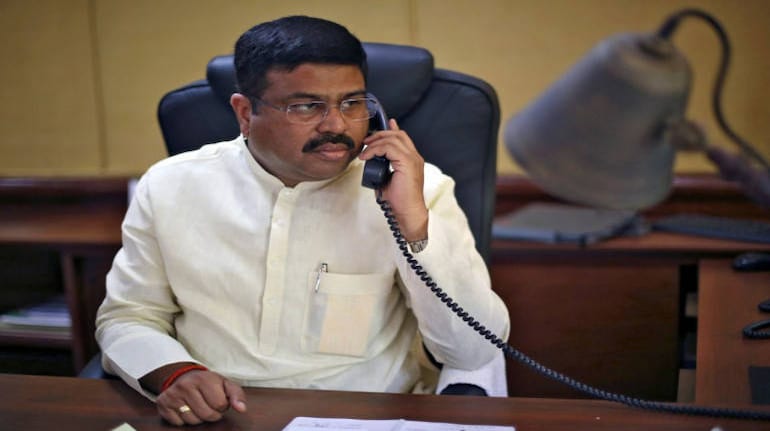
The policy envisages conducting a bidding process for Enhanced Oil Recovery (EOR) contracts to increase production for its major oil fields. ONGC’s Bombay High oil wells, which are over 50 years old, contribute the biggest share of India’s oil production but its contribution to the economy has been falling steadily. Oil Minister Dharmendra Pradhan hopes that the policy will help double the production of oil from these wells.
Pradhan cites the example of a tiny oil well in Austria which has been producing oil since the Second World War and having 98 percent water cut. In India, we shut down wells which have 60 percent water content, he says.
Water, gas and other chemical injections are used to extract crude. Pradhan was referring to how after pumping in only 60 percent of water, we tend to give up. With a little help from EOR, output could be increased.
While the example might be correct it cannot be applied to the Indian condition or for that matter, any other oil well. Each oil well has its own character and requires a different treatment. A huge offshore reservoir like Bombay High would require a different technology and the expenses would be too high. At current prices of oil, few companies would be brave enough to make that kind of investment.
Secondly, EOR technology has globally been successful on onshore oil wells. Bombay High is an offshore well, where globally technology has not yet been perfected.
Indian oil wells have been using the water or gas injection method for oil production which normally results in recovery of only 25 percent of oil from the well. Pradhan is right when he says that technology can improve production, as the chemical flooding, gas injection and thermal recovery methods have been known to improve recovery by up to 75 percent. However, these have mainly worked on onshore wells.
Apart from the fact that the technology is very costly, it is time-consuming. It can take over 2-3 years just to study the well characteristics which would require screening, scoping and then move on to reservoir modeling and, finally, simulation. Only then a small portion of the reservoir will be tested and if results are encouraging it can be expanded to the remaining portion of the well.
In India, EOR has been tested successfully by Cairn India at its Mangala field in Rajasthan, which is the largest onshore oil well in the country. The company has spent over USD 600 million in its Rajasthan field to enhance production which has been one of the main reasons for the company doubling its production to over 300 million barrels. Cairn’s Rajasthan production accounts for nearly 23 percent of India’s oil production.
The policy initiative that Pradhan is hoping to introduce might get a muted response as the policy is meant for enhancing production of existing wells which are mainly offshore wells. Also, the timing for conducting such an exercise is wrong given the oil prices and finally the technology is still in its nascent stage.
Discover the latest Business News, Sensex, and Nifty updates. Obtain Personal Finance insights, tax queries, and expert opinions on Moneycontrol or download the Moneycontrol App to stay updated!
Find the best of Al News in one place, specially curated for you every weekend.
Stay on top of the latest tech trends and biggest startup news.