






It is a strange time to be a foreign affairs afficionado. With large countries attempting to gobble up smaller ones and equally large powers who condemn the ‘gobblers’ themselves kidnapping sitting presidents from their own backyard nations. Amidst such growing conflict, Iran sits on the powder-keg of a potential revolution.
Regardless of any real change happening in that country, or its possible impact on India, it gives us an opportunity to go back in history. And look at a few individuals who came from what was then Persia and made an impact in our land, in varying ways:
Mahmud Gawan: Sometime in 1453, a man came ashore at the western port of Dabhol. Like many Persian adventurers before him, he intended to go to Delhi to seek his fortune. And like many others earlier, he was diverted by the promise of more immediate success to the Bahmani court at Bidar. Then 42 years of age, Mahmud Gawan had already travelled through Anatolia, Egypt, Syria and other places.
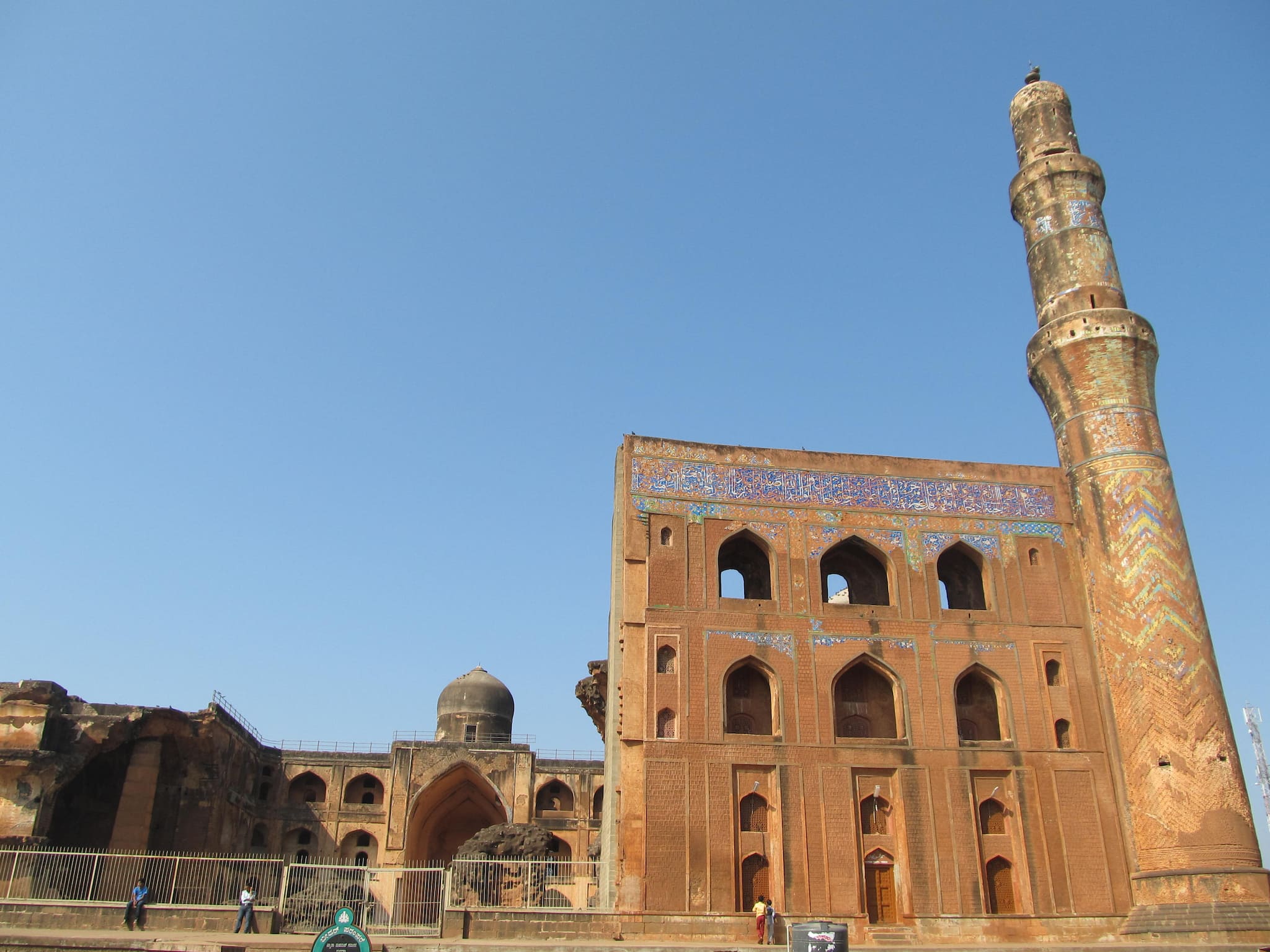 Front portion of Mahmud Gawan's madrasa in Bidar. (Source: Arjun Kumar)
The Bahmani state, then united, was a magnet for Persian talent – from individuals with ambition to art, literature, dress; from styles of piety to Arabian horses and military techniques. There was immense demand for everything Persian, which was considered the cultural acme of the Islamic world.
Going through the governor of the local province of the port, Gawan impressed upon the authorities that he was no ordinary merchant but a man of capability and knowledge. Progress was rapid. From an initial rank of 1,000 – indicating the revenue he was to collect from districts he was placed in charge of and the number of mounted troops he was expected to maintain from that revenue, he was appointed ‘Wakil-i-sultanat’ (Chief Minister) by 1458. By 1466, he was serving as regent to a boy-prince, and effectively controlled the state.
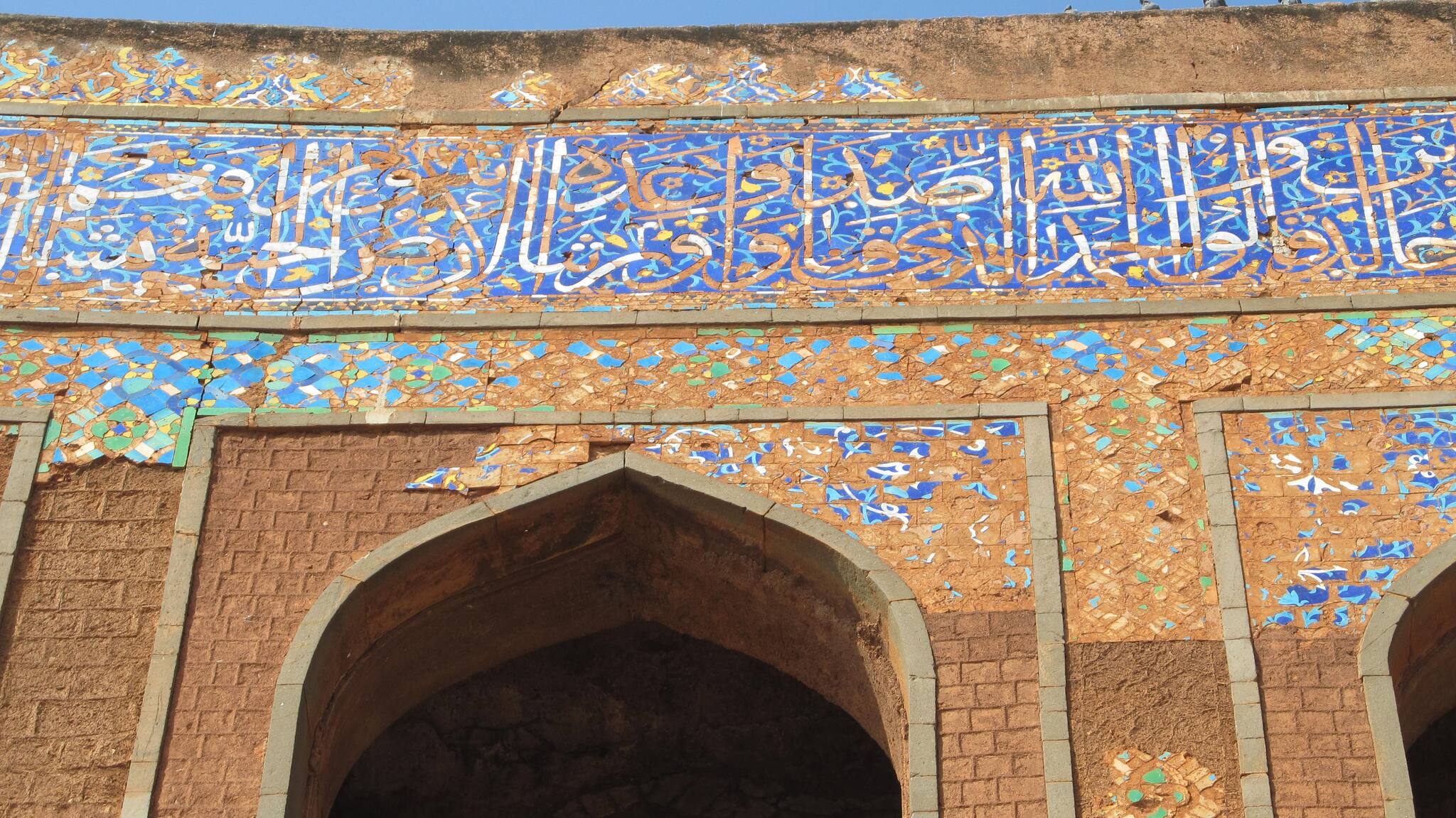 Calligraphy amid lapis lazuli tilework on Mahmud Gawan's madrasa in Bidar. (Source: Arjun Kumar)
He personally led military campaigns in the Konkan, into the Telangana region and the eastern parts of the Deccan, expanding the kingdom and strengthening control over trade routes. Combining military leadership with administrative reform, he curbed the power of the nobility by bringing key forts and revenue areas under a strong centre and standardised land revenue collection. He grew the kingdom’s global presence, leveraging his network and writing to the Ottomans, and to the rulers of Iraq and Egypt. While this resulted in a prosperous kingdom, it also caused envy and caused intrigues in court against him. In 1481, he fell victim to that intrigue, with a wide-addled Sultan ordering his execution. His legacy stands in the form of his massive, ruined madrasa in Bidar.
Ghiyas Beg: Born in Tehran to a prosperous family, Ghiyas Beg’s fortunes in the land of birth took a turn for the worse around 1576. With relatives already in imperial service with the Mughals of Hindustan, he fled Persia as a refugee. Accompanied by his pregnant wife, two sons and a daughter, his wife gave birth en route. Set upon by bandits and stripped of almost all their possessions, they abandoned their newborn daughter by the highway only to be reunited with the infant later – an infant who would change their lives.
Appointed Diwan of Kabul, he gradually rose in rank, overcoming occasional difficult moments, including an accusation of embezzlement. One of his sons was executed for being part of a plot against Emperor Jahangir. However, these moments passed, and the former refugee went on to become one of the empire’s most significant people, going on to be titled ‘I’timaduddawla’ (Pillar of the state). His sons also joined service, and the family went on to serve the empire for generations.
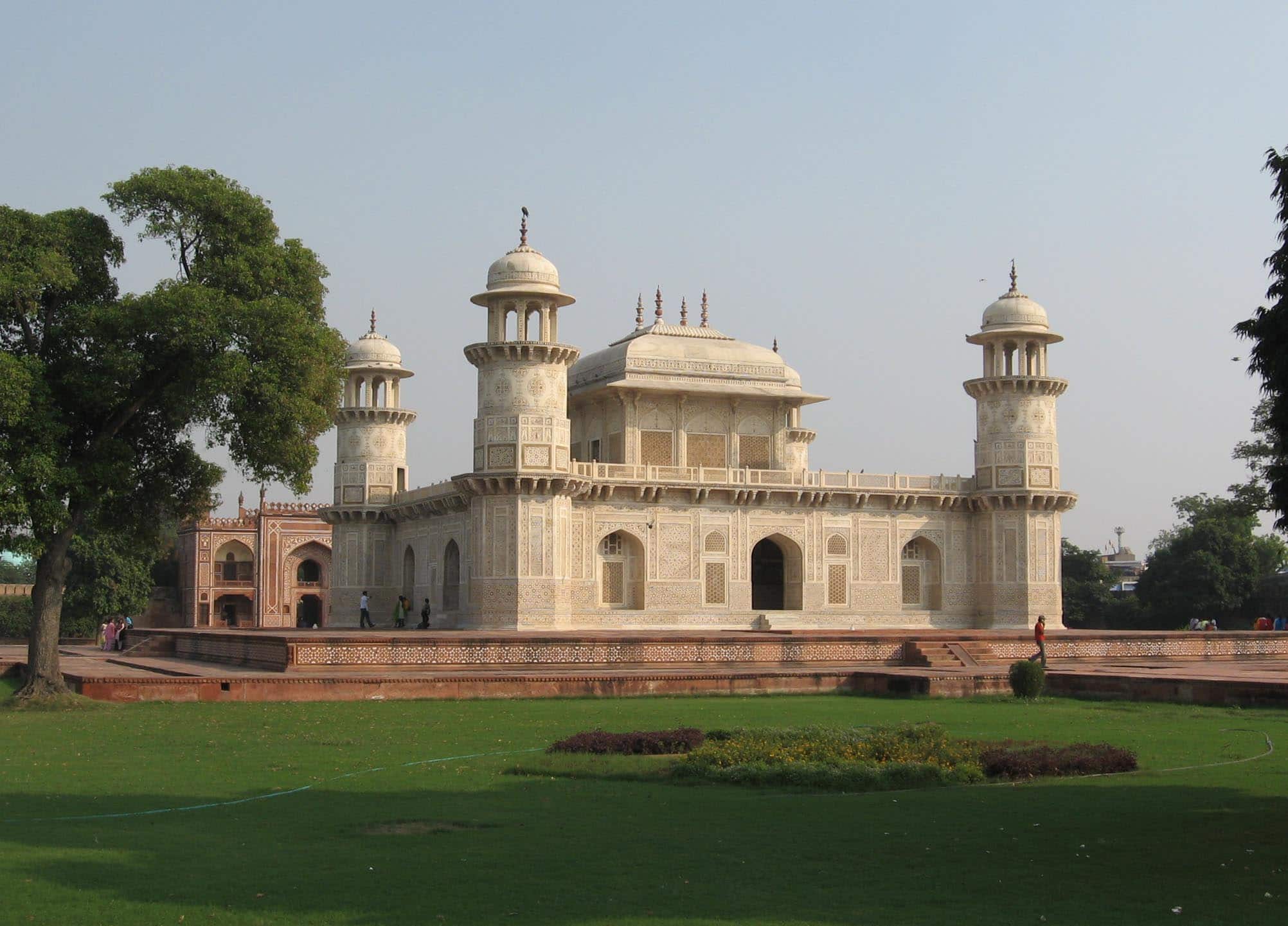 The magnificent tomb of Ghiyas Beg in Agra, along the banks of the Yamuna. (Source: Arjun Kumar)
Mehr-un-Nissa, the daughter he once abandoned, grew into a beautiful young woman whose second marriage was to the Emperor Jahangir. She became the most powerful Mughal queen ever, with even coins being issued in her name. When Beg died in 1622, he was buried in a magnificent tomb in Agra, which appears to be an early prototype of the Taj. And the Taj Mahal itself, was the tomb of Beg’s granddaughter, wife of Shah Jahan. Aurangzeb, and all further Mughal emperors, were also Beg’s descendants.
Mirza Ismail: The movement of talent from Persia to India continued in the modern era. Around 1824, a young horse trader called Agha Aly Asker arrived with two hundred horses which he sold to the Wodeyar rulers of Mysore. With this, he began a long relationship with Mysore, where he settled. Agha Aly’s grandson went to the same school as a Wodeyar prince. At the age of forty-two, that grandson – Mirza Ismail – became the youngest Diwan of Mysore.
He oversaw one of the greatest phases of the state’s history. Among his achievements was the expansion of hydroelectric power generation linked to the Shivanasamudra project, enabling industrial growth and urban electrification, particularly in Bengaluru. He strengthened irrigation across the Cauvery basin, improved agricultural productivity, promoted state-supported industrial ventures in sugar, cement, and engineering and laid the foundation of skilled technical education in Bangalore. He supported the University of Mysore, scientific research bodies, hospitals and public sanitation systems.
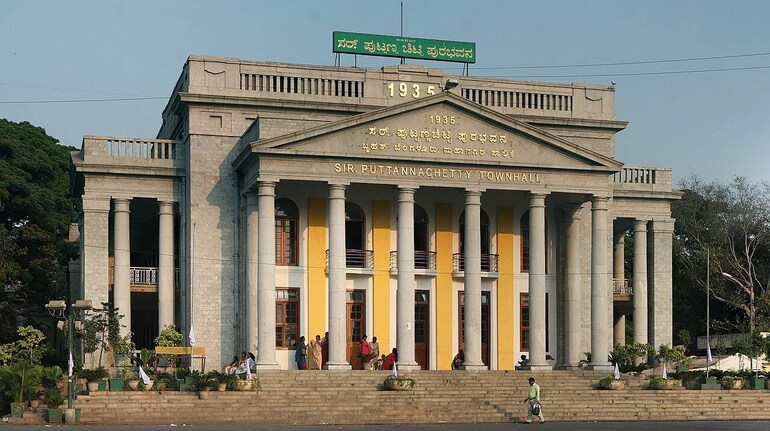
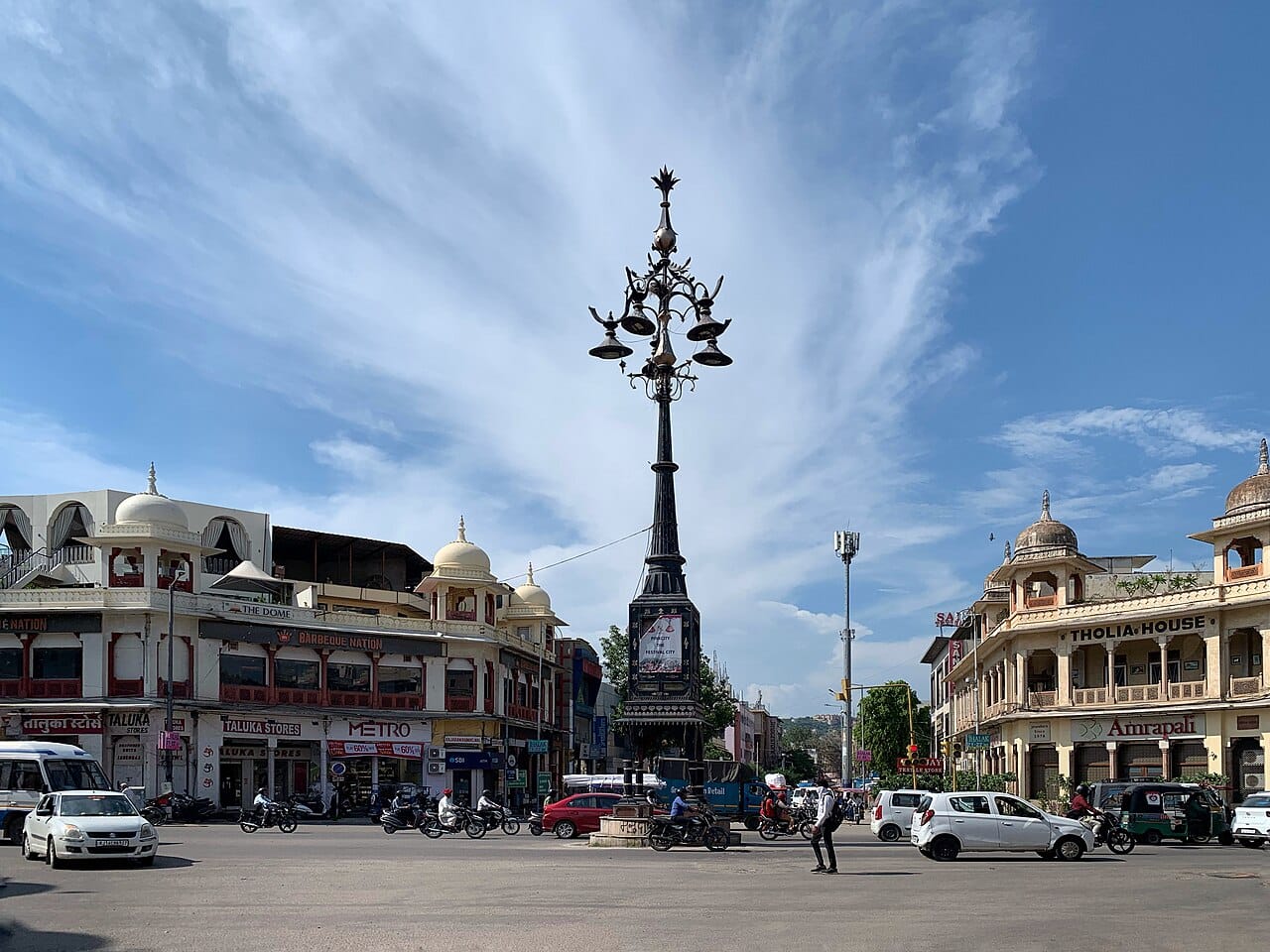 The Panch Batti Circle in Jaipurs Mirza Ismail Road. (Source: Wikipedia)
After being Diwan of Mysore for a decade and a half, Mirza Ismail became a ‘serial Diwan’ of sorts, taking on the same role in the princely states of Hyderabad and Jaipur. In each role, his governance was characterized by careful financial management, institution-building and the creation of urban spaces that remain the pride of their cities till date. A key road in Jaipur is named after him, though one doubts anyone understands the connection with Iran.
While remembering the stellar contributions of these three individuals to the kingdoms they were associated with in their time, one can also recall that even the Zoroastrian community came to India from Persia. On a concluding note, we can say that it wasn’t always one-way traffic: the founder of Iran's Islamic Republic, Ayatollah Ruhollah Khomeini, and the current Supreme Leader, Ayatollah Ali Khamenei, have ancestral ties to India, located to Uttar Pradesh. India definitely got the better of this bargain!
(Arjun Kumar is a heritage explorer by inclination with a penchant for seeking obscure sites. A brand consultant by profession, he tweets @HiddenHeritage.)
Views are personal, and do not represent the stand of this publication.
Discover the latest Business News, Sensex, and Nifty updates. Obtain Personal Finance insights, tax queries, and expert opinions on Moneycontrol or download the Moneycontrol App to stay updated!
Find the best of Al News in one place, specially curated for you every weekend.
Stay on top of the latest tech trends and biggest startup news.




