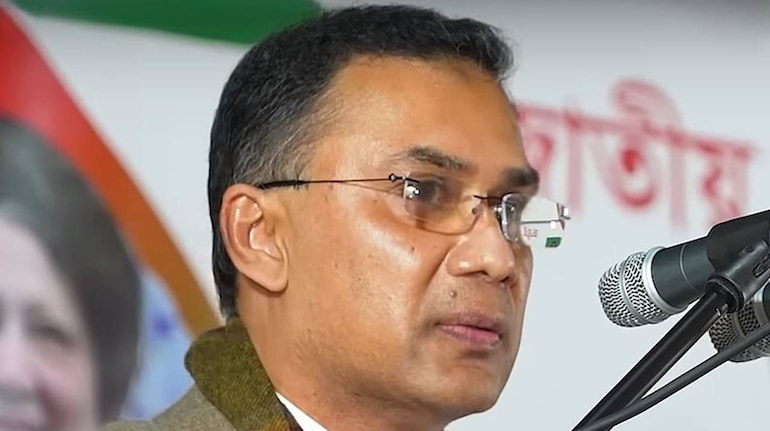
Tarique Rahman’s return to Dhaka signals New Delhi’s tacit understanding with a resurgent Bangladesh Nationalist Party and India’s clear-eyed acceptance – at long last -- of the impending reality of BNP taking up the reins of power after the elections in February.
Prolonged talks between India and BNP
Now it can be told that it was the multiple rounds of secret talks with the Indian Government that delayed the would-be Prime Minister’s return to his country from London. The decks for Rahman’s homecoming were finally cleared after the BNP leadership and the Indian Government arrived at a working agreement to safeguard their interests. Obviously, it’s an informal arrangement but its significance is huge.
Importantly, Rahman had to patiently bide his time despite announcing in an interview with BBC Bangla as early as on October 6 that he had decided to return. A full seven weeks later; on November 29; he was forced to publicly explain that the “return to his homeland” had to be put off due to certain “political realities”.
Element of mystery
Without elaborating, Rahman wrote on Facebook that “there are limits to how much detail can be shared about the sensitive matter”, to calm down BNP supporters eagerly waiting for him to return from exile and lead the party.
But the Dhaka Tribune was more forthright because it probably got wind of the hush hush India-BNP parleys and reported on December 1 that “an international diplomatic dimension” was delaying Rahman’s return as “a few powerful countries” still had their reservations.
Although Dhaka Tribune held a “a few powerful countries” responsible for delaying Rahman’s homecoming, read between the lines it was clearly alluding to only one very powerful country – India. And it would have been more apt if Rahman himself had flagged “geopolitical realities” instead of “political realities” in his November 29 social media post to clarify why he had put his homecoming on hold.
India’s reached out to wider BNP leadership, not just Rahman
In London -- the headquarters of the BNP since 2018 when Khaleda Zia was convicted and jailed in Dhaka and her UK-based son and heir-apparent, Rahman, became the opposition party’s acting chief – India was represented in the behind-the-scenes talks by its diplomats.
In Dhaka too, diplomats engaged the top BNP leadership for a structured exchange of views paving the way for Rahman’s return.
Given India’s total dominance of the region, it’s natural for political parties eyeing power in any South Asian country, to hold a dialogue with New Delhi – and even more so in the case of Bangladesh because of India’s geographical encirclement and economic stranglehold over the much smaller nation.
There is no doubt that Rahman’s return to Bangladesh is the outcome of a tacit understanding that BNP and India have successfully reached. During the long consultations in London and Dhaka, the two sides candidly aired their fears and expectations and laid down their red lines pretty firmly, I’m told.
It's a good start, but expectations need to be tempered
I wouldn’t say that New Delhi and BNP are off to a flying start – the duo isn’t exactly like a plane taking off for the blue skies. But it’s a good beginning, nonetheless. In any case, Prime Minister Narendra Modi’s government is pragmatic enough to realise that Rahman and BNP can never be a substitute for Sheikh Hasina and the Awami League whose loyalty and allegiance had thoroughly spoilt New Delhi. But all good things come to an end.
The bottom line is that the Modi’s regime’s diplomatic and security establishments are now resigned to BNP rule over Bangladesh. And in the run-up to the February polls, New Delhi is very pleased with the BNP’s onslaught on its once-trusted ally, the Jamaat-e-Islami – India’s bugbear. The Modi dispensation’s antipathy towards the religion-centric Jamaat at its doorstep is ironical, considering the Bharatiya Janata Party’s own total dependence on religion to fuel its unparalleled rise in India.
BNP’s ideological break with Jamaat
Rahman’s and BNP general secretary Mirza Fakhrul Islam Alamgir’s open attacks on the Islam first ideology of the Jamaat – which has disassociated itself from BNP and is contesting the elections on its own – is music to New Delhi’s ears. The two key BNP leaders are regularly harping on the significance of the liberation war of 1971, which is an indirect endorsement of India’s contribution to Bangladesh.
Moreover, at present, the BNP is marketing itself as a liberal, democratic and secular party – a la Awami League -- to win over the voters of the party which ruled over Bangladesh for 15 years but has been banned from contesting the elections this time. The BNP is pulling out all stops to co-opt Awami League’s constituency to augment its own in order to win the battle of the ballot.
India’s believes BNP’s centrist position is based on conviction
New Delhi is convinced that the centrist approach that the BNP is currently displaying is more than strategic – it’s ideological. India’s calculation is that if the Jamaat is somehow kept at bay, half the battle is won, making the rest of its geopolitical task much easier, simpler and doable.
But what will the Modi government do if the elections witness an Islamist surge- much like the Hindutva tide in India?
(Views are personal, and do not represent the stance of this publication.)

Discover the latest Business News, Sensex, and Nifty updates. Obtain Personal Finance insights, tax queries, and expert opinions on Moneycontrol or download the Moneycontrol App to stay updated!
Find the best of Al News in one place, specially curated for you every weekend.
Stay on top of the latest tech trends and biggest startup news.