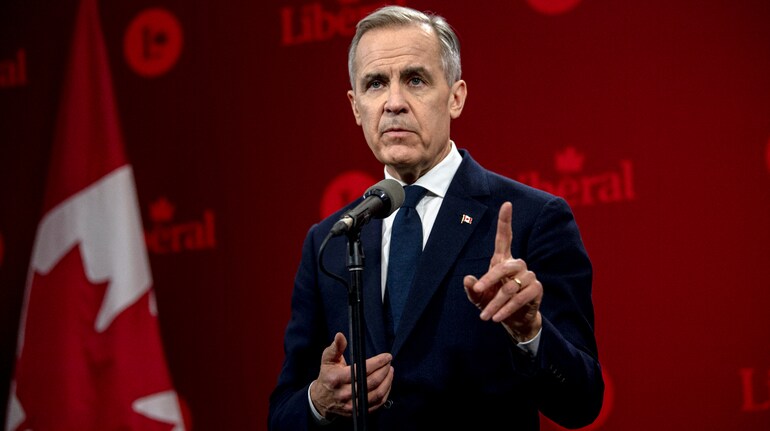
Mark Carney was sworn in as the 24th Prime Minister of Canada. Carney is one of those rare individuals who after heading a central bank (actually two central banks) is now head of the government as well.
The relationship between government and central banks has always been an interesting one. For a long period of central bank history, the central bank was largely seen as an arm of the government. However, after the inflation shock of 1970s, central bank independence emerged as one of the key facets of a modern central bank. Under this model, the central bank was given economic goals by the government and allowed to achieve those goals independently.
One crucial aspect of central bank independence is government appointing heads of central banks, which is tricky. The appointee should be seen as a candidate independent of the government. Having said that, the position of central bank Governor is a political position and a highly eminent one as well. Any central bank Governor, no matter how independent, has no choice but to be in constant discussions with the government on matters of monetary policy and financial system. A good central banker is one who manages to remain independent despite being close to the government.
The interactions and wider prestige of the role can also lead certain central bankers to take up political roles as well. Of all the political positions, one that suits the temperament of a Central Bank Governor is that of a Finance Minister. After all, the central bank Governor constantly interacts with the Finance Minister on common matters of economic policy. Thus, there are quite a few cases of Central Bank Governors going on to become Finance Ministers. And also of finance ministers going on to head the monetary authority.
| Table 1: List of Central bank Governors becoming Ministers of Finance/Economy | ||||
| Name | Country | Governor | Finance Minister/Economy Minister | |
| 1 | Takahashi Korekiyo | Japan | 1911-13 | 1913-32 (multiple times) |
| 2 | Junnosuke Inoue | Japan | 1919-23 and 1927-28 | 1923-24 and 1929-31 |
| 3 | C. D. Deshmukh | India | 1943–1949 | 1950–1956 |
| 4 | Hisato Ichimada | Japan | 1946–1954 | 1957–1958 |
| 5 | Yadav Prasad Pant | Nepal | 1968-73 | 1980-83 |
| 6 | Ghulam Ishaq Khan | Pakistan | 1971-75 | 1977-85 |
| 7 | Carlo Azeglio Ciampi | Italy | 1979-93 | 1993-94 |
| 8 | Lamberto Dini | Italy | 1979-94 | 1994-96 |
| 9 | Manmohan Singh | India | 1982–1985 | 1991–1996 |
| 10 | Domingo Cavallo | Argentina | Jul 1982- Aug 82 | Mar 2001- Dec 2001 |
| 11 | Richard Hu Tsu Tau | Singapore | 1983-84 | 1985-2001 |
| 12 | Kwabena Duffuor | Ghana | 1997-2001 | 2009-13 |
| 13 | Tommaso Padoa-Schioppa* | Italy | 1998–2005 | 2006–2008 |
| 14 | Tito Mboweni | South Africa | 1999–2009 | 2018–2021 |
| 15 | Heng Swee Keat | Singapore | 2005-11 | 2015-21 |
| 16 | Shamshad Akhtar | Pakistan | 2006-2009 | 2023-24 |
| 17 | Janet Yellen | US | 2014-2018 | 2021-2025 |
| 18 | Mario Marcel Cullell | Chile | 2016-2022 | 2022-present |
| 19 | Abdolnaser Hemmati | Iran | 2018-21 | 2024-25 |
| 20 | Aïmene Benabderrahmane | Algeria | 2019-20 | 2020-22 |
| Note * Tommaso Padoa-Schioppa was member of Executive Board of European Central Bank that made monetary policy | ||||
| Table 2: List of Finance/Economy Ministers becoming Central bank Governors | ||||
| Name | Country | Finance Minister | Governor | |
| 1 | Ramón de Santillán González | Spain | April 1840 – July 1840; January 28, 1847 – March 28, 1847 | 1856-63 |
| 2 | H. H. Kung | China | 1933-44 | 1933-45 |
| 3 | António Manuel Pinto Barbosa | Portugal | 1955-65 | 1966-74 |
| 4 | Albert Ndele Bamu | Congo | 1960-61, 1970 | 1961-70 |
| 5 | Bernal Jiménez Mong | Costa Rica | 1963-66 | 1973 and 1974-77 |
| 6 | Krister Wickman | Sweden | 1967-69 | 1973-76 |
| 7 | Willem Frederik "Wim" Duisenberg | Netherlands | 1973-77 | 1982-97 (Netherlands Central Bank), 1998-2003 (ECB) |
| 8 | Leszek Balcerowicz | Poland | 1989-91, 1997-2000 | 2001-2007 |
| 9 | Guillermo Ortiz Martínez | Mexico | 1994-97 | 1998-2009 |
| 10 | Agustín Carstens | Mexico | 2006–2009 | 2010–2017 |
| 11 | Elvira Nabiullina | Russia | 2007-12 | 2013-present |
| 12 | Tharman Shanmugaratnam | Singapore | 2007-15 | 2011-23 |
| 13 | Christine Lagarde# | France | 2007–2011 | 2019–present |
| 14 | Agus Martowardojo | Indonesia | 2010-13 | 2013-18 |
| 15 | György Matolcsy | Hungary | 2010-2013 | 2013-2025 |
| 16 | Yannis Stournaras | Greece | 2012-14 | 2014-present |
| 17 | Peter Kažimír | Slovakia | 2012-19 | 2019-present |
| 18 | Mihály Varga | Hungary | 2013-2025 | 2025 onwards |
| 19 | António Manuel Pinto Barbosa | Portugal | 2015-20 | 2020-present |
| 20 | Luis Caputo | Argentina | 2017-18, 2023 onwards | June 2018 to Sep 2018 |
| Note: Christine Lagarde is currently serving as President of European Central Bank. | ||||
It will be interesting to understand the circumstances under which these crossovers happened. Usually, these crossovers happen during times of political or economic crisis, or both. As a watcher of the Indian economic policy, one can comment on two individuals that served first as Central Bank Governor and later as Finance Minister: C.D. Deshmukh and Manmohan Singh.
India’s experience
Deshmukh was appointed as the first Indian RBI Governor as his predecessor James Taylor passed away in office. Deshmukh served as RBI Governor from 1943-49 and ably handled RBI during trying times: World War II, Partition and Indian Independence. Deshmukh was appointed as Finance Minister (1950-56) when John Mathai suddenly resigned due to differences over the Planning Commission. Deshmukh presented six Union Budgets, nationalised Imperial Bank as State Bank of India and created Life Insurance Corporation.
Singh’s tenure at RBI was for around two years and four months (Sep-1982 to Jan-1985). The one notable work during his RBI tenure was constitution of a Committee under Sukhamoy Chakravarty that laid the foundations of India’s modern monetary policy system. His tenure as Finance Minister (1991-96) was the most consequential in India’s economic and political history. He was appointed as a Finance Minister as the Indian economy was facing a crisis and then Prime Minister PV Narasimha Rao looked forward to appointing a professional economist as Finance Minister. And the rest is history. Singh became the architect of India’s economic reforms and completely turned around the economy. India seen as a bright spot in today’s tumultuous world is largely due to the foundations laid by Singh and his team in 1991.
An elite club: Central bank governor to PM
How about the case of Central Bank Governors becoming Prime Ministers? This list has fewer persons given the odds.. We have had seven such names based on my research who crossover as both Central Bank Governors and Prime Ministers. There are two names who have served in all the three roles of Central Bank Governor, Finance Minister and Prime Minister: Carlo Azeglio Ciampi and Manmohan Singh.
| Table 3: List of Central Bank Governors becoming Prime Ministers (or Presidents) later | ||||
| Name | Country | Governor | Prime Minister/President | |
| 1 | Takahashi Korekiyo | Japan | Bank of Japan 1911-13 | 1921-22 |
| 2 | Carlo Azeglio Ciampi | Italy | Bank of Italy: 1979–1994 | Prime Minister in 1993-94 as and President 1999-06 |
| 3 | Manmohan Singh | India | Reserve Bank of India 1982-95 | India: 2004-14 |
| 4 | Josef Tošovský | Czech Republic | State Bank of Czechoslovakia: 1989–1992, Czech National Bank: 1993–2000 | Czech Republic: 1997–1998 |
| 5 | Mugur Isărescu | Romania | Bank of Romania 1990-99, Dec-2000 to present | December 1999 – December 2000 |
| 6 | Mario Draghi | Italy | Bank of Italy: 2006–2011, European Central Bank: 2011–2019 | Italy: 2021–2022 |
| 7 | Mark Carney | Canada | Bank of Canada: 2008–2013, Bank of England: 2013–2020 | Canada: 2025–present |
It is interesting that barring Singh as Prime Minister and Ciampi as President, the Central Bankers had really short tenures as heads of Government. This is because most of them were called to serve as heads of caretaker governments during times of political and economic crisis.
For instance, Josef Tošovský was asked to serve as the Prime Minister during Czech Republic’s political crisis in 1997. He served as Prime Minister from December 1997 to July 1998 and then was reappointed as Governor of the Central Bank.
Mugur Isărescu was appointed Prime Minister for a year from 1999-2000 only to be reappointed as the Governor of the central bank from 2000 onwards. He has served as the Governor of the Central Bank for thirty-five years now, holding the record as the longest serving central bank Governor in history. Mario Draghi was also appointed as Prime Minister due to the political crisis in Italy.
To sum up, Carney’s election as Canada’s Prime Minister has led to this rare case of a central banker occupying the highest political office. It has not just led to discussions on previous such occupants but also opened the discussion on central bank independence. Given central bank independence is going to be tested and world increasingly embroiled in crisis, will we see more central bankers occupying highest political offices as well?
Discover the latest Business News, Sensex, and Nifty updates. Obtain Personal Finance insights, tax queries, and expert opinions on Moneycontrol or download the Moneycontrol App to stay updated!
Find the best of Al News in one place, specially curated for you every weekend.
Stay on top of the latest tech trends and biggest startup news.