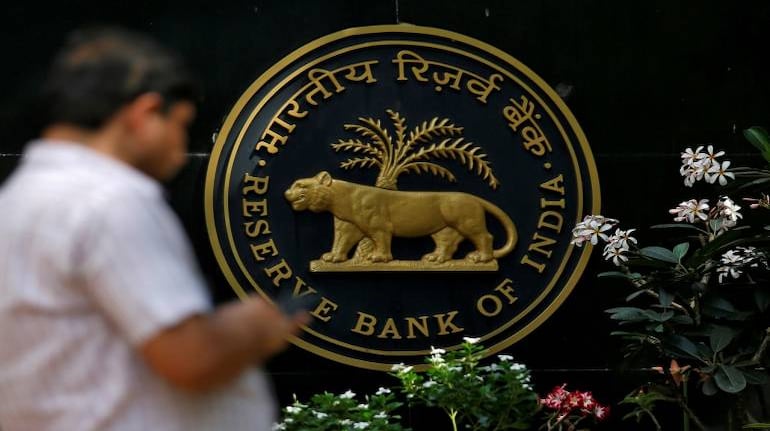
The monetary policy committee (MPC) chose, contrary to market near consensus, with a 5-1 vote to hold the policy repo rate while changing the policy stance from neutral to “calibrated tightening”. This is a signal that now “rate cuts are off the table” but also that MPC is “not bound to raise the repo rate every quarter”.
The MPC decision should be seen through the lens of the open economy Impossible Trilemma: in an economy with full capital convertibility and a fully floating exchange rate, it is impossible to use interest rates to conduct domestic monetary policy. An added concern at this stage is of a domestic credit squeeze, further weakening the conduct of policy.
Matching policy instruments to multiple, often conflicting, objectives is always a difficult exercise. The MPC decision is a very sensible policy outcome given the constraints on policy authorities. One, the rupee is now part of global emerging markets allocations, and domestic policy will only have a limited effect. Two, there seems to be an implicit undertone that risks to growth are building up, some part of it via a slowdown in credit.
This risk is partially reflected in the updated RBI inflation forecasts. CPI inflation is forecast to be 3.7% (without factoring in an increase in house rent allowance of state governments, which have not materialised as of yet) in Q2 FY19 (pending the print for September, which we forecast to be 4.1%), 3.9 — 4.5% in H2 and 4.8% in Q1 FY20. Even with “risks somewhat to the upside”, this does not suggest the emergence of significant pricing power in the near term. The only puzzling aspect in this scenario is the marginal reduction in the forecast FY19 growth rate to 7.4%. It appears that in the current tight monetary and financial conditions, that FY19 — particularly Q3 — growth is likely to be lower.
In this context, the decisions also highlight some fundamental thinking of the MPC. First, the mandate and focus of MPC is inflation targeting. Fiscal prudence is taking on partial responsibility for closing the excess demand gap. Most importantly, and probably the most important shift in policy stance, the exchange rate is now an important channel for the economy to adjust to external shocks.
Second, as a corollary of the above change, is the belief that onshore forex markets and liquid and deep enough to be able to determine their own prices. Third, contagion arising from domestic credit concerns, are sufficiently relevant now to attempt providing flows of financing to productive enterprises; otherwise, economic activity decelerates, further aggravating investor confidence, initiating a vicious cycle.
The more important policy lever at present, in our opinion, is liquidity management, which is being used to achieve multiple objectives. A volatile forex market calls for tighter liquidity, to increase the cost of speculative positions. But there is a limit to curbing liquidity, given the need to limit a rise in the cost of funds for banks and other lenders, to prevent a choking off of credit in a nascent investment recovery.
RBI has used Open Market Operations (OMOs) to infuse durable liquidity, to the extent of a calendared OMO buying of bonds in October. In addition, it has allowed banks a further carve out from their Statutory Liquidity Ratio (SLR) holdings of government bonds for meeting Basel 3 Liquidity Cover Ratio (LCR). This was necessary since the need to maintain High Quality Liquid Assets (HQLA) to meet LCR norms were preventing banks from depositing their SLR holdings as collateral to borrow from RBI’s Term LAF liquidity window. They had to resort to raising shorter term funds by issuing Certificates of Deposit (CDs) driving 1-year CD interest rates up past 8.6%.
Market chatter had suggested an outright cut in banks’ Cash Reserve Ratio (CRR) today, being one of the most durable sources of extra liquidity. However, given current concerns on liquidity and solvency in the financial sector, it was a good idea to maintain this buffer. Anyway, the CRR is a very broad instrument, and OMOs do a better job in targeting on specific maturities of the yield curve.
Liquidity is likely to tighten further in H2 FY19, requiring significant infusion to prevent cost of funds spiking up. The problem with liquidity management is its fungibility. Infusion of funds at longer maturities will flow back into short maturity instruments, increasing the potential of forex market volatility. If volatility continues, RBI will have to squeeze near term cost of funds, while more durable liquidity infusion attempts to flatten the yield curve, which has steepened excessively over the past year.
(Saugata Bhattacharya is Senior Vice President, Business and Economic Research, Axis Bank. Views expressed are personal)
Discover the latest Business News, Sensex, and Nifty updates. Obtain Personal Finance insights, tax queries, and expert opinions on Moneycontrol or download the Moneycontrol App to stay updated!
Find the best of Al News in one place, specially curated for you every weekend.
Stay on top of the latest tech trends and biggest startup news.