






In the recently released Bollywood film ‘Baramulla’, as the film goes towards its climax there is a particularly moving scene when a family stumbles onto a hidden room in their house. A room which contains the remains of a Hindu Pooja space. To the family, which is apparently Muslim in their faith, it is a moment of stunning revelation – of the fact that their house was once the home of a Kashmiri Pandit family, now long displaced and the items of their faith desecrated, scattered or hidden.
On December 25th, 2025, this phenomenon went beyond movies into the real world. Nazir Ahmad Latoo, a fisherman in Baramulla district, found a stone sculpture while fishing in the Jhelum River. Handed over to the Police Station at Sheeri, the idol is now in the custody of Jammu & Kashmir’s Directorate of Archives, Archaeology & Museums.
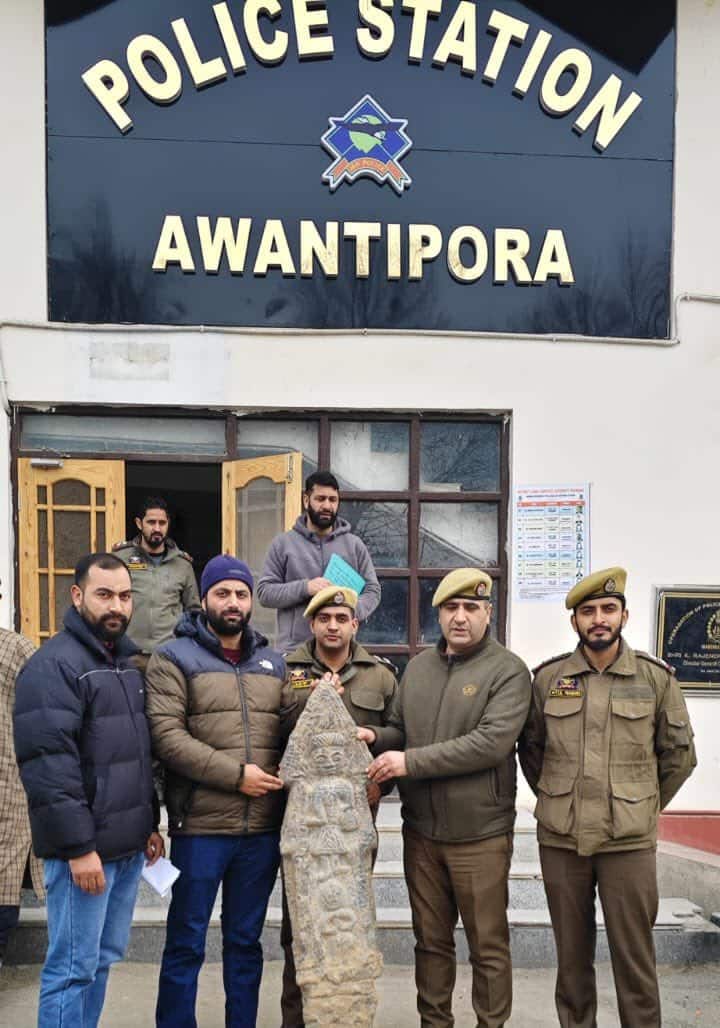 Shiva Temple panel recovered from the Jhelum at Larkipora.(Source: J&K Police)
From Screen to Reality
The two incidents, in the movie and the real world, are unrelated on the surface. However, both share a deep connection to the lost Pandit community of Kashmir. Beyond the loud victimhood narratives of some current residents, it is the Pandits, their homes and their culture, which has been devastated in Kashmir. Occasionally, one comes across a group of stones or a rock cut icon and is served a reminder of the forgotten community and their history.
Echoes of a Displaced Community
An hour away from Sheeri lies Pattan, home to the 9th–10th century Sugandhesa Temple. It would be more appropriate to say that Pattan houses only the ruined remains of the Sugandhesa, which has been reduced to rubble. ‘Rubble’ is the state most of Kashmir’s ancient temples find themselves in, and what makes it worse is the utter indifference of the local populace towards them.
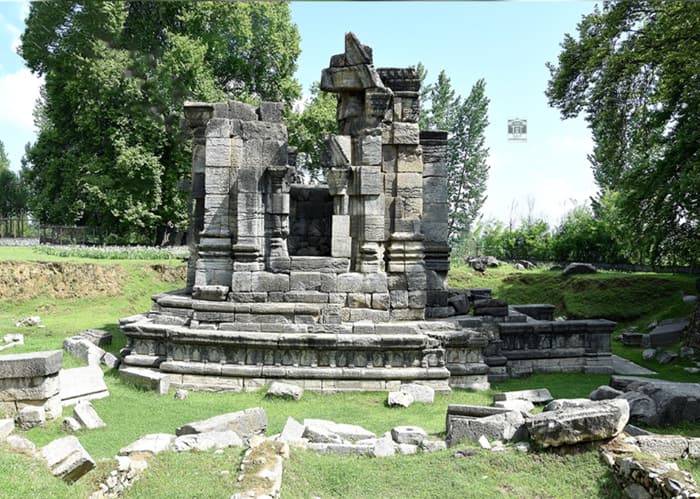 Sugandhesa Temple in Baramulla's Pattan. (Source: Archaeological Survey of India)
Vanishing Sacred Landscapes
This author got a first-hand experience of this at Kakpora. Located on the road that goes from Srinagar to Anantnag, this place was formerly called Khagipura, named after a King called Khagendra. Prominent in the place is a fenced compound containing the remains of what was once a large Shiva temple. Dated to the 10th–11th century period, the temple is in the centre of a courtyard, in a style that is common across shrines in the Valley. Only the base of the building is intact. When this author entered the compound and began to take pictures, a few locals gathered and were soon joined by others. They seemed amazed that someone would want to closely examine the irrelevant ruin in their habitat.
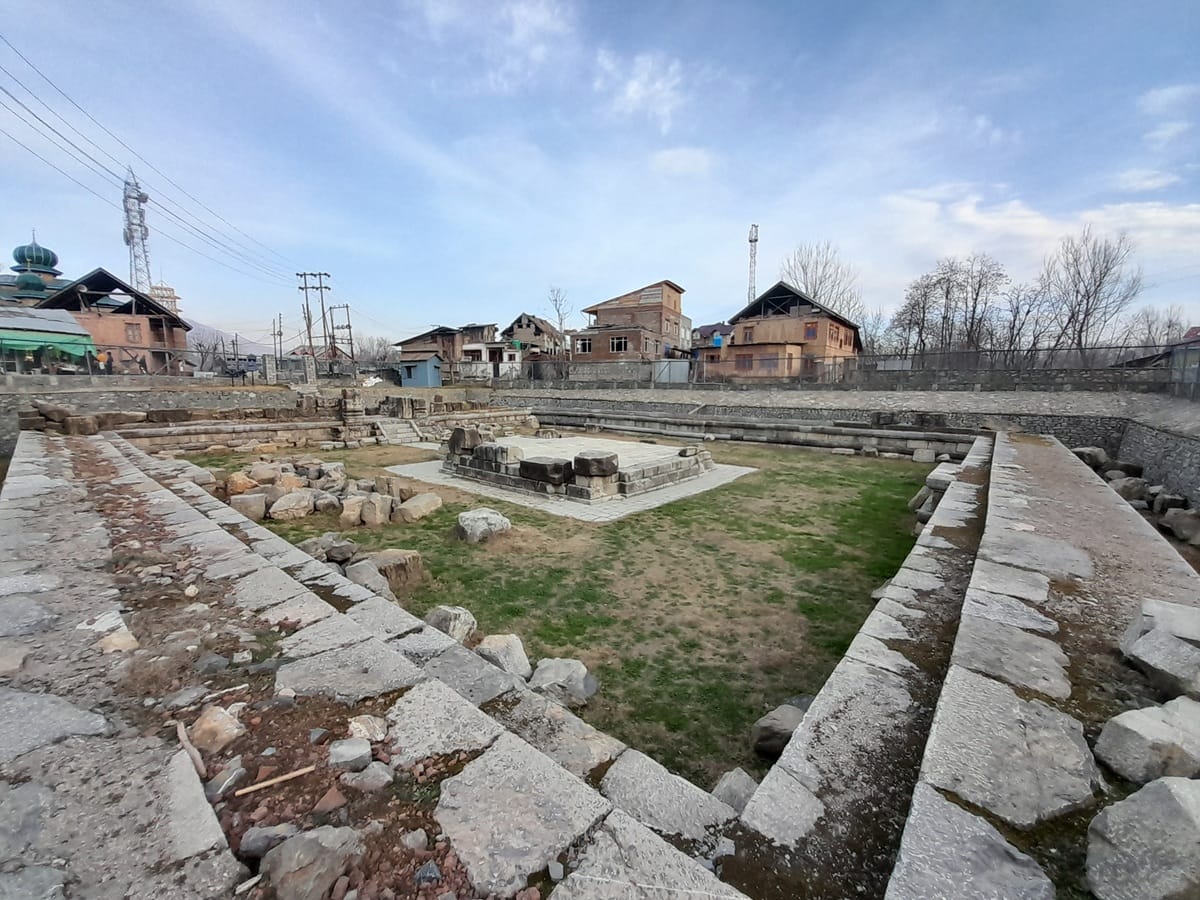 Site of a ruined Shiva Temple at Kakpora. (Source: Arjun Kumar)
A short distance away, at Loduv village – pronounced ‘Lodhu’ with a Kashmiri twang – is an unusual shrine. Unusual because it stands in the middle of a water body and is accessible via a narrow causeway. Like the Kakpora shrine, this too is a Shiva Temple, only much older, dating to the 8th century CE – which makes it the oldest extant stone shrine in the Valley. The operative word is ‘extant’, barely so. While the structure of the Loduv shrine is externally intact, sculpted remains lying outside would once have been part of the main structure itself. Perhaps the most astonishing aspect of the shrine is that the water body it stands in is fed by a natural spring containing sulphur. Imagine Pandits coming here to take a dip in these waters for their medicinal effect. Now, the temple is silent and a mosque looms nearby. Next to the water body stands a CRPF trooper keeping a close watch for any suspicious activity.
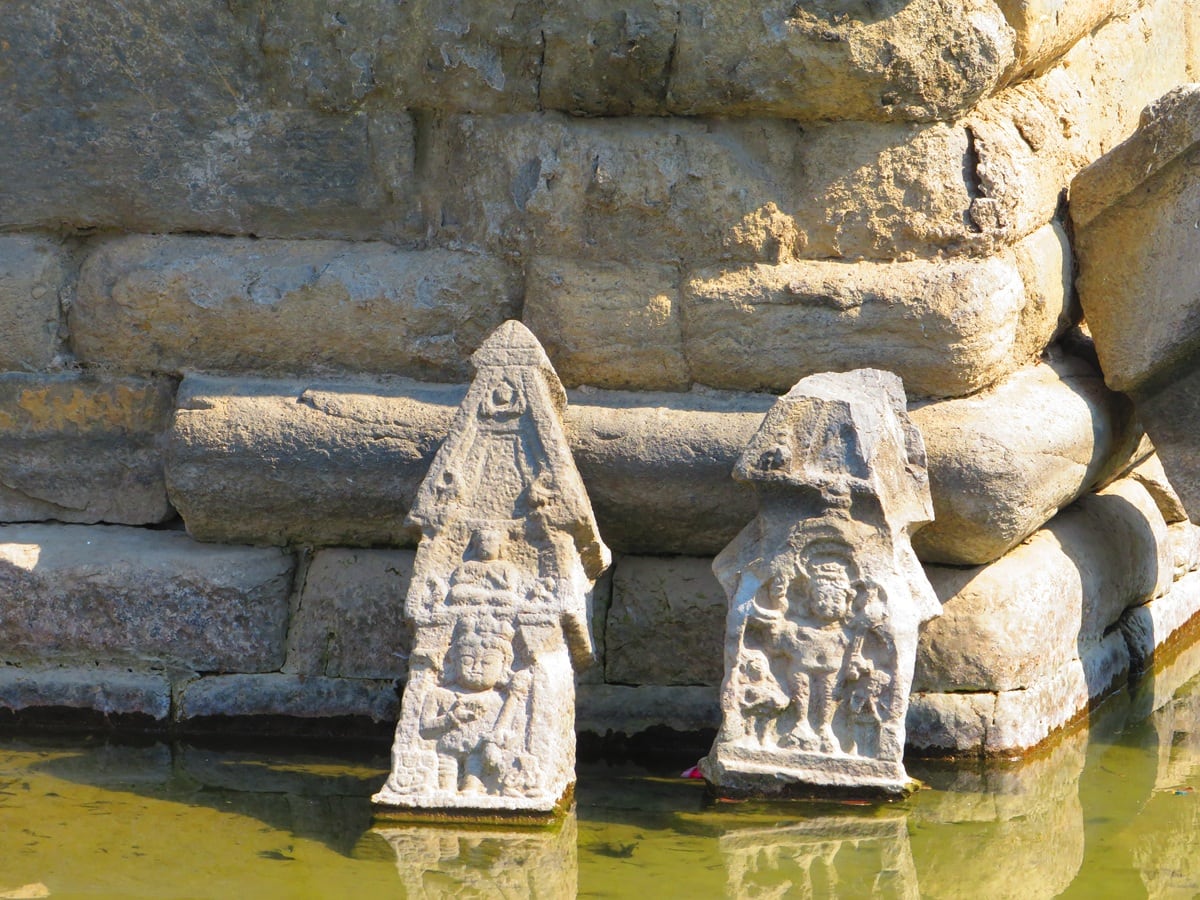 Iconography lying outside the Loduv Shiva Temple. (Source: Arjun Kumar)
Legacy Amid Neglect and Indifference
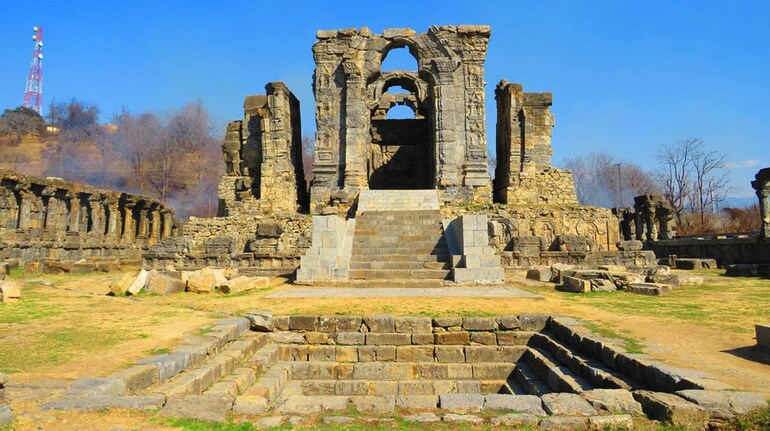
Further away, Kashmir’s largest and historically significant shrines - the Avantiswami Temple and Martand’s Sun Temple – are similarly neglected. The darkest hour of these shrines came in the rule of Sultan Sikandar Shah Miri (reign 1389–1413 CE) – also called Butshikan (meaning ‘iconoclast’) - who razed them. Periodic earthquake tremors in subsequent years compounded the damage. Amidst vast quantities of stone, Hindu iconography is clearly visible. The Sun Temple, once the Valley’s finest shrine built by Emperor Lalitaditya, is called ‘Shaitan ki Gufa’ by local youth who have grown up in a monotheist society, one without the influence of Kashmiri Pandits.
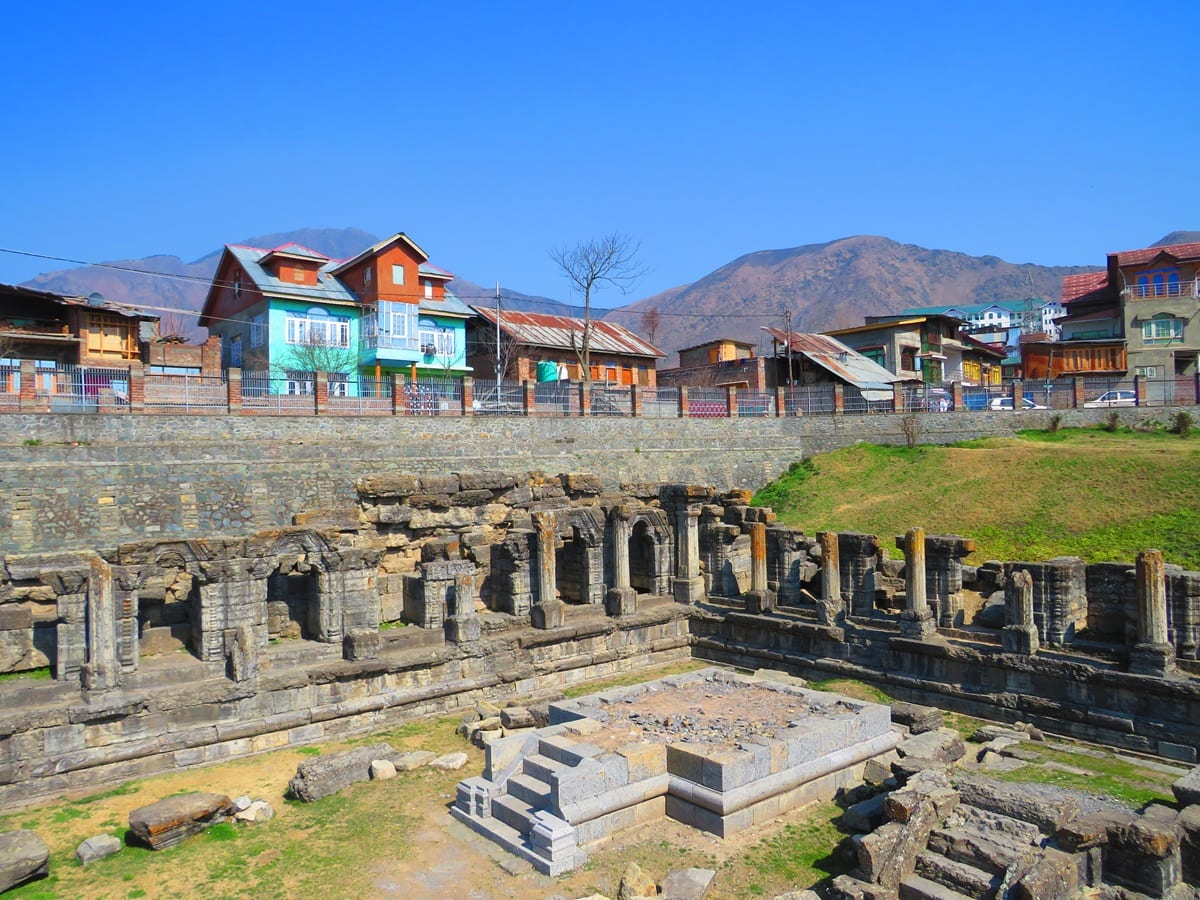 Ruins of the Avantiswami Temple. (source: Arjun Kumar)
Iconoclasm, Memory, and Historical Erasure
Kashmir’s temple architecture has several unique features. The stone used comprises huge blocks of masonry. Entrance portals are horseshoe-shaped arches, as are niches containing sculpted icons. Sculpted figures are always shown in erect position, without inscriptions. Depictions of Shiva, Vishnu, Kamdev, Ganga and Yamuna are common. It would be a tragedy if this chapter of Indian history is lost.
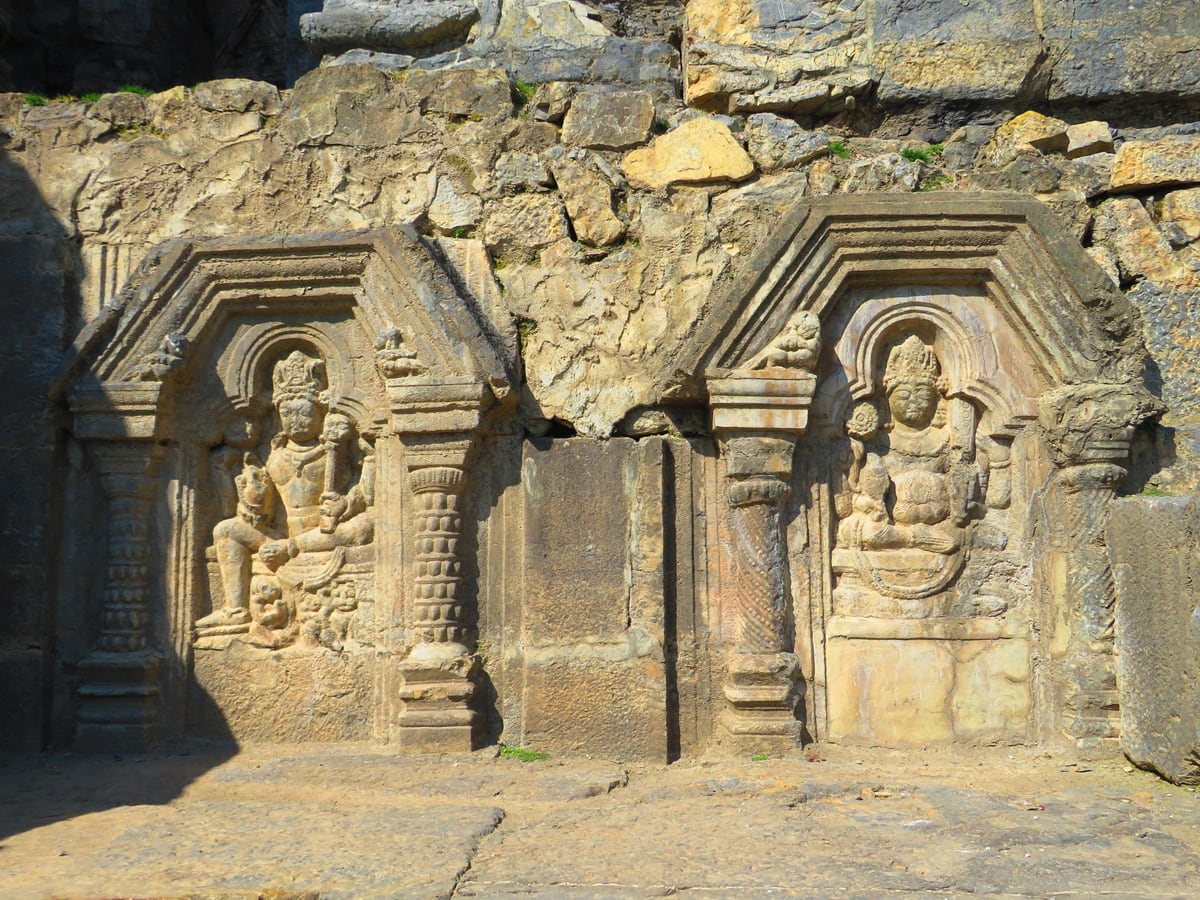 Religious iconography of the Sun Temple at Martand. (Source: Arjun Kumar)
And it goes beyond Hindu shrines. At Malangpora are the remains of an ancient Buddhist stupa. And at Baramulla’s Zehanpora, an ongoing excavation mentioned in the PM’s most recent ‘Mann ki Baat’ has revealed unusual rock formations that could be more stupas. However inconvenient it may be, and however much it may be denied, the past cannot be ignored. These places are not merely relics of history or tourist destinations. In Kashmir, their restoration would present a powerful physical reminder to people of a certain stripe that a multi-cultural society once existed here. A reminder that Baramulla was once Varahamula.
(Arjun Kumar is a heritage explorer by inclination with a penchant for seeking obscure sites. A brand consultant by profession, he tweets @HiddenHeritage.)
Views are personal, and do not represent the stand of this publication.
Discover the latest Business News, Sensex, and Nifty updates. Obtain Personal Finance insights, tax queries, and expert opinions on Moneycontrol or download the Moneycontrol App to stay updated!
Find the best of Al News in one place, specially curated for you every weekend.
Stay on top of the latest tech trends and biggest startup news.




