The world’s most populous nation is more poorly endowed with farmland, per capita, than Greece or Algeria. That’s going to make life harder as a warming planet destabilises the cycles of rain and sun that have kept it fed for millennia.
India last week suspended exports of non-basmati varieties of rice after heavy monsoon rainfall damaged newly planted crops due to be harvested in winter. With rice retail prices up 3 percent in the past month and 11.5 percent over the past year, the government hopes to quell food inflation by reserving more grain for the domestic market.
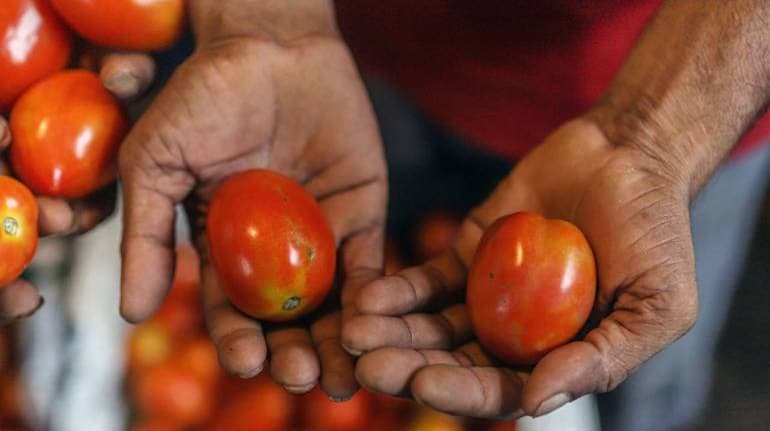
It’s not the only crop that’s in crisis. Tomato prices have risen fivefold or more in recent months, prompting heists from stores, markets and trucks, and causing farmers to camp out in their fields to protect their produce from theft. One Twitter user said her sister brought 10 kilograms (22 pounds) of the vegetable in her luggage during a visit from her home in Dubai. Once again, heavy rainfall in tomato-producing states has been the culprit.
What’s remarkable about all this is that India as a whole isn’t having a particularly unusual monsoon. Rainfall has been about 5 percent above average levels so far, but total monsoon precipitation typically varies 10 percent in either direction from year to year.
The problem is that this average conceals huge fluctuations across space and time. East of Delhi — especially in the grain-producing breadbaskets of Uttar Pradesh, Bihar and West Bengal — it’s been unusually dry, while western states, where pulses, oilseeds and vegetable crops predominate,
have been soaked. Making matters worse, the clockwork operation of the monsoon has been disrupted, with dry early weeks giving way to unusually wet conditions more recently.
There’s a grand injustice to the fact that a nation that accounts for just 3.7 percent of the world’s historic carbon emissions — a smaller share than Germany — should be facing some of the worst damage. At the same time, Prime Minister Narendra Modi’s government is responsible for its own policy choices, and many will only exacerbate the problems of food security on a warming planet.
Take road transport. India is falling well behind other major auto markets in its shift to electric cars and buses, with sales percentages in the single digits last year despite better performance from three-wheelers and two-wheelers. One factor has been the lackluster rollout of charging stations, with 135 cars per public charger compared to 19 in the US and six in China and the Netherlands.
Where India is succeeding is biofuel. The government is running ahead of its 10 percent ethanol blending mandate and looks on track to hit a 20 percent rate by 2025 as it seeks to trim its oil import bill. That’s putting pressure on farm production, however. Sugarcane is a thirsty crop which, unlike most Indian food grains, needs a whole year or more to grow to maturity. It predominates in many of the same northern states where rice and wheat would otherwise be grown.
With renewables, too, India needs to lift its game. The 15.7 gigawatts of wind and solar installed last year is only about half of what is needed to hit the government’s target and left the country 32 percent short of where it had intended to be by that date. Planned tenders of 50 gigawatts a year through March 2028 are markedly more ambitious — but they need to be turned from words into reality first.
No country will suffer more from climate change this century than India — but no country is going to see its emissions grow faster over the coming decade. If New Delhi doesn’t want to see a future of more crop failures, floods, droughts, export bans and farmer suicides, it’s going to need to do everything to reverse that trend.
David Fickling is a Bloomberg Opinion columnist covering commodities, as well as industrial and consumer companies. Views are personal, and do not represent the stand of this publication. Credit: BloombergDiscover the latest Business News, Sensex, and Nifty updates. Obtain Personal Finance insights, tax queries, and expert opinions on Moneycontrol or download the Moneycontrol App to stay updated!
Find the best of Al News in one place, specially curated for you every weekend.
Stay on top of the latest tech trends and biggest startup news.