
co-presented by
ASSOCIATE SPONSORS
co-presented by


ASSOCIATE SPONSORS




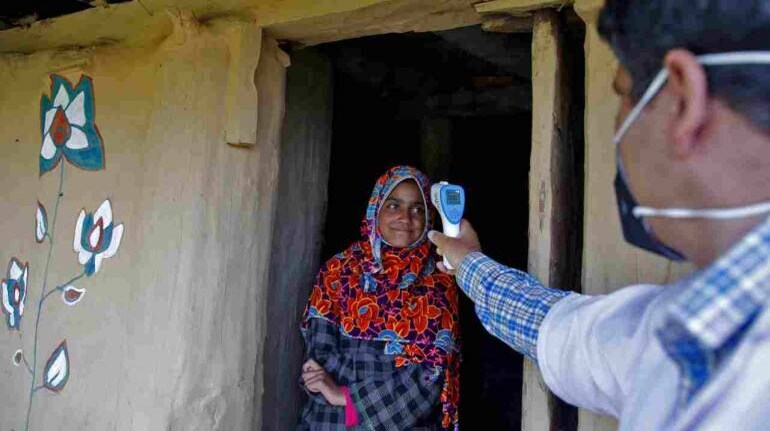
In May, the Independent Panel on Pandemic Preparedness and Response submitted its report to the World Health Organization (WHO), to be presented at the 74th World Health Assembly (WHA).
The panel, co-chaired by Ellen Johnson Sirleaf, former President of Liberia and Nobel Laureate, and Helen Clark, former Prime Minister of New Zealand, has high-profile members, including former Presidents, economists, health bureaucrats and activists. They reviewed documents, heard from experts, held round-table discussions, organised town-hall meetings and received open submissions from the governments and civil society. The final report titled ‘Covid19: Making it the last pandemic’ is a seminal work on the socio-economic and healthcare perspectives of the COVID-19 pandemic.
Multi-Dimensional Assessment
The report goes beyond the usual statistics about mortality, morbidity and loss to the economy; and acknowledges the social impact of the pandemic. The pandemic kept 90 percent of the children out of schools at its highest point. It increased the demand for support services for gender-based violence by five times and placed 10 million girls at risk of an early marriage.
The pandemic has already pushed around 120 million people into extreme poverty. This is the kind of multi-dimensional assessment that the governments and healthcare agencies should consider before advocating for blanket lockdowns as a means of containing outbreaks in low-middle income countries (LMICs).
The document puts forward some immediate steps to stop the pandemic. The public health measures should be applied uniformly across countries and there should be some method to scale the interventions according to the epidemiological situation in a country. Otherwise, some countries will remain weak links in the fight against COVID-19 and in some places, all economic activity will be stifled out.
The roles expected from countries with a place on the global high table are also mentioned in the document. This includes ensuring at least 1 billion doses of vaccines to the LMICs by the beginning of September, and financing the Access to COVID-19 Tools (ACT) Accelerator, which is a global mechanism for development and equitable distribution of diagnostics, therapeutics and vaccines.
The report also calls for increasing localised production of tools required to contain COVID-19, through voluntary licensing or transfer of technology arrangements. It also calls on the WHO to frame a roadmap with clear goals, targets and milestones, to limit COVID-19’s globally impact.
Slow To React
The panel advocates additional legal instruments complimentary to the International Health Regulations (IHR), a global framework to determine response from countries to public health emergencies which transcends borders. It says that the IHR system was slow to respond and there was a delay in declaring COVID-19 a Public Health Emergency of International Concern (PHEIC).
Even after the declaration of the PHEIC, there was no immediate co-ordinated global response to the outbreak. There were serious supply chain constraints in the earlier part of the outbreak while ‘vaccine nationalism’ complicated things in the later phase of pandemic response. Countries which could not mobilise local communities in its fight against the pandemic, performed poorly in terms of the quality of response. Countries with the poorest results were those which systematically devalued science and denied the impact of the outbreak, a possible reference to the United States under the Donald Trump administration.
Surprise Findings
Incidentally, the countries which performed remarkably well were those which went through the SARS outbreak during the 2002-2004 period. These countries, from south-east Asia and east Asia, had whole-of-government approaches, tiered command structures and specialised health protection agencies, all of which proved effective in limiting the spread of the outbreak.
The international system to assess health security and pandemic preparedness of a country has been the Joint External Evaluation (JEE) tool. This is voluntary, multi-sectoral evaluation which can help a country identify the needs for effectively addressing health security risks. But when the panel looked at the COVID-19 death rates and the JEE scores, the results were very contradictory. Countries with better JEE scores had higher death rates due to COVID-19. Whether it’s a problem with the measurement tool or is it data suppression from some countries, we do not know at this stage.
Be Prepared
The recommendations of the panel are sweeping in nature.
It calls for the establishment of a ‘Global Health Threats Council’ at the United Nations (UN) and an International Pandemic Financing Facility. A Pandemic Framework Convention should also be adopted within the next six months, complimentary to the IHR. The WHO should be strengthened and it should be given powers to investigate pathogens with pandemic potential in all countries. A new benchmarking system for country-level pandemic preparedness should be considered, along with a global system of surveillance for infectious diseases.
The panel calls for transformation of the ACT Accelerator into a more sustainable, pre-negotiated, end-to-end platform for essential medical supplies. It also asks national governments to establish national/sub-national public health institutions with multi-disciplinary capacities and deeply engage local communities in responding to healthcare challenges.
A More Holistic Approach?
Though the report calls for overall improvement of national health and social investments, it advances the health securitisation narrative significantly. When the political capital available for investment into healthcare infrastructure is so high, the panel should have adopted a more holistic approach towards the pandemic preparedness question. Pushing for improvement in public healthcare spending as a percentage of the Gross Domestic Product (GDP) in the LMICs to rolling out Universal Health Coverage (UHC) programmes, the canvas available to the panel was rather big, but it chose to paint only on the peripheries.
Besides, the health securitisation narrative is inherently unjust to the developing countries which may share an unequal burden of the impact of any pandemic. Rather than empowering the LMICs to deal with their healthcare issues, increased health security will be focusing on early warning and subsequent isolation of these countries — something which was evident during the Ebola outbreak in West Africa five years back.
A UNGA Debate
That said, the overall direction taken by the report is constructive and takes into account the broad issues of global health inequity which was evident during the pandemic. Whether the WHO or the WHA has the mandate to discuss such broad ranging issues is another question, and many experts feel that the report should be considered by the UN General Assembly.
“Those who cannot remember the past are condemned to repeat it”, is a quote attributed to the Spanish philosopher George Santayana. Though it’s almost 70 years after his passing, these words remain relevant in extremely different contexts.
We should understand our failures and learn from it, otherwise the sacrifices of countless frontline workers who died of COVID-19 would be made worthless!
Discover the latest Business News, Sensex, and Nifty updates. Obtain Personal Finance insights, tax queries, and expert opinions on Moneycontrol or download the Moneycontrol App to stay updated!
Find the best of Al News in one place, specially curated for you every weekend.
Stay on top of the latest tech trends and biggest startup news.