






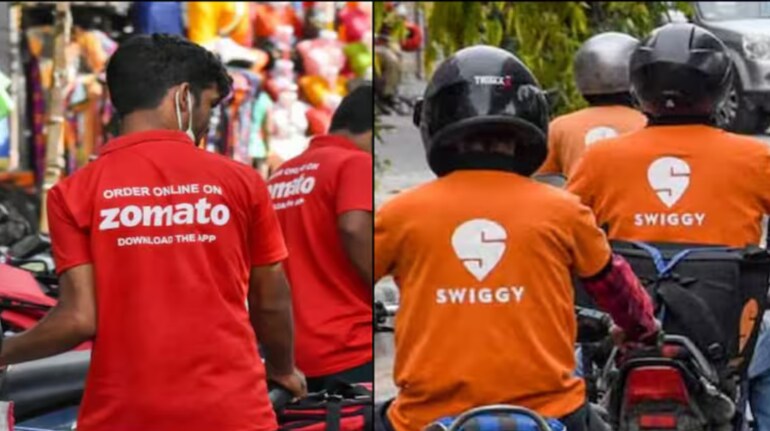
The recent intervention by the Modi government urging quick-commerce platforms to drop their “10-minute delivery” guarantees is a significant development and marks the beginning of a new way for the State to engage with the rapidly growing gig economy. Until now, millions of workers in this sector were primarily governed by algorithm-driven marketing. However, this intervention has not placed a premium on worker welfare and dignity.
This intervention has been welcomed by Swadeshi Jagaran Manch (SJM) as well as Bharatiya Mazdoor Sangh (BMS)—the two RSS-inspired organisations. While SJM primarily works in the field of economic policy, BMS is India’s largest trade union. BMS, in particular, has been at the forefront of organising gig workers for the last couple of years and protecting their interests. It had announced in June 2025 that it would be specifically focused to organise gig workers and take up their issues.
According to a NITI Aayog report titled "India’s Booming Gig and Platform Economy" (June 2022), the number of gig and platform workers in the country stood at 7.7 million in 2020–21, including women, and is expected to rise to 23.5 million by 2029–30.
The Modi government’s initiative to make the quick-commerce platforms drop the “10-minute delivery” guarantee should not be seen in isolation. This might be viewed as an extension of a comprehensive plan to ensure the safety and dignity of gig workers, who largely belong to the lower-income groups and marginalised sections of society.
Prior to the current move, the Modi government had recently implemented four new labour codes, which were welcomed by BMS. One of the biggest beneficiaries of these new codes is gig workers.
The Code on Social Security, 2020, implemented as part of these four labour codes, provides clear definitions of “gig workers” and “platform workers”. Under this Code, appointment letters must be issued to every worker. It mandates compulsory registration of all establishments, irrespective of their size. ESI now applies to all establishments employing 10 or more workers and is extended across the entire country. The Employees’ State Insurance (ESI) scheme provides socio-economic protection against sickness, maternity, disablement, and death due to employment injury, along with medical care for employees and their families. Under the new Code, ESI applies even to hazardous occupations employing just a single worker.
In cases where an employer fails to enrol or register an employee or does not pay contributions, the employee remains entitled to benefits under the Code. Compensation is now provided for accidents occurring while travelling to and from the workplace. The Code extends social security not only to gig and platform workers but also to unorganised sector workers, inter-state migrants, home-based workers, domestic workers, and fixed-term employees.
There have been increasing concerns about the safety and mental stress of the riders who were working to deliver goods within “10 minutes” for delivery apps. According to a 2025 study (A Study of 10-Minute Delivery Apps in the e-Business Ecosystem) published in the International Journal of Engineering and Management Research, “Delivery riders are under constant time pressure, raising concerns about their mental and physical health.”
According to this study, “The ten-minute delivery game has a dark impact on the lives of many, and employees often work under pressure to meet deadlines, which results in stress, injuries, physical exhaustion, and mental strain. As a result, the number of employees leaving their jobs prematurely is high.”
From the consumer’s perspective, dropping the “10-minute” delivery promise wouldn’t have much impact on the business. According to a Forbes India survey that asked consumers if they really needed 10-minute deliveries, 58% of respondents said such deliveries were “nice to have, but not essential”, while 75% said they would not change their frequency of orders if deliveries took between 20 and 30 minutes, instead of 10 minutes.
In fact, a 2024 study in the European Journal of Development Studies also raises the issue of the environmental sustainability of quick-commerce platforms. Titled ‘Is Quick Delivery Related to Quick-Commerce Environmentally Sustainable?”, the study “highlights the significance of establishing a more sustainable quick-commerce environment by leveraging strategies that promote energy security, reduce environmental pollutants, and decrease fuel imports.”
Given the rapid expansion of the gig economy, it is important for the state to step in to protect the rights of gig workers. All stakeholders—civil society, government, and the private sector—were able to implement a welfare step for millions of workers through mutual discussions. One of the invisible outcomes of this move is the ‘trust’ among the government, private sector, and civil society. This augurs well for the Indian economy.
Earlier Sanghnomics columns can be read here.
(Arun Anand has authored two books on the RSS. His X handle is @ArunAnandLive.)
Views are personal, and do not represent the stance of this publication.
Discover the latest Business News, Sensex, and Nifty updates. Obtain Personal Finance insights, tax queries, and expert opinions on Moneycontrol or download the Moneycontrol App to stay updated!
Find the best of Al News in one place, specially curated for you every weekend.
Stay on top of the latest tech trends and biggest startup news.




