External Affairs Minister S Jaishankar spoke expansively about what he called “sharp churnings” in world affairs at the Eight Indian Ocean Conference in Muscat. But predictability enough, he didn’t shine a torch on the new turbulence and disruptions in South Asia itself which impact India’s national interests and have far bigger implications for New Delhi than developments thousands of kilometers away.
Bringing up the Middle East, Jaishankar warned that the “serious conflict underway there had the potential of further escalation and complication”, even as at the other end of the Indian Ocean, the Indo-Pacific was “witnessing deeper tensions and sharper contestations”. And in order to bypass these “churnings”, he advised countries in the Indian Ocean Region to have each other’s back, supplement their strengths and coordinate their policies to fulfil their development, connectivity, maritime and security objectives.
Jaishankar’s studied silence on the geostrategic churning closer home is of course perfectly understandable as it directly impacts India’s security and can’t be highlighted or flagged at public platforms just yet.
But to be honest, the changes in our immediate security-strategic landscape I’m referring to – the tightening Pakistan-Bangladesh embrace and warming India-Taliban ties – are all of a piece really.
Extraordinary change in India-Taliban equation
Just last month, our Foreign Secretary Vikram Misri, no less, met Afghanistan’s Foreign Minister Amir Khan Muttaqi in Dubai. The tete-a-tete was totally path-breaking considering that Prime Minister Narendra Modi’s government had shuttered our Kabul embassy and evacuated all diplomats and Indians from Afghanistan in August 2021 hours before the Taliban take-over, denouncing the Taliban who forced the US-NATO withdrawal as proxies of Pakistan’s ISI and apprehending the worst.
Gradually, we did partially reopen our embassy – all our consulates are still shut – ostensibly for coordinating humanitarian aid and development assistance but actually because there is no alternative to presence on the ground in a country as critical and crucial for Indian interests as Afghanistan where China is expanding its footprint.
After the embassy’s limited re-opening, JP Singh, Joint Secretary in the Ministry of External Affairs who handles Iran-Pakistan-Afghanistan, visited Kabul more than once to confer with the very same Taliban we had kept accusing of planning terrorist attacks on India in cahoots with ISI. But a meeting between our Foreign Secretary and the Taliban Foreign Minister was still inconceivable until it actually took place. Such a high level of engagement with a regime that neither India nor any other country recognizes as Afghanistan’s legitimate rulers is frankly unheard of in our diplomatic history.
I think our diplomatic-security establishment is making the most of plummeting Afghanistan-Pakistan relations – the icing on the cake being New Delhi’s full-throated, official condemnation of Pakistani airstrikes killing 51 Afghans in Paktikha province on December 24. The MEA Spokesperson fired the salvo on January 6 ahead of the Misri-Mutaqqi meeting on January 12; in a sense the condemnation set the stage for the unimaginable tete-a-tete in the desert which broke absolutely new ground troubling Islamabad no end.
With Hasina gone, Pakistan sees an opening
The undreamt Dhaka-Islamabad rapprochement after Sheikh Hasina’s ouster is even faster paced than New Delhi cosying up to the once-derided and much-maligned Talban. The gulf between Bangladesh and Pakistan had widened so much under Hasina – who was out to please India to somehow remain in power – that it appeared to be simply unbridgeable. Hasina was a trophy for New Delhi for 16 long years – particularly for the BJP government since 2014: a Muslim woman PM in south Asia firing on all cylinders at Pakistan at the drop of a hat to give India an advantage.
But those days are now gone and unlikely to return -- although in both politics and geopolitics nothing is impossible. Minus Hasina, the sea change in Bangladesh-Pakistan equation is as startling as it is striking and obviously a major source of worry for India.
While there wasn’t a single one-on-one meeting between the premiers of Bangladesh and Pakistan during Hasina’s rule since 2009 – officially described as the golden period of India-Bangladesh relations by Dhaka and New Delhi – Pakistani PM Shehbaz Sharif and Bangladeshi acting PM have already met twice in six months. Moreover, Pakistani and Bangladeshi army generals are now meeting openly in Islamabad and Dhaka and the Indian media has reported coordination between ISI and its Bangladeshi counterpart.
The geopolitical ground in south Asia is clearly shifting with Pakistan and Bangladesh bonding at multiple levels as they try equally hard to reset their once bitter and strained relations. And if Pakistani Foreign Minister Ishaq Dar’s Bangladesh visit materializes in March as is being planned, it would be a watershed moment. Naturally, the Modi government is as concerned over their new bonhomie as Pakistan is as its ally Taliban gets closer to its adversary, India, and the New Delhi-Kabul engagement solidifies.
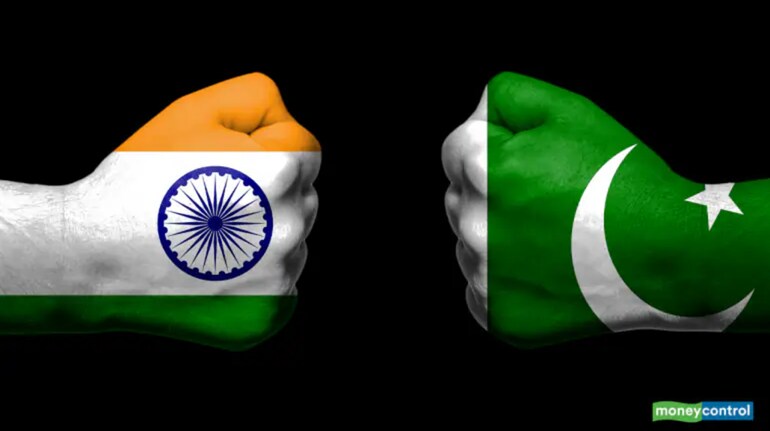
The expansion of Indian influence in Afghanistan is as troubling for Pakistan as the latter’s wooing and courting of Bangladesh is for India. But as the two nuclear-armed military powers jockey for influence to undercut the other, the key question is: can they overcome the limitations of geography to rewrite history?

Discover the latest Business News, Sensex, and Nifty updates. Obtain Personal Finance insights, tax queries, and expert opinions on Moneycontrol or download the Moneycontrol App to stay updated!
Find the best of Al News in one place, specially curated for you every weekend.
Stay on top of the latest tech trends and biggest startup news.