Prakash Chandra
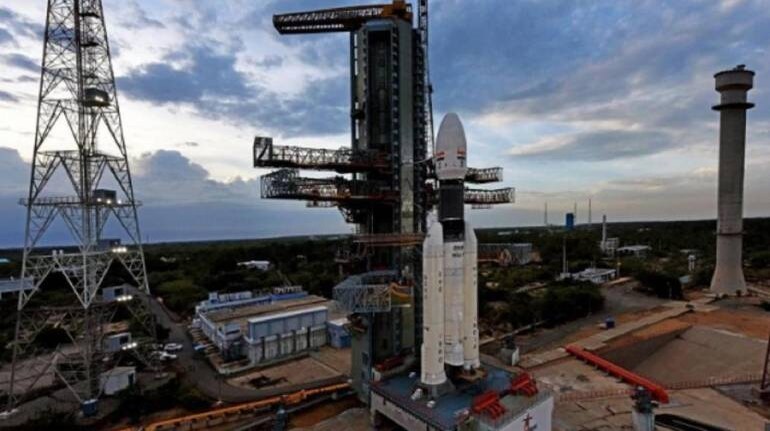
India’s second Moon-shot, Chandrayaan 2, which will lift off from Sriharikota on July 22 afternoon, will carry much more than its payload of instruments: the hopes of Indian Space Research Organisation (ISRO) scientists who had worked so hard to realise a mission beset by delays.
Six years ago, Russia ended its collaboration with ISRO on Chandrayaan 2 (in hindsight, a good thing to happen as the space agency was forced to develop the technology on its own). The mission suffered another setback last summer when ISRO decided to redo the spacecraft design and again in January when the lunar lander Vikram developed a snag during testing.
As a result, ISRO closed launch windows in April and May before finally beginning the countdown for July 15. However, on July 15 barely an hour before take-off, the launch was aborted following a technical snag. ISRO has rectified the snag and a week later it is ready to make history.
These hiccups pale in significance compared to the enormous engineering challenges facing ISRO’s most complex mission. For Chandrayaan 2 is heading to the Moon’s south pole — uncharted territory where no man or machine has been before.
Come September, after reaching lunar orbit, Vikram will separate from the lunar orbiter and start its descent to the Moon’s surface. Unlike Chandrayaan-1 (launched in 2008) whose impact probe crash-landed on the Moon, Vikram must execute a complicated braking manoeuvre lasting a quarter-hour before it soft-lands on an ancient high plain near the lunar south pole.
Israeli scientists discovered how tricky this could be last month when their Beersheet lander came up just short in its attempt to soft-land on the Moon and was irretrievably lost. As ISRO Chief K Sivan said recently, “Those 15 minutes are going to be the most terrifying for us. Every second of the flight from the start of the landing process till touchdown is crucial. It’s a new thing for ISRO.”
If Vikram lands successfully, Pragyan — the six-wheeled rover nestling inside it — will roll out onto the Moon’s surface to carry out topographical studies and mineralogical analyses that would help investigate the Moon’s evolution. Vikram and the orbiter too carry instruments for studying various aspects of the Moon’s remarkable geology. Unlike on rocky planets such as Earth, there are no oceans, atmosphere or seismic activity to landscape the lunar surface and this has helped the Moon preserve its past in a near pristine condition. Stand on the Moon and you time-travel instantly to the infant solar system soon after it coalesced from a giant rotating cloud of gas and dust some 4.6 billion years ago.
Unlike popular belief, Earth’s lone satellite does have an atmosphere. However, it is so thin that all the molecules in a cubic centimetre of it would fit inside the exclamation mark at the end of this sentence! Studying it at close quarters could lead to new techniques for ‘un-mooning’ isotopes such as Helium 3 (which is rare on Earth but contained in 'cold traps' at the lunar pole) which are ideal nuclear and rocket fuels.
Such exploratory methods would also be useful for studying alien planetary atmospheres elsewhere in the solar system and beyond. Indeed, almost everything about the Moon —its absolute sterility, very weak magnetic field, high vacuum and extreme temperature variations — points to a whole lot of new science that can be done there.
Since lunar days last much longer than Earth’s, solar panels at the pole could convert the abundant sunlight into electricity. Imagine trapping all that sunshine — some 15,000 terawatt hours — and beaming it Earthwards through microwave bridges! Just 1 per cent of this lunar-based solar energy would suffice to replace all the fossil fuel plants on Earth with clean, low-cost, electric power.
With so much lunar potential waiting to be tapped, it is no wonder there is renewed interest in the Moon as countries scramble for the next gold rush. China took an early lead in this new race to the Moon when its Chang’e 4 probe became the first ever spacecraft to put down on the far side of the Moon, this January.
However, unlike national pride that powered Space Race 1.0, mercantile interests now spur pioneering spacefarers like the Americans and Russians to return to the Moon along with new players such as the Japanese and Europeans. Monetising access to space and space-based services and resources is the name of the game. From Elon Musk’s SpaceX and Jeff Bezos’s Blue Origin to Richard Branson’s Virgin Galactic, many private players are seeking first-mover advantage by offering services to carry crew and payload to the Moon.
If Chandrayaan 2 is successful, India has a good chance to share pole position with these players in being able to fly commercial payloads to the lunar surface. After all, it isn’t so much the idea of planting the tricolour on the Moon as that of having such a capability — so that India could compete in the emerging hi-tech global market, which should drive ISRO’s lunar ambitions.
Prakash Chandra is a science writer. Views are personal.



Discover the latest Business News, Sensex, and Nifty updates. Obtain Personal Finance insights, tax queries, and expert opinions on Moneycontrol or download the Moneycontrol App to stay updated!
Find the best of Al News in one place, specially curated for you every weekend.
Stay on top of the latest tech trends and biggest startup news.