






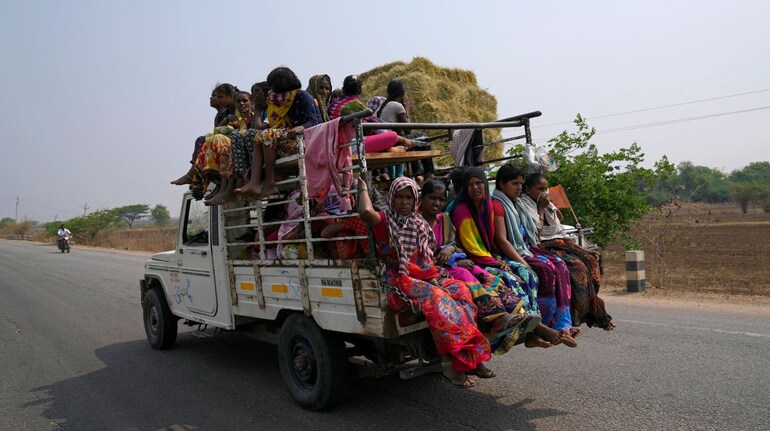
This Budget marks a defining inflexion in India’s growth trajectory, placing Bharat beyond the metros at the heart of economic acceleration. Districts, small towns, and Tier-2 and Tier-3 cities are no longer peripheral to India’s story; they are emerging as engines of enterprise, production, and upward mobility. India’s economic geography is expanding with clarity and intent.
Redefining India’s Economic Geography
At the core of this transformation are MSMEs, the backbone of India’s growth heartland. Embedded in local clusters and regional markets, they drive employment, exports, and resilience at scale. The Budget reflects a clear evolution in approach, from viewing MSMEs primarily through the lens of support to enabling their scale, formalisation, and integration into domestic and global value chains.
MSMEs as Engines of Scale, and Global Integration
This shift is reinforced through an MSME growth fund, improved access to credit, and a strong push on digital enablement. Better working-capital flows, compliance facilitation through Corporate Mitras, and stronger digital platforms lower barriers for small enterprises to grow with confidence. Faster customs processes, simplified imports, and AI-enabled risk systems open global gateways for MSMEs, artisans, and start-ups, moving enterprises from informality to integration.
The rise of Tier-2 and Tier-3 cities as city-economic regions is central to this model. Manufacturing and services clusters in textiles, pharmaceuticals, food processing, electronics, logistics, and light engineering are increasingly taking root beyond metros. By aligning infrastructure development, skilling, and technology adoption with regional strengths, the Budget advances a cluster-led growth strategy that grounds national ambition in local capability.
Infrastructure for Distributed Growth
Technology infrastructure acts as the catalyst for this distributed growth. Investments in AI, data centres, semiconductors, and rare-earth ecosystems underpin economic expansion well beyond India’s largest cities. Long-cycle certainty for data centres enables cloud and AI workloads to be served from across the country, supporting digital services, GCCs, and innovation hubs in emerging cities. Semiconductor and electronics initiatives deepen domestic manufacturing value chains, while critical-mineral strategies strengthen future supply security across clean energy and advanced industries.
The Finance Minister’s articulation of a goal to raise India’s share of global services exports to 10% by 2047 provides an important lens through which to read this Budget. The measures announced across AI, data centres, digital infrastructure, skilling, ease of doing business, and MSME integration are not incremental tweaks, but foundational investments aimed at scaling India’s services leadership from strength to global dominance.
The Growth Connective
Skilling is the connective tissue that binds this strategy together. The focus moves beyond short-term employment schemes towards building a productivity-led workforce aligned with regional demand. Labour-intensive sectors such as tourism, textiles, logistics, and allied healthcare receive targeted impetus, recognising their role in job creation across smaller towns. Industry–academia collaboration and regional Centres of Excellence help skills follow opportunity.
Tourism, in particular, emerges as a powerful force multiplier, closely correlated with infrastructure and city development. As connectivity improves through roads, rail, aviation, and urban amenities, tourism catalyses MSME growth, jobs, and local value creation in Tier-2 and Tier-3 regions. Linking tourism to heritage revitalisation, digital documentation, infrastructure, and service quality positions it as an integrated economic system rather than a standalone sector.
Underlying all of this is a sustained push on ease of doing business. Rationalising penalties, reducing compliance friction, clearing quality-control backlogs, simplifying imports, and continuing decriminalisation may not make headlines, but they materially improve the operating environment, especially for MSMEs with global ambitions. For long-term investors and entrepreneurs alike, regulatory consistency and predictability often matter as much as fiscal incentives.
This Budget positions Bharat as India’s growth heartland, the frontier of the country’s next phase of expansion. MSMEs, city-economic regions, technology infrastructure, skilling, tourism, and digital platforms converge to create a more distributed, resilient, and inclusive growth model. India’s scale, competitiveness, and long-term resilience will increasingly be built not just in its largest cities, but through the enterprise, talent, and ambition that thrive far beyond them.
(Romal Shetty, CEO, Deloitte South Asia.)
Views are personal, and do not represent the stand of this publication.
Discover the latest Business News, Sensex, and Nifty updates. Obtain Personal Finance insights, tax queries, and expert opinions on Moneycontrol or download the Moneycontrol App to stay updated!
Find the best of Al News in one place, specially curated for you every weekend.
Stay on top of the latest tech trends and biggest startup news.




