




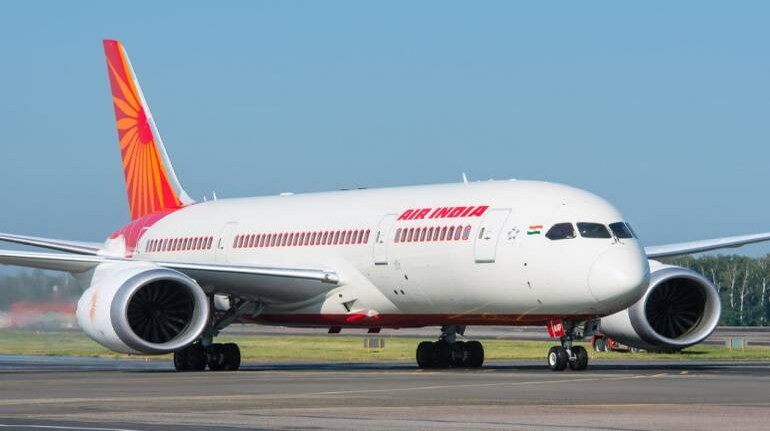
Air India has been in the news once again for the wrong reasons. The incident of an inebriated business class passenger urinating over a lady passenger on its New York-Delhi flight has stunned everyone because of the deplorable nature of the incident and the alleged inaction of Air India.
Even though the incident took place on November 26, 2022 and the aggrieved lady passenger had complained to chairman N Chandrasekhar the very next day, the action of filing a first information report (FIR) and constituting an internal committee was initiated only last week. Air India’s CEO & MD Campbell Wilson in a letter to employees on Thursday has said: “This week has, regrettably, been dominated by media headlines of which you are no doubt familiar. The repulsion felt by the affected passenger is totally understandable and we share her distress.”
If the airline had indeed rightly understood her repulsion, one is tempted to ask: why did it take so long to initiate action? Was it because the person involved happened to be a VIP that the airline was trying to protect? Why was the cabin crew deficient in helping the aggrieved passenger on board? Why was the offending passenger allowed to walk away on arrival? Any finally, why was the unruly passenger barred for only 30 days and not longer and across all airlines?
These were majorly the issues that engrossed the media debates of which I was also a part on many television news channels. While news anchors and other participants based their comments solely on the contents of the letter written by the aggrieved passenger, I, as a former head of the inflight services department of Air India and thus aware of the reporting system on all untoward incidents, felt that there was a need to hear the other side too while wholeheartedly concurring with others that the act of urinating by a male passenger on a lady passenger was both condemnable and unpardonable.
As Air India management wasn’t forthcoming with their version on other issues, I reached out to the crew to understand what exactly had transpired on the flight after the incident. The crew dismissed charges of being insensitive or failing to help – they had given the lady a fresh set of nightwear offered to first and business class passengers and sanitised her dress, shoes, bag and the soiled seat. One expects the crew to defend their own actions.
The management would do well to conduct a detailed probe to identify not only the weaknesses in their response in this particular incident but to refine the training curriculum suitably.
The crew had also followed the standard protocol of informing the Commander and all subsequent actions were as per his directions. On the failure to alert the security to nab the male passenger on arrival, it appears that there was some understanding having been reached between male and lady passengers. Whether the meeting was prodded by the crew, as alleged by the aggrieved passenger, needs to be verified by contacting other co-passengers.
While the aggrieved lady passenger’s initial demand was restricted to getting her dress, bag and shoes dry cleaned by the airline, the male passenger agreed and offered her monetary compensation, which she said she has returned. The crew might have erroneously assumed that the matter was closed and that no further action was needed. The entire incident was, however, duly reflected in the flight report that is mandatorily submitted after each flight, the crew averred.
Why was the passenger made to sit on the soiled seat after some drying and placing of a blanket, and not offered a vacant first class seat? One can clearly fault the crew on this count as giving a seat in first class would have possibly calmed the situation.
Playing By The Rules
Not having to report the incident to security agencies for apprehending the unruly passenger once a mutual agreement had been arrived at finds credence in the new standing instructions that the management is reviewing for the crew now - “reporting of all incidents to authorities on arrival, including in scenarios where the alleged victim does not wish such a report to be made”. In the letter to employees today, Mr Wilson reiterated: “Whilst the story is more complicated than has been reported, there are clearly some lessons we can and must learn. Most importantly is that, if an incident on our aircraft involves improper behaviour of such magnitude, we must report it to authorities at the earliest opportunity, even if we genuinely believe that the matter has been settled between the parties involved. The same applies in the case of passengers deemed to meet the threshold of “Unruly”.”
It is apparent from the other related instance on the Paris-Delhi flight, which happened a week later, that the crew knew the defined rule in such instances. It informed the ground agencies, the offending passenger was consequently detained, and questioned by Central Industrial Security Force (CISF) personnel. Only after the lady passenger showed her reluctance to file a complaint, was he allowed to go.
From a legal perspective, one can ask whether an agreement between two involved parties can absolve the airline from its mandated responsibilities. There might not be any takers for this argument. The AI management has thus done well to review its standing instruction to the crew. So has the regulatory agency, DGCA, which believes the airline lacked appreciation of regulatory obligations prescribed in the Aircraft Rules, 1937 and Civil Aviation Requirements on ‘handling unruly passengers’.
READ | Peeing on co-passenger, shouting at crew: 4 mid-air incidents involving Indians
The swift pace of action in the last week after inaction for four weeks or more included filing of FIR, setting up of an internal committee as mandated by law after seizing all related documents, holding the first hearing of the committee on January 4 and scheduling the second hearing on January 10 after giving additional time at the request of the male passenger demonstrates that the management isn’t attempting to protect anyone.
Delayed Action
It is difficult to fathom why would a management delay action on a complaint directed from the chairman’s office. The reasons for delay may not find many takers in the vitiated environment wherein the complainant can do no wrong and the airline can do nothing right. A senior airline functionary on conditions of anonymity said: we had been in touch with the aggrieved passengers and her representatives and it is grossly incorrect to allege that the airline has not reached her. The demand for compensation had been gradually increasing and a time had come when the negotiating management team said no more can be acceded and the action of filing FIR was initiated. This explains the delay.
The earlier this ugly incident is put to rest, the better for the airline, as it can ill afford media attention on wrong counts. The best illustration of the media not wanting to hear anything that is contrary to the demand for arrest is that while Air India management has barred the unruly passenger for 30 days as an interim measure pending receipt of the final report from the internal committee investigating the matter, the media has described the action as too little and too late. Full action, as provided in the law, will perhaps come once the enquiry is completed and the report submitted to DGCA.
Air India has a challenge now to not only be fair to all but also appear to be so, by placing information related to the main incident of urinating and on other consequent aspects of the complaint, in public if it wishes to redeem its image.
Jitender Bhargava is the former executive director of Air India & author of The Descent of Air India. Views are personal and do not represent the stand of this publication.
Discover the latest Business News, Sensex, and Nifty updates. Obtain Personal Finance insights, tax queries, and expert opinions on Moneycontrol or download the Moneycontrol App to stay updated!
Find the best of Al News in one place, specially curated for you every weekend.
Stay on top of the latest tech trends and biggest startup news.




