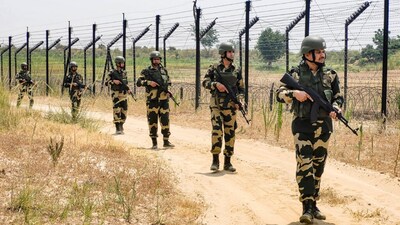
Operation Sindoor: Why it is different from earlier strikes against Pakistan
The primary message is that there is no safe location in Pakistan. The International Border can no longer be used as a shield for terror infrastructure.

How NSE’s algo norms affect retail traders
The NSE has unveiled long-anticipated standards for retail algorithmic trading, aiming to balance accessibility with regulatory compliance.
Trade wars and global economic uncertainty
Global economic uncertainties from trade tensions, geopolitical conflicts, and volatile oil prices are straining credit markets. This article talks about the impact on credit markets in India
Is Yes Bank ready for a big-league backer?
The short term potential return for putting capital into the bank isn’t lucrative.
Data Story: What’s driving FPIs back to India? A solid economic signal
As major global economies struggle with sluggish growth and the effects of Trump’s tariffs, India has emerged as a rare bright spot in the April 2025 PMI data
Chart of the Day | Banks’ CD ratio is again back to below 80%. What does it tell us?
Caution among banks and RBI cues have played out to bring down CD ratio
India wins a major trade trophy with the UK deal
The conclusion of the India-UK FTA is significant as world trade is going through an uncertain phase
Kaleshwaram’s ugly reality drowns Telangana’s dream
The Kaleshwaram Project was envisaged as a multi-purpose and multi-stage project to lift water from the Godavari River and take it across 13 districts in Telangana. It was to symbolize the state’s ability to harness engineering potential by lifting water from a height of 100 meters above sea level to 618 meters at the highest elevation point. Today, the project is in a mess, with Telangana racking up a huge debt on its account and a political slugfest underway. The takeaway: Don’t let politicians play the role of engineers
Sardar Patel’s vision could have spurred faster growth than Nehruvian model
Sanghnomics: Had Sardar Patel led India, economic policies may have focused on production, fiscal discipline, and minimal state control, avoiding Nehruvian socialism. This could have accelerated India's transition to an open economy by two decades
China’s diplomatic charm offensive
Leaders are touring the world both to push back against US influence and also to shore up its export markets as its trade surplus rises
Delhi govt asks hotels, clubs restaurants having excise license to get police clearance
There around 900 hotels, clubs and restaurants in different parts of the city that serve liquor to their customers.
India's Natural Gas Challenge: Escaping the vicious price-demand loop
India’s natural gas push shows strong infrastructure growth, but demand lags due to pricing, limited uptake, and policy gaps. Success depends on aligning supply with affordability, accessibility, and demand-driven strategies to avoid underutilised assets
India’s capital is coming home & and it’s not stopping at the Sensex
In 2025, domestic institutional investors surpassed foreign ones in NSE-listed firms, reflecting rising Indian investor confidence, deeper market participation, and a transformative shift towards financial self-reliance in both public and private capital markets
How to determine if a rally will sustain
Follow the money and disregard the noise
US-Ukraine critical mineral deal rests on heroic assumptions
US involvement in Ukraine’s critical mineral sector may not have a compelling economic rationale, but it justifies further US involvement in Ukraine and the post-war reconstruction of the country
Chart of the Day: An unusually slow beginning to summer 2025 for power utilities
Electricity production declined sequentially in April for the first time since the COVID years
How do you add punch to IPRs to tackle the patent punch?
Increased R&D spending and other initiatives can help India project itself as a strong China-plus-one contender in trade talks
Is gold a safe haven?
Gold is not considered a productive asset as it does not generate cash flows but is still an excellent portfolio diversifier
Data Story: India beats global average in workplace engagement but falls short on life satisfaction
As AI and disruption shake up the workplace, Gallup’s 2025 State of the Global Workplace report finds morale and life satisfaction among workers under serious strain Manas Chakravarty
Why private sector banks couldn’t rake up a decent operating profit growth in Q4
Operating profit growth could elude private sector lenders for some more time
What the future holds for India's next stage of healthcare evolution
India's healthcare system faces a significant challenge: bridging the gap between world-class care and access for its growing middle class. To solve this, a unified, cashless, outcome-driven model with aligned stakeholders is essential for the future
The Art of Letting Go: Why deregulation is a mark of state maturity
A mature state is not defined by how much it regulates, but by how wisely it chooses when to regulate—and when to step back. India’s next leap in governance requires regulatory vigilance, institutional humility, and the courage to retire what no longer serves, the authors observe in this article
Greg Abel faces tricky task leading Berkshire Hathaway after Buffett
Handpicked successor inherits record cash pile — but will be scrutinised more than ‘Oracle of Omaha’
A practical alternative in Bhushan Steel insolvency case
Supreme Court found procedural flaws in the resolution and also concluded that the conduct of critical stakeholders was dubious. Given that the resolution had already been implemented and the company is running, the Court could have ordered parties it found guilty to pay compensation. Unravelling a done deal will have consequences that will ripple out across the economy
Will Trump’s gamble on Iran’s nukes pay off?
Trump’s tough stance on Iran could escalate Middle East tensions, strain U.S.-China ties, impact global oil trade, and reshape regional alliances while testing his diplomatic credibility