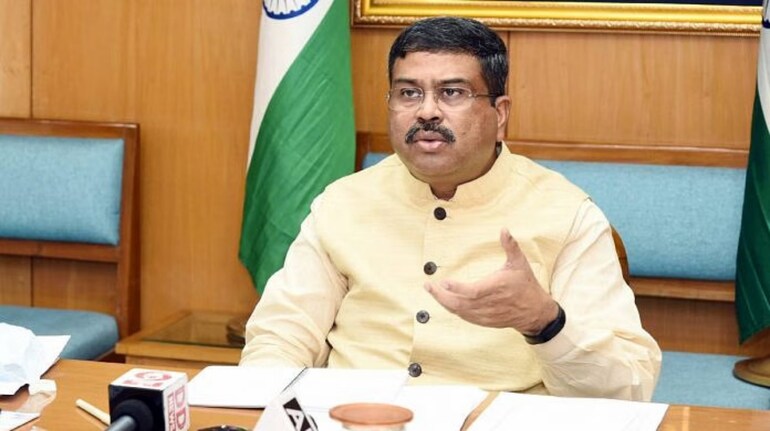

Union Education Minister Dharmendra Pradhan responded to the ongoing controversy surrounding the University Grants Commission (UGC)’s newly notified equity regulations, stating, “I assure everyone there will be no discrimination and no one can misuse the law.”
His remarks come amid intensifying protests and political reactions over the UGC’s latest move on caste-based discrimination in higher education institutions.
What do the new rules say?
On January 13, the UGC issued a new framework titled the Promotion of Equity in Higher Education Institutions Regulations, 2026. The rules mandate every university and college to establish Equal Opportunity Centres, Equity Committees, and round-the-clock grievance helplines.
These mechanisms are intended to address complaints of discrimination, particularly involving students from Scheduled Castes (SC), Scheduled Tribes (ST) and Other Backward Classes (OBC).
The regulations apply to all stakeholders within an institution -- students, faculty, non-teaching staff and administrators. Discrimination is defined broadly to include not only direct acts but also subtle or indirect practices that violate dignity or deny equal treatment.
Institutions must record complaints, conduct internal monitoring, and submit periodic reports. Non-compliance can invite serious consequences such as denial of approvals for academic programmes, loss of eligibility for UGC funding schemes, or even withdrawal of recognition.
Why the regulations?
The commission has pointed to a steep rise in complaints related to caste-based discrimination. UGC data shows a 118.4 percent increase in such cases over the last five years.
It has also highlighted continuing upper-caste dominance in many institutions and noted that participation of SC, ST and OBC groups remains below 15 per cent despite constitutionally mandated reservations.
The new regulations, according to the UGC, aim to close these gaps and reinforce institutional accountability.
What is the opposition to the rules?
Opposition to the rules has largely come from sections of general category students and faculty.
Critics argue that the framework implicitly treats general category students as likely offenders and does not provide adequate safeguards against false or malicious complaints.
Although the regulations allow appeals to an Ombudsman within 30 days, they do not specify penalties for proven false complaints. Protesters say this creates an uneven system in which “the burden of proof will now be entirely shifted on to the accused”.
There are also objections to the composition of Equity Committees, which critics claim will include only representatives from reserved categories. This, they argue, amounts to “reverse bias”.
Another concern relates to institutional autonomy: the head of an institution both constitutes the Equity Committee and acts on its recommendations, raising questions about impartiality.
One social media post warning about the impact of the rules said, “General category will be isolated. They will fear talking to other communities. And that will again be branded as Casteism.”
Political reactions
The controversy has spilled into politics. Several BJP-affiliated leaders and office-bearers in Uttar Pradesh resigned from their posts, calling the regulations discriminatory.
Devendra Pratap Singh, a member of the Uttar Pradesh Legislative Council, cautioned that the policy could “fracture social harmony and intensify caste conflict”.
BJP MP Nishikant Dubey attempted to counter these claims on X, writing, “Rest assured, the UGC’s rule will apply equally to Scheduled Castes, Scheduled Tribes, Backward Classes, as well as the general category.” He also posted, “Modi hai toh mumkin hai. All misconceptions regarding the UGC notification will be cleared.”
Public figures including Anand Ranganathan and Mohandas Pai have criticised the rules, describing them as one-sided and “draconian”, and urging their withdrawal.
Students protest
Around 100 students from colleges across Delhi gathered outside the UGC headquarters to demand a rollback. “The new regulations are draconian in nature. The definition of victim is already predetermined. The victim can be anyone on campus,” said Alokit Tripathi, a PhD student from Delhi University.
Tripathi added that UGC officials assured protesters that they would consider appointing one member from the general community in the Equity Squad and that “the identity of the accuser will not be kept private in order to discourage false complaints”.
Students also warned that Equity Squads would feel like “living under constant surveillance inside the campus”.
Left-back student group welcomes inclusion of OBCs
Left-backed student group All India Students’ Association welcomed the inclusion of OBCs but flagged vague definitions and low representation of SC, ST, OBC, and women in committees.
"However, representation of SC, ST, OBC and women in the Equity Committee, both among faculties and students, remains low, vague and inadequately defined. Further, the regulations define discrimination in broad and abstract terms without enumerating concrete acts or instances of discrimination," the statement read.
As debates, protests, and a Supreme Court Public Interest Litigation (PIL) seeking a review or stay on the implementation of the regulations continue, the Ministry of Education has said it is working to clarify “misconceptions” around the regulations, even as campuses across the country remain divided over their potential impact.
(With inputs from agencies)
Discover the latest Business News, Sensex, and Nifty updates. Obtain Personal Finance insights, tax queries, and expert opinions on Moneycontrol or download the Moneycontrol App to stay updated!
Find the best of Al News in one place, specially curated for you every weekend.
Stay on top of the latest tech trends and biggest startup news.