
If there were two municipal corporations after the Brihanmumbai Municipal Corporation (BMC) that was keenly watched as trends started to solidify in the ongoing Maharashtra civic elections, it was the two civic bodies of Pune and Pimpri Chinchwad.
Right from the lead-up to the polls, when NCP, although a member of the ruling Mahayuti, and NCP (SP), a constituent of the opposition Maha Vikas Aghadi, joined hands for the January 15 elections to election campaign, which was marked by allegations and counter-allegations, from both sides (NCP-BJP), the two civic bodies were not only believed to throw up a more competitive fight but also the outcome weighed heavily by strong political underpinnings.
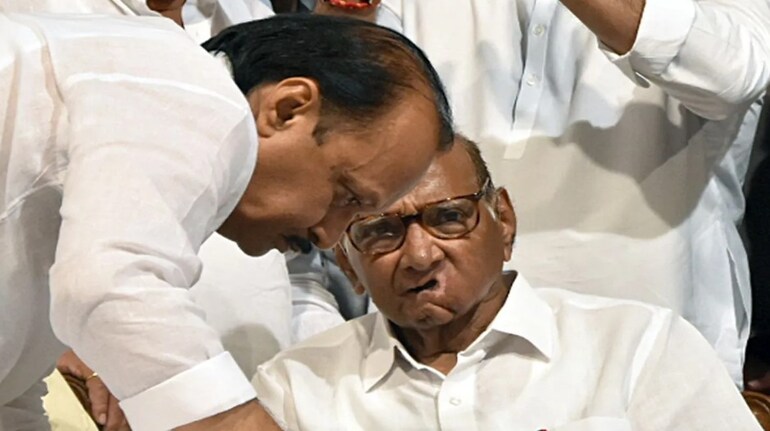
However, according to the latest readings (tally upto 6 pm), the BJP is leading in 80 wards and Ajit Pawar's NCP is leading in 6 wards in Pune Municipal Corporation (PMC) polls. Shockingly, Sharad Pawar's NCP is only leading in 3 wards in the all important Pune civic body.
In Pimpri Chinchwad, the saffron party is leading in over 80 wards and Ajit Pawar's NCP is leading in 37 wards. Sharad Pawar's NCP has failed to open its tally until the latest reading ( 6 pm).
It is worth mentioning that the BJP had single-handedly held power in the previous five-year terms from 2017 to 2022 in Pune and PCMC civic bodies, after which the Administrator had control of the civic body due to a delay in civic polls after it was put on hold by the Supreme Court on the reservation issue.
Why Pawars failed to deliver
Despite tactical effort between the two NCP factions led by Sharad Pawar and Ajit Pawar, the electorate did not respond with the kind of consolidation the leadership had hoped for. The NCP factions, even when fighting on broadly aligned lines, failed to convert their traditional pockets of influence into a citywide momentum. Pune's voter profile has changed significantly over the past decade, with middle-class, first-time voters and apartment-centric societies responding more to governance, infrastructure, and national-level political narratives than to legacy local leadership.
Analysts opine that a key reason behind the setback is the incomplete nature of their alliance. While there was seat coordination and an attempt at joint campaigning, this was never showcased as a full political reunion. On the ground, workers remained divided, loyalties were confused, and voters were unsure whether this was a genuine reconciliation or merely a temporary adjustment to stop the BJP. That ambiguity diluted the impact of the alliance.
The setback in Pimpri-Chinchwad
The Pimpri-Chinchwad municipal corporation, considered as one of the richest after the Brihanmumbai Municipal Corporation (BMC), had been held by Sharad Pawar's undivided NCP since 2017. However, the Pawars have lost this stronghold, despite their aggressive campaigning.
Pimpri-Chinchwad was expected to be different. The result is particularly significant because Pimpri-Chinchwad was seen as the testing turf for whether Ajit Pawar's personal clout could still significantly shape urban verdicts. The strong leads suggest that charisma alone is no longer sufficient without strong organisational unity and a clear political narrative.
BJP's superior booth-level management
At the same time, the saffron party entered both elections with superior booth-level management, a clearer message, and a sustained urban presence built over years. In contrast, the NCP's effort appeared reactive, stitched together close to the polls, and overly dependent on legacy goodwill rather than future-oriented promises.
Discover the latest Business News, Sensex, and Nifty updates. Obtain Personal Finance insights, tax queries, and expert opinions on Moneycontrol or download the Moneycontrol App to stay updated!
Find the best of Al News in one place, specially curated for you every weekend.
Stay on top of the latest tech trends and biggest startup news.