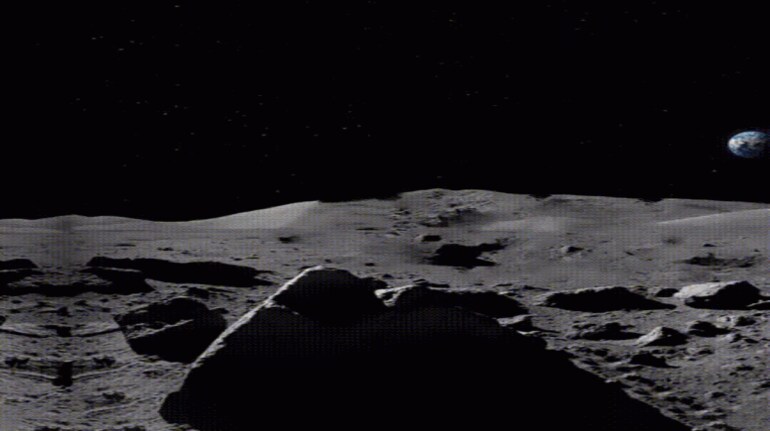
The Indian Space Research Organisation (ISRO) on September 22 said it has made efforts to establish communication with its lunar mission Chandrayaan-3's lander Vikram and rover Pragyan to ascertain their 'wake-up condition' after they had been put into sleep mode early this month -- but no signals have been received from them as of now.
ISRO is trying to establish connection with the Chandrayaan-3 mission's Vikram lander and Pragyan rover today as dawn breaks out on the Moon.
The lander and the rover were put to 'sleep' earlier this month to ensure they can continue their experiments. If Vikram and Pragyan wake up in full working order then they hold the promise of extending their mission for another 14 Earth days. This will give ISRO an opportunity to gather further insights into the lunar landscape.
In a post on X (formally Twitter) on September 22 evening, the space agency said efforts have been made to establish communication with the Vikram lander and Pragyan rover to ascertain their wake-up condition. As of now, no signals have been received from them. Efforts to establish contact will continue.
Chandrayaan-3 Mission: Efforts have been made to establish communication with the Vikram lander and Pragyan rover to ascertain their wake-up condition.As of now, no signals have been received from them. Efforts to establish contact will continue. — ISRO (@isro) September 22, 2023
Meanwhile, Former ISRO chairman K Sivan had earlier said, "We have to wait and see. It has undergone a lunar night. Now the lunar day starts. So, now they will try to wake up. If all the systems are functioning, it will be alright... This is not the end, newer sciences will come. Even now the Chandrayaan-1's data has brought in a lot of discoveries. So, I hope that a lot of new things will come. Scientists will keep trying. So, this is not the end of the story..."
On September 2, the space agency said that the Pragyan rover had “completed its assignments” on the Moon’s surface and had been “safely parked and set into sleep mode”. Both the lander and the rover have been in complete darkness since September 4 when sunset occurred at the Shiv Shakti point. Once the sun sets on the moon after the completion of one lunar day, temperatures on the Moon could plunge below minus 200°C.
Chandrayaan-3 successfully landed on the south pole of the moon on August 23. Since then, both Pragyan and Vikram have sent a repository of data to ISRO, including the detection of sulphur and other elements, some of which has been made public by the space agency.
“The Chandrayaan-3 landed successfully and it worked for almost 14 days. It was designed to work for 14 days (on the moon). Its life period was only 14 days because the moon's temperature falls down to (-) 250 degrees during the (lunar) nighttime. So, it worked during the sun hours or daytime and during that it had already given all the data (it was supposed to)," Bhubneshwar-based space scientist Suvendu Patnayak told ANI.
Discover the latest Business News, Sensex, and Nifty updates. Obtain Personal Finance insights, tax queries, and expert opinions on Moneycontrol or download the Moneycontrol App to stay updated!
Find the best of Al News in one place, specially curated for you every weekend.
Stay on top of the latest tech trends and biggest startup news.