







2025 marked a turbulent period for India’s foreign policy, one with a series of jolts, keeping the external affairs ministry officials busy. From the return of Donald Trump to the White House, crippling US tariffs, instability across India’s neighbourhood, and enduring global conflicts – all these factors repeatedly challenged New Delhi’s assumptions.
The Trump factor
Donald Trump’s return to the White House in January proved to be the most disruptive event for India’s foreign policy in 2025. The US imposed punitive tariffs of up to 50 per cent on Indian goods due to trade imbalances and New Delhi’s continued purchase of discounted Russian oil, which Trump said funded the Russian war in Ukraine. The four-day conflict with Pakistan in May complicated the situation, with Trump seeking credit for the ceasefire on May 10 and India rejecting claims of third-party mediation. New restrictions on H-1B visas further strained remittances and technology ties.
Trump’s unpredictable approach – including repeating claims of mediating peace during Operation Sindoor, coupled with invitation to Pakistani leaders, and the approval of advanced technology and upgrades for Pakistan’s F-16 fighter planes added to the strain in ties. It also undermined India’s sustained campaign to isolate its neighbour over terrorism. However, towards the later part of the year, there were signs of improvement in strains with Trump and Modi publicly praising each other and reaching out to one another.
On the brink of war
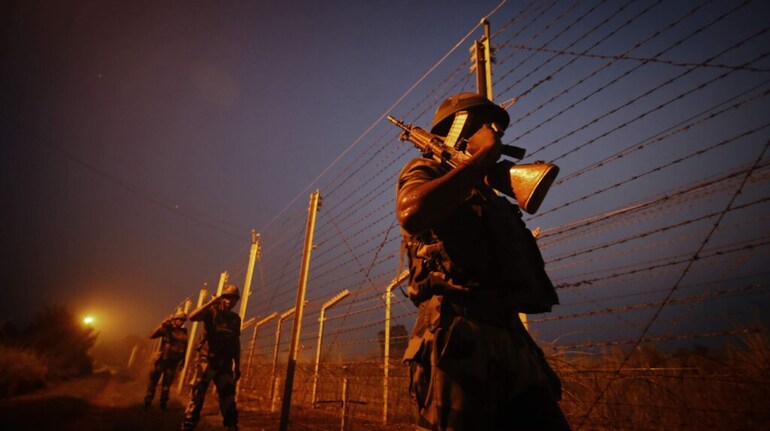
India and Pakistan ties plunged to their lowest in decades following the deadly terror attack in Jammu and Kashmir’s Pahalgam on April 22, which claimed 26 lives. This triggered Operation Sindoor, a retributory military response targeting Pakistan-based terror camps, followed by a brief yet tense four-night military confrontation in May.
A confrontation with Pakistan, youth-led protests toppling Nepal’s government, and a surge of anti-India violence in Bangladesh after the killing of youth leader and the ouster of former Prime Minister Sheikh Hasina last year raised uncomfortable questions about New Delhi’s standing in its neighbourhood.
The blow was deepened by the announcement of a Saudi–Pakistan Strategic Mutual Defence Pact declaring “any aggression against either country shall be considered an aggression against both”. Despite years of personal and diplomatic investment by Prime Minister Narendra Modi to draw Saudi Arabia closer to India, the pact underlined the enduring depth of Riyadh’s security ties with Islamabad-and the limits of India’s influence.
Relations with Bangladesh have deteriorated further as India accused the Yunus-led interim regime of failing to curb attacks on Hindus, a charge Dhaka rejected. The lynching of Dipu Chandra Das and two other Hindu people in December amid political unrest and anti-India protests has further sharpened tensions.
Meanwhile, India’s ties with Turkey and Azerbaijan worsened significantly due to their explicit support for Pakistan following India’s strikes.
Despite these challenges, India registered selective diplomatic gains. Ties with Canada improved under the new Prime Minister Mark Carney after a prolonged downturn linked to Khalistani activism, reflecting a cautious reset in engagement. New Delhi also pursued pragmatic outreach to the Taliban regime in Afghanistan, prioritising strategic presence, humanitarian access, and regional influence over formal recognition.
In the aftermath of Operation Sindoor, India launched an intensive diplomatic campaign, sending cross-party delegations abroad to justify its strikes, expose Pakistan’s alleged terror links, and build global consensus. The outreach emphasised India’s unity on national security, while also marking a shift toward a more assertive, proactive, and multi-aligned foreign policy.
India’s ties with Russia and China
In 2025, India pragmatically recalibrated its ties with China and Russia amid US tariff pressure and a more transactional global order. Relations with China saw a cautious thaw following the 2024 border disengagement, marked by leader-level engagement (PM Modi’s first visit to China in seven years for the SCO Summit), partial de-escalation along the LAC, and the resumption of travel and economic exchanges, even as strategic rivalry persisted.
Ties with Russia remained resilient despite Western sanctions, anchored in energy security, defence cooperation, and sustained political engagement. Russian President Vladimir Putin’s India visit, along with his conversation with PM Modi on the sidelines of the SCO Summit in China earlier, grabbed everyone’s attention.
The SCO summit in September turned into a showcase of Eurasian unity, as India, Russia, and China used the platform to project strength and signal defiance amid US tariff tactics. The public warmth between Prime Minister Narendra Modi, President Vladimir Putin, and President Xi Jinping, appeared well timed to send a strong message to the West.
Discover the latest Business News, Sensex, and Nifty updates. Obtain Personal Finance insights, tax queries, and expert opinions on Moneycontrol or download the Moneycontrol App to stay updated!
Find the best of Al News in one place, specially curated for you every weekend.
Stay on top of the latest tech trends and biggest startup news.





