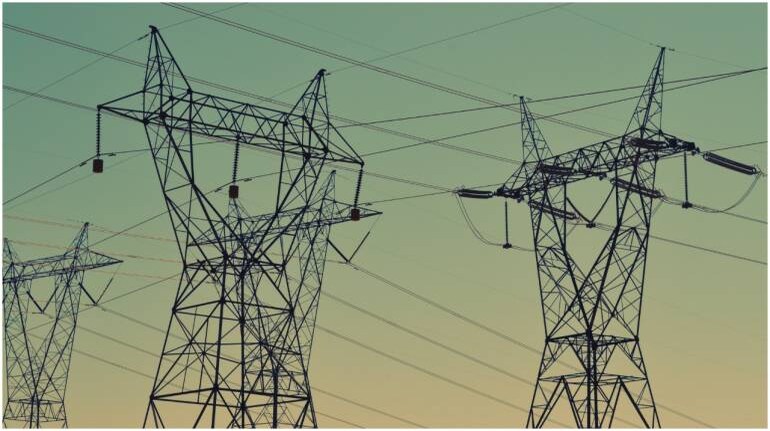
Indians are cranking up air conditioning as they still work from home, while lights come back on in offices and factories with an end to COVID curbs, upending power demand patterns amid a heatwave and the country's worst blackouts in years.
India has traditionally seen peak demand late in the evening when people head back home but that has shifted to mid-afternoon when temperatures are hottest, government data shows, driven by record residential daytime use, a pick up in industrial work, and more use of irrigation pumps to tap higher solar supply.
Also Read: Explainer-Why is India facing its worst power crisis in over six years?Relentless daytime demand in the world's third-biggest power market means utilities have been unable to ease output even over peak solar power supply periods, further straining grids already overwhelmed due to the heatwave baking swathes of South Asia.
For power producers in India, this has led to a larger-than-usual drawdown in coal inventories, leaving them under-stocked ahead of the hottest part of the year, with disruptions to coal supply lines due to rail car shortages adding to their woes.
The power crunch in India highlights potential challenges for other nations in the region such as Pakistan and Bangladesh with even smaller generation capacities.
Pakistan too has been facing severe outages with some rural areas getting as few as six hours of electricity per day.
"While the culture of work from home has gained more social acceptance, offices have also opened up across India, which has led to a combination of both higher domestic and commercial demand," said Prabhajit Kumar Sarkar, Managing Director and CEO at Power Exchange India Limited.
A senior official from the federal grid operator POSOCO agreed. "The hybrid work culture is definitely causing a major power demand peak in the afternoon," he said on condition of anonymity as he was not authorised to speak to media.
A hybrid work model, where people work some days in office and others remotely, is a popular choice among companies as they emerge from the COVID-19 pandemic.

Industry experts say the Indian government could consider steps such as variable tariffs to disincentivise daytime usage to ease the power crunch.
"Regulators could consider flattening the curve by incentivising power consumption during non-peak hours by reducing tariffs," said R.K. Verma, former chairman of India's Central Electricity Authority.
Hiking tariffs for peak hours is another option, he added.
The federal power ministry did not respond to a Reuters email seeking comment on this.
Analysts and experts cautioned that grids would remain under pressure for years, with midday peak demand adding to persistent high use during the night when solar power supplies drop off.
RELENTLESS POWER DEMANDIndia's total power output in the first four months of 2022 rose by an average of 6.1 percent from a year earlier and by 24.3 percent from the COVID-hit levels of 2020, POSOCO data shows.
In April, as the heatwave kicked in, average power production spiked 11.9 percent versus 2021 and 56.8 percent from 2020.
Average power use over 1445-1530 hours in the afternoon surged 15.5 percent from a year ago, versus an 11.5 percent rise for the full month, POSOCO data shows.
On April 29, when India saw some of its worst blackouts in years, its electricity supply rose to 207.1 gigawatts (GW) in the afternoon, the highest since July 2021. But that still fell 4.7 percent short of demand, causing grid breakdowns.
There was no let up in power demand at night either, with supply averaging 180.3 GW over 2245-2300 hours in April, 8.5 percent more than a year ago, on heavy air-conditioner use.
"There is a definite likelihood of continued power cuts due to the current heat conditions," said Rajiv Agarwal, secretary general of the Indian Captive Power Producers Association.
India's electricity demand this year is expected to rise at the fastest pace in at least 38 years, officials say.

Such sustained demand rates have taken a toll on coal stocks at power plants, which have fallen to just enough for 8 days of use - the lowest in at least nine years for this time of the year - and 42 percent below India's target at end-April.
India's worst power crisis in over six years is partly attributable to the shortage of coal, which accounts for more than 75 percent of its electricity generation since 2015 on an average.
Amid a push for cleaner air, expansion of coal-fired plants has lagged, registering less than an 18 percent gain since 2015 and a mere 4 percent expansion in the past five years, data from the BP Statistical Review of World Energy shows.
This compares to a near doubling in renewable sources in the past five years.

New Delhi has already unveiled steps to alleviate the power crunch, including cancelling passenger train services to free up tracks for the movement of coal and invoking an emergency law to restart generation at idled import-dependent coal power plants.
But it may be years before India can break free from the risk of further grid breakdowns, industry analysts say.
"We need to focus on adding generation capacities which can supply during night hours, like nuclear, hydro or coal, which may take at least 3-5 years to come onstream," said Victor Vanya, director at power analytics firm EMA Solutions.
Discover the latest Business News, Sensex, and Nifty updates. Obtain Personal Finance insights, tax queries, and expert opinions on Moneycontrol or download the Moneycontrol App to stay updated!
Find the best of Al News in one place, specially curated for you every weekend.
Stay on top of the latest tech trends and biggest startup news.