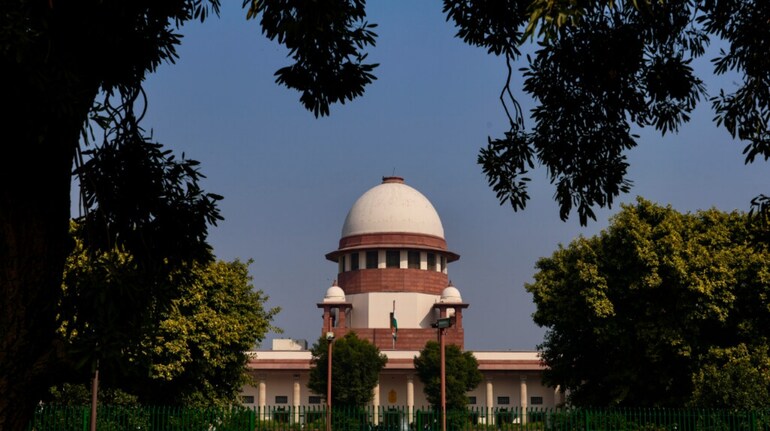

The Supreme Court on Monday put the brakes on a Rajasthan High Court directive ordering the removal of liquor shops located within 500 metres of national and State highways, even as judges acknowledged the deadly consequences of drunken driving.
Staying the High Court’s order for now, the top court said the issue raised genuine concerns but required careful judicial examination before such far-reaching directions could be enforced across the State.
High Court’s sweeping order put on hold
A Bench of the Supreme Court of India, comprising Justices Vikram Nath and Sandeep Mehta, stayed the operation of the Rajasthan High Court’s November 24, 2025 directions, which had mandated the removal or relocation of 1,102 liquor outlets within two months.
While granting interim relief, the Bench did not downplay the seriousness of the issue. “The concern shown here is absolutely genuine...the fact is that many deaths have indeed taken place. Some decision or policy will have to be put in place to save lives,” the court observed.
The appeal was filed by Ram Swaroop Yadav, who argued that the High Court had issued statewide directions without hearing affected stakeholders. He contended that binding precedents allowing liquor vends within municipal limits had been ignored.
Senior advocate Mukul Rohatgi, appearing for the petitioner, said the High Court had exceeded its remit. “The judge has passed an order for the entire State without hearing anybody. The State is supporting me,” he told the Bench, adding that the matter before the High Court arose from a dispute concerning a single village in Sujangarh.
State flags ‘practical difficulties’ of enforcement
Appearing for the Rajasthan government, Solicitor General Tushar Mehta highlighted what he described as serious logistical hurdles in enforcing a blanket 500-metre ban.
He pointed out that several towns and cities in Rajasthan are situated directly along highways, meaning strict implementation would effectively wipe out liquor vends from large urban stretches.
He cited examples of cities such as Chandigarh, which lie entirely along highways, to argue that such restrictions could lead to unintended consequences.
Taking note of these submissions, the Bench issued notice on the appeal and stayed the High Court’s directions until further orders, while clarifying that public safety concerns linked to alcohol consumption and road accidents remained central to the court’s consideration.
Justice Mehta also raised the issue of indirect promotions along highways. “They put up advertisements saying that liquor is available 500 metres away,” he remarked.
The Solicitor General echoed this, saying that where direct hoardings are barred, advertisers resort to subtle signals. “Indian ingenuity no one has seen. There is a rule in some states that says one will not advertise with hoardings on highways that there is a liquor vendor nearby. Now the only hoarding is an arrow. Those who know, know what the arrow is for (sic),” he said.
‘Liquor-friendly corridors’
The Rajasthan High Court, in its ruling, had sharply criticised the State for converting highways into what it called “liquor-friendly corridors.”
A Division Bench of the Rajasthan High Court had ordered that no liquor shop within 500 metres of a national or State highway should continue operations, regardless of whether it fell within municipal limits or other local bodies.
The High Court relied on the Supreme Court’s 2016 judgment in State of Tamil Nadu v. K. Balu, which imposed a 500-metre buffer around highways.
However, the top court later clarified that licensed vends within municipal limits were exempt, leaving States discretion over local bodies.
Courtroom banter: 'Khuda tu rehta kaha hai aur...'
Monday’s hearing also saw moments of courtroom banter. Rohatgi referred to indirect branding, saying, “or you have shadow advertisement. Soda, water etc.”
When it was suggested such signs implied alcohol availability, Justice Mehta responded, “we don’t know that. At least I don’t.”
The Solicitor General then illustrated his point with a story: “there was a beggar. Mandir ke samne baitha koi 10 Paisa daalta, koi 25 paisa daalta, 10-15 rupay ki income hoti thi. Masjid ke saamne gaya same. Church ke saamne gaya same. Ultimately kisine kaha theke ke saamne jaa ke baith. Wahan jaa ke baitha, jo bhi theke se nikla 100 rupay diya. Usne kaha khuda tu rehta kaha hai aur pata kahan ka deta hai!”
(There was a beggar. He sat outside a temple. Someone would drop 10 paise, someone 25 paise, and he would earn about 10–15 rupees. He went and sat outside a mosque; it was the same. He went and sat outside a church; it was the same. Eventually, someone told him to go and sit outside a liquor shop. He went and sat there, and whoever came out of the shop gave him 100 rupees. Then he said, ‘God, where do you actually live, and where do you give directions from?)

Discover the latest Business News, Sensex, and Nifty updates. Obtain Personal Finance insights, tax queries, and expert opinions on Moneycontrol or download the Moneycontrol App to stay updated!
Find the best of Al News in one place, specially curated for you every weekend.
Stay on top of the latest tech trends and biggest startup news.