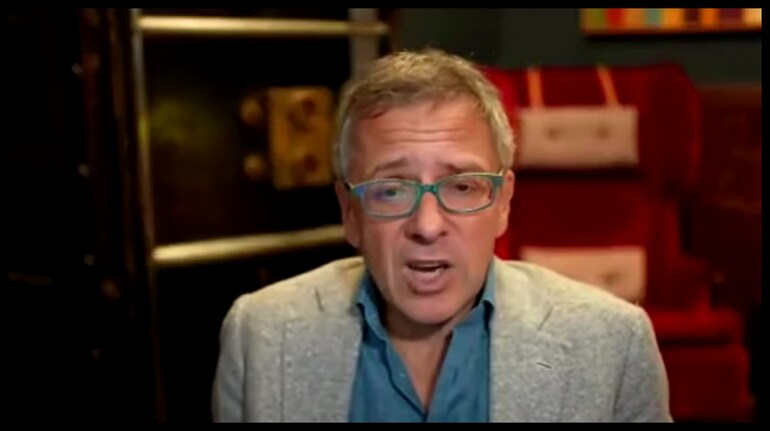
Eurasia Group president and geopolitical analyst Ian Bremmer has said that Prime Minister Narendra Modi and Russian President Vladimir Putin’s much-talked-about limousine ride during the Shanghai Cooperation Organization (SCO) meeting in China was a meaningful gesture that sent a direct message to Washington, which penalised India’s continued purchase of Russian oil through steep tariffs.
Bremmer, in conversation with ANI, recalled that PM Modi, unlike other SCO countries did not sign on the Belt and Road initiative, and also skipped Beijing's World War II commemoration and military parade.
"What Modi did do and I think it's meaningful was he got into Putin's limousine, just like Putin got into Trump's limousine in Anchorage a week or so before, and made it very clear -- as Trump was saying he would increase tariffs on India over oil purchases from Russia -- Modi's said, I'm gonna do whatever I want with Putin, and I'm not going to listen to you. That was a very direct message," Bremmer said.
He said that the move worked towards PM Modi’s advantage. “I think it was noticed, but it did not lead to negative consequences. In fact, it probably made Trump pay more attention to the need to engage with Modi in a friendlier way. On balance, I would say that worked. I would say that worked,” Bremmer stated.
He highlighted what he described as hypocrisy in Washington's stance. "The White House shows hypocrisy, because it was the Biden administration that basically told India to mop up the Russian oil to stabilize oil prices. And now you have a full 180 over here."
Explaining further, Bremmer said, "If I were going to make the hypocrisy argument, I wouldn't talk about oil. I would talk about the Americans buying Russian uranium, billions of Russian uranium and fertilizer. At the same time, the Americans are telling you don't buy oil, the Americans are buying Russian product and they're not suggesting that they're gonna stop. So that's the hypocrisy."
He added that oil purchases from Moscow were initially seen as necessary to avoid global recession. The oil situation was a trade-off, he said, adding that the United States was concerned that at the beginning of the war, the Europeans desperately needed energy. “They were cutting off the Russians. They were concerned that you would knock the world into a global recession. And there was very little time to engage in alternatives to what the Russians were. And now we're in an environment where Chinese demand is low. It's not growing very much. OPEC is producing and putting more out. The Americans are producing more. So there's less concern about taking some of the Russian oil off of the market. In that regard, there's more willingness on the part of Trump to squeeze," he said.
Modi’s meet with Putin came after Washington penalised India with steep tariffs -- 25 per cent on exports and an additional 25 per cent surcharge – over India’s continued purchase of Russian oil.
“After the proceedings at the SCO Summit venue, President Putin and I travelled together to the venue of our bilateral meeting. Conversations with him are always insightful,” Modi wrote on X.
Discover the latest Business News, Sensex, and Nifty updates. Obtain Personal Finance insights, tax queries, and expert opinions on Moneycontrol or download the Moneycontrol App to stay updated!
Find the best of Al News in one place, specially curated for you every weekend.
Stay on top of the latest tech trends and biggest startup news.