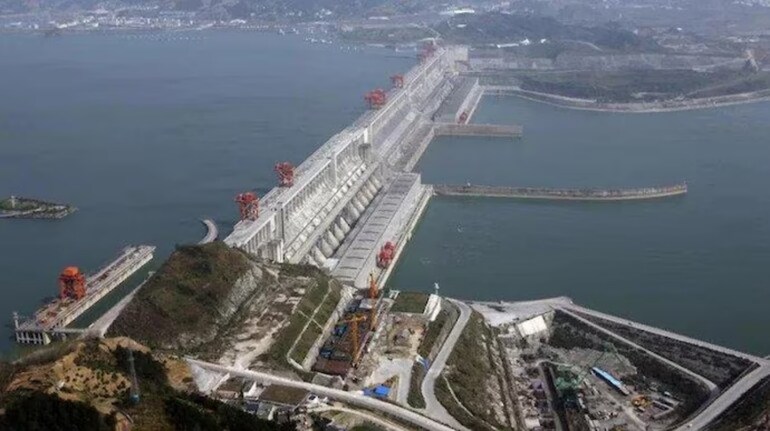
China recently approved the construction of the world's largest dam, stated to be the planet's biggest infra project costing $137 billion, on the Brahmaputra River in Tibet close to the Indian border.
Beijing has defended its plan, saying the project will not “negatively affect” lower riparian states and that safety issues have been addressed through decades of studies. However, India views it with apprehension for several critical reasons.
Water Control: The Brahmaputra River, known as Yarlung Zangbo in Tibet, is a lifeline for millions in India’s Northeastern states and Bangladesh. A dam of this magnitude would grant China significant control over the river’s water flow. This raises fears of potential water shortages during dry seasons and disruptions to agricultural activities in downstream countries. It could also enable Beijing to release large amounts of water flooding border areas in times of hostilities because of its size and scale.
Flooding risks: Experts have warned that the proposed dam could exacerbate the risk of flash floods, particularly during monsoon season. The sudden release of large volumes of water from the dam could overwhelm downstream river systems, leading to widespread devastation.
Environmental Impact: There would be major environmental effects from the building and operation of such a large dam. Local communities being uprooted, fragile ecosystems being upset, and possible harm to the region's biodiversity are among the major concerns.
Geopolitical Tensions: The already tense relationship between China and India is made more complicated by the Brahmaputra River issue, and the lack of openness and restricted information exchange surrounding the dam project only serves to increase anxiety and mistrust.
Historical Precedent: Downstream nations are also concerned about China's dam construction on other transboundary rivers, like the Mekong. Tensions have increased as a result of inadequate collaboration and consultation with impacted countries.
India too is building a dam over Brahmaputra in Arunachal Pradesh.
India and China established the Expert Level Mechanism (ELM) in 2006 to discuss various issues related to trans-border rivers under which China provides India with hydrological information on the Brahmaputra and Sutlej Rivers during the flood seasons.
Data sharing of trans-border rivers figured in the talks between India, China Special Representatives (SRs) for border questions which NSA Ajit Doval and Chinese Foreign Minister Wang Yi held in Beijing on December 18.
The SRs provided positive directions for cross-border cooperation and exchanges including data sharing on trans-border rivers, a statement by the Ministry of External Affairs said.
The Brahmaputra Dam presents enormous engineering challenges as the project site is located along a tectonic plate boundary where earthquakes occur.
The Tibetan plateau, regarded as the roof of the world, frequently experiences earthquakes as it is located over the tectonic plates.
(With agencies)Discover the latest Business News, Sensex, and Nifty updates. Obtain Personal Finance insights, tax queries, and expert opinions on Moneycontrol or download the Moneycontrol App to stay updated!
Find the best of Al News in one place, specially curated for you every weekend.
Stay on top of the latest tech trends and biggest startup news.