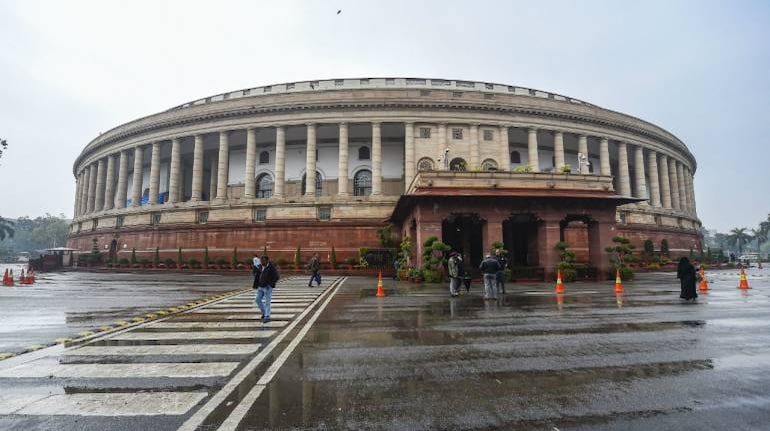
The Lok Sabha passed the Narcotic Drugs and Psychotropic Substances (Amendment) Bill, 2021 on December 13 amid protest from the Opposition. Finance Minister Nirmala Sitharaman, who introduced the bill, said that the amendment was to clarify a drafting error that existed in the legislation since its 2014 amendment. The Opposition, however, took strong objection to making the amendment retrospective and giving effect to it from May 1, 2014.
So what is the amendment?The bill was introduced to make a correction in the drafting of the law post its amendment in 2014, and introduces a change to Section 27A which deals with punishment for financing illicit traffic and harbouring offenders.
As the law stands today, Section 27A lays down rigorous punishment for a list of activities enumerated under Section 2 clause (viiia). But, after the amendment to the law in 2014, this list of activities no longer existed under clause (viiia) but was catalogued under clause (viiib). The wordings of Section 27A remained unchanged and do not reflect the re-cataloguing of the illicit activities. So, effectively Section 27A was rendered ineffective, or in Tripura High Court’s words – inoperable.
The amendment of 2021 just replaces the term "clause (viiia) of section 2" with the accurate corresponding provision "clause (viiib) of section 2", albeit retrospectively.
So what if the amendment is retrospective?The furore around the retrospectivity of the amendment stems from the fact that the NDPS Act falls under criminal law and jurisprudence.
No person can be punished for an act which was not defined as an offence at the time it was committed. Additionally, no person can be punished for the same act or offence more than once and has a constitutional guarantee against such double jeopardy. It is because of these principles that it is prohibited to make any criminal law effective retrospectively, and also why this amendment is facing protest.
The government too agrees on the underlying principle relating to retrospectivity but has argued that a clerical or drafting error does not make the cut for this scrutiny. Through the amendment, the government is not looking to introduce a substantive change but is merely looking to make amends to a clerical error so that the true intent of the law can be achieved, Sitharaman had argued.
What is the possible effect on the ground?Interestingly, if the amendment is passed and notified, the effect of the same on the pending cases could go either way. Pending NDPS cases registered under Section 27A after 2014 will end up raising the question of the validity of the amendment should the cases go in appeal before constitutional courts. How the question of law will be interpreted will depend on how the issue is treated by the court it is placed before.
The drafting irregularity in this law was brought to the notice of the Tripura High Court in a case for bail. In June this year, the high court directed the government to amend the law “without further delay” to do away with this error. While doing so, the court took the object and purpose of the law into consideration and noted that the oversight in drafting has raised the question of “how to overcome the difficulty and to operate a very important provision of the NDPS Act.”
The high court said that till the time an amendment to the law is made, clause (viiia) of Section 2 be read as clause (viiib). Very pertinently, the court expressed its concern that the protection against double jeopardy that the Constitution of India provides as a fundamental right under Article 20 might face “incongruity”.
With the amendment to the bill brought in after the high court’s direction, the retrospectivity of the change is very likely to face legal challenge.
How did the error make its way into the law?The Act in its original form aimed to curb and curtail illicit use and trafficking of drugs and imposes strict punishment for offences for use, possession, sale, transport, conveyance et al of several drugs. This also laid roadblocks in the way of access to drug substances for medical purposes and this roadblock was aimed to be lifted through the 2014 amendment. The law had to be amended to look beyond only curbing illicit use.
With this intent, when the law was amended in 2014 and among other things, a definition clause for “essential narcotic drug” was inserted under clause (viii) of Section 2 of the Act.
The subclauses under Section 2(viii) were shuffled and renumbered as a result with Section 2(viiia) now becoming a definition of “essential narcotic drug” and the definition of “illicit traffic” which is punishable under Section 27A now being renumbered as Section 2(viiib). No change was made to Section 27A in a clear case of oversight.
For over seven years, the law continued to operate with this anomaly until June this year when the Tripura High Court was made aware of the issue and set the ball in motion for the error to be changed.
Discover the latest Business News, Sensex, and Nifty updates. Obtain Personal Finance insights, tax queries, and expert opinions on Moneycontrol or download the Moneycontrol App to stay updated!
Find the best of Al News in one place, specially curated for you every weekend.
Stay on top of the latest tech trends and biggest startup news.