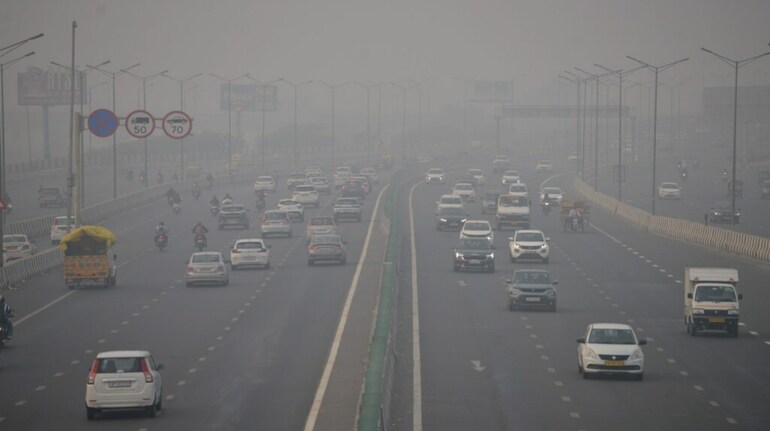
The Supreme Court on Monday declined to relax the stringent restrictions under Stage IV of GRAP despite rising concerns over its impact on daily life. However, the court allowed the Commission for Air Quality Management (CAQM) to consider limited relaxation for holding physical classes in schools and educational institutions in Delhi-NCR.
Earlier in November, the apex court questioned the Delhi government over its “delay” in implementing Stage IV measures and said that the CAQM’s subcommittee was mandated to act preemptively before air quality deteriorated to critical levels. The GRAP Stage IV came into effect in Delhi on November 18.
The matter was last addressed on November 23, when the SC appointed 13 young lawyers as court commissioners to inspect entry points into Delhi and assess the enforcement of GRAP 4 measures. These measures included a ban on the entry of heavy trucks and light commercial vehicles (LCVs) registered outside the state.
The commissioners reported back after inspecting 83 of the approximately 120 entry points, including 23 major ones. The panel found significant gaps in the implementation of GRAP 4 restrictions. According to their reports, monitoring teams and police personnel were present at most check posts only after the court's November 23 order, even though GRAP 4 had been in effect since November 18. The reports also noted the absence of barricades and transport enforcement teams to clarify exemptions for vehicles.
What is a Graded Response Action Plan, how does it combat air pollution and what’s allowed under its Stage IV? Let’s take a look.
What is GRAP?
The Graded Response Action Plan (GRAP) is a set of emergency protocols first introduced in 2017 to tackle air pollution in Delhi-NCR. GRAPs are designed to activate progressively stricter measures as air quality worsens. GRAP primarily categorises air quality into four stages:
Stage I: ‘Poor’ air quality (AQI: 201-300)
Stage II: ‘Very Poor’ air quality (AQI: 301-400)
Stage III: ‘Severe’ air quality (AQI: 401-450)
Stage IV: ‘Severe+’ air quality (AQI: 450+)
Measures under each stage are cumulative in nature, which means that restrictions from earlier stages remain in effect when a higher stage is in place.
Why was Stage IV activated and what restrictions does it impose?
Stage IV of GRAP was enforced on November 18 due to deteriorating air quality caused by stagnant weather conditions, heavy fog and limited wind movement. These conditions trapped pollutants, pushing the Air Quality Index (AQI) beyond the 450 mark.
Under GRAP Stage IV, entry of trucks in the city is prohibited except for those carrying essential goods or using clean fuels (LNG, CNG or BS-VI diesel); non-CNG or BS-VI diesel light commercial vehicles (LCVs) registered outside Delhi are barred unless delivering essential goods. Moreover, all construction and demolition activities, including public infrastructure projects, are halted, states may suspend physical classes for certain grades, encourage offices to operate with 50% staff on-site and implement additional measures like odd-even traffic schemes and closure of non-essential activities. Under this stage, citizens, especially children and the elderly, are advised to stay indoors as much as possible.
Major contributors to Delhi’s air pollution
While stubble burning often takes the spotlight during winter, vehicular emissions remain the leading cause of Delhi’s chronic air pollution, particularly in colder months. A report by the Centre for Science and Environment (CSE) reveals that over 50% of locally generated pollution in Delhi stems from transportation.
Traffic congestion is a major driver of nitrogen oxide (NOx) emissions, which constitute 81% of NOx levels in Delhi. The city faces an overwhelming daily influx of approximately 1.1 million vehicles, intensifying the pollution burden. Local sources contribute 30.34% to Delhi's pollution, with transportation alone accounting for over half of this share. In comparison, neighboring NCR districts add 34.97% to the pollution, while other regions contribute 27.94%. Despite widespread focus on stubble burning, it is responsible for only 8.19% of Delhi's overall pollution levels.
While GRAP Stage IV measures aim to curb pollution, their impact on daily life, especially for vulnerable populations, cannot be overlooked. Educational disruptions, halts to construction projects and restrictions on goods movement have raised concerns among residents and policymakers.
How can we contribute to curbing pollution?
While the air quality keeps reaching record highs, the problem of pollution needs helping hands from both authorities and the general public. In order to contribute towards curbing air pollution, the citizens should:
- Prioritize public transportation over personal vehicles and choose less congested routes even if they are slightly longer
- Ensure regular replacement of air filters in vehicles to reduce emissions
- Refrain from dust-generating construction activities
- Avoid open burning of solid waste and biomass to minimize air pollution
Discover the latest Business News, Sensex, and Nifty updates. Obtain Personal Finance insights, tax queries, and expert opinions on Moneycontrol or download the Moneycontrol App to stay updated!
Find the best of Al News in one place, specially curated for you every weekend.
Stay on top of the latest tech trends and biggest startup news.