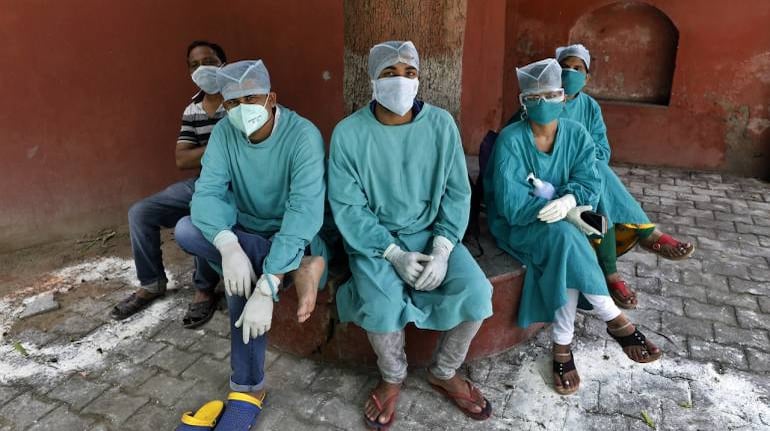
Even as COVID-19 cases across India and, indeed, the world continue to rise, the coronavirus "hotspots" where cases were being reported in large numbers about two to three months ago are now showing signs of improvement, according to reports.
One of the success stories being cited is that of India's national capital Delhi, where, according to experts, the situation had turned so grave the capital's deputy chief minister, Manish Sisodia, had predicted that the cases would surge up to 5.5 lakh by the end of July.
The end of July is here and currently, there are 130,606 cases in Delhi. Out of these, 114,875 have recovered or have been discharged from the hospitals.
Delhi's Chief Minister Arvind Kejriwal has said this turnaround in the national capital is being "discussed and lauded across India and abroad". This Delhi model of containing the virus involved coordination between the state and the central government, and that a second lockdown is not needed in Delhi is, according to Kejriwal, a "matter of satisfaction".
Follow our LIVE blog for the latest updates of the novel coronavirus pandemic
The other sprawling metropolis that has managed to improve the situation and get a grip on the virus is Mumbai. Both Delhi and Mumbai now have less than one percent of daily growth rate of cases; although, according to BMC officials, the rate of improvement in Delhi seems much sharper than Mumbai.
"The cases have remained more or less stagnant between 1,000 to 1,500 (in Mumbai), but the doubling rate is at 66 days and we are seeing definite improvement in terms of hospitalisation and general spread of the disease, both in slums as well as housing complexes. In early July, we focused on the wards showing a spike, and even they have now been brought under control," a senior official of the BMC told Moneycontrol.
The K-East ward, for instance, which has the highest number of cases in Mumbai at nearly 7,000, has been growing at a rate of 0.8 percent every week, according to BMC's data.
Another city with a similar story and trajectory— spike and then control— is Chennai, where the average daily cases from July 1 to 6 were 1,932. However, from July 7 to July 20, there has been a decline with the average of new positive cases at 1,217.
The difference between Delhi and Chennai, however, is that the latter had declared a second, stricter lockdown to control the spread while Delhi, reports suggested, had focused more on wide-spread testing. This has also revealed, officials say, newer ways of controlling the virus.
"Different cities have different mechanisms, and we cannot say what will absolutely work. For instance, Delhi and Chennai had the testing and lockdown approach while we had a more region-wise approach where we clamped down aggressively," the BMC official quoted above said.
Delhi's sero-prevalence study finds 23.48% people affected by COVID-19
In Chennai, the lockdown, which was the most intense among all the other cities, seems to have worked. The city's doubling time, too, has increased to around 50 days now, in parallel— albeit this time positive— with Mumbai and Delhi.
In other countries too, former hotspots have shown a declining trend. New York City, for instance, which was a world infection hotspot once, reported zero deaths due to COVID-19 on July 13, a first since the start of the pandemic. In April, the city had reported 731 virus-related deaths in a day.
Italy's hardest-hit region, Lombardy, an epicenter of the pandemic at the beginning, reported zero COVID-19 deaths on July 21 and just 33 fresh cases. This was an admirable improvement and a small breather for a region that has seen over 16,800 fatalities— half of Italy's over 35,000 total deaths.
However, experts have warned that while the peak in these cities and region's might have passed, letting down guard might give way to a second wave of infections, like it has in Iran. Other cities in India, like IT hubs Pune and Bengaluru, too, are witnessing a spike in infections.
Discover the latest Business News, Sensex, and Nifty updates. Obtain Personal Finance insights, tax queries, and expert opinions on Moneycontrol or download the Moneycontrol App to stay updated!
Find the best of Al News in one place, specially curated for you every weekend.
Stay on top of the latest tech trends and biggest startup news.