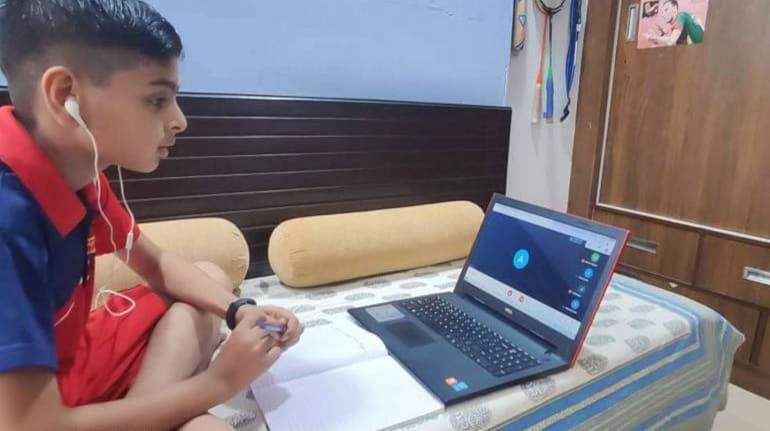
A survey among children in four southern states found that about 94 per cent of the respondents did not have access to smartphones or the internet for online education.
The study conducted by child rights body CRY in May-June covered 5,987 children in Karnataka, Tamil Nadu, Andhra Pradesh and Telangana. The information was collected by CRY's community organisers through telephonic interviews.
The objective of the study was to embark on a fact-finding mission on "internet accessibility of children" in the age group of 11-18 years.
"With schools closed and mobility restricted due to the COVID-19 pandemic, CRY wanted to envisage the ground reality of the potential for online education," it said.
The study found that most of the respondents from Karnataka owned smartphones with nine per cent of the 1,445 respondents answering in the affirmative, while only three per cent out of the 1,740 children surveyed in Tamil Nadu had smartphones.
"A further dipstick reveals that the annual income of 95 per cent of the families is less than Rs 1 lakh. Without substantial resources and with bare minimum affordability, having a smartphone is a luxury that more than two-thirds of these families can only hope for," the study said.
About 94 per cent of the children surveyed in the four states do not have access to smartphones or the internet for online education, the study found.
While six per cent of the children own smartphones, 29 per cent access their family members' phones, it said.
Also, 55 per cent of these children get access to smartphones only for three days a week or less, while 77 per cent of them get access to smartphones for less than two hours a day.
Karthik Narayanan, regional director at CRY South, warned that the study shows that children from the marginalised sections of the society are becoming more vulnerable than ever before.
"Education is the key to ensure a protective environment for children. Going to school not only sharpens a child's mind but buys crucial time in their lives from being drawn into child marriage or child labour. With conventional education becoming difficult and online education being accessible to only a few, the children from the marginalised sections are becoming more vulnerable than ever before," he said.
The nationwide lockdown induced by COVID-19 in March prompted schools and colleges to move to the virtual world for teaching and learning activities. But a weak internet penetration has turned e-education into a distant dream for many children in the rural areas.
According to official statistics, there are over 35 crore students in the country.
Follow our full coverage of the coronavirus pandemic here.Discover the latest Business News, Sensex, and Nifty updates. Obtain Personal Finance insights, tax queries, and expert opinions on Moneycontrol or download the Moneycontrol App to stay updated!
Find the best of Al News in one place, specially curated for you every weekend.
Stay on top of the latest tech trends and biggest startup news.