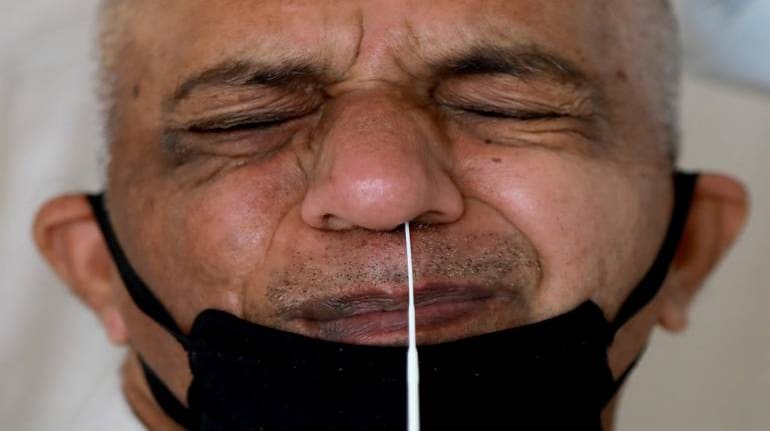
For every positive COVID-19 test more than 20 negative tests have been done, the ICMR has said, asserting there has been a 1,000-fold increase in the quantum of tests per day in the last two months.
A total of 25,12,388 samples had been tested by 9 am of May 20, and the testing capacity has been scaled up to 1 lakh tests per day, it said.
Starting with less than 100 COVID-19 tests per day just two months ago, a 1000-fold increase in just 60 days was made possible by dedicated teams from research institutions, medical colleges, testing laboratories, ministries, airlines and postal services working together, the Indian Council of Medical Research (ICMR) said in a statement.
In January, India had only one laboratory testing for COVID-19, at the Indian Council of Medical Research's National Institute of Virology, Pune. "Today there are 555 laboratories across the country, performing molecular tests for diagnosis of COVID-19 - an unparalleled achievement in the history of the Indian health system," the apex health research body said.
Faced with an unprecedented challenge, both in terms of technicalities and scale, Indian scientists had to innovate extensively, health workers had to train and learn on the job, administrators had to coordinate multiple actions round the clock amid the challenges of a nationwide lockdown.
In the absence of an effective treatment, prevention is the best strategy, which revolves around testing. In a diverse country like India, for inclusive and equitable access to testing, optimization of resources, based on the evolving epidemic was an essential part of sustainable scaling up.
"As the epidemic evolved, India's testing strategy underwent iterative calibration to keep pace with the changing epidemiology and extent of infection. This ensured that access to tests was assured for risk groups that needed it the most; wasteful, unnecessary testing was avoided; and testing infrastructure was optimally scaled up without taking away resources from other key public health interventions," the ICMR said.
This is evidenced by the fact that for every positive test more than 20 negative tests have been done throughout the course of the epidemic, it said.
"With its testing capabilities now matching the most advanced countries in the world, Indian institutions have risen to the occasion in an emergency situation. In the days ahead their contributions will be required even more as India continues to grapple with the clear and present danger still posed by COVID-19," it said.
Discover the latest Business News, Sensex, and Nifty updates. Obtain Personal Finance insights, tax queries, and expert opinions on Moneycontrol or download the Moneycontrol App to stay updated!
Find the best of Al News in one place, specially curated for you every weekend.
Stay on top of the latest tech trends and biggest startup news.