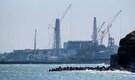
To build the clean energy sector the world needs, nuclear power advocates must sway public opinion their way. Every form of major infrastructure has to deal with public opinion, and in a democracy you don’t get to rule whether your opponents’ arguments are valid enough
On May 23, India met a peak power demand of 221.34 GW, which is the highest so far.
”India added 1.9 GW of solar capacity in the first quarter of calendar year 2023, a 48 per cent decrease year-over-year (YoY) compared to the 3.6 GW added in Q1 2022,” the report titled ’Q1 2023 India Solar Market Update’ said.
The EU's Deforestation Regulation disguises protectionism as environmental stewardship. The EU's aim to reduce imports and promote its agricultural exports under the guise of sustainability is concerning
That’s why Dr. Sultan Al Jaber is the right person to preside over the upcoming UN climate summit
The clean energy source is generating buzz as an alternative to fossil fuels. The FT calculates that delivering it requires $20tn of investment by 2050
A study by researchers at the University of Exeter says that 600 million Indians will be affected by climate change
The share of coal-fired power plants in meeting the demand was 71 percent.
In the wind energy sector, most of the manufacturers are actually exporting all their products. I'll do away with the LMM for wind energy if this continues, said Union minister for power and renewable energy RK Singh.
On February 15, the government issued an order stating that if any renewable energy project is not commissioned by the prescribed date of completion, then the developer will be blacklisted for a period of three to five years after asking him/her to show cause.
In a message for the World Day of Prayer for the Care of Creation, the Pope said a U.N. climate summit meeting in Dubai on Nov. 30-Dec.12 "must listen to science and institute a rapid and equitable transition to end the era of fossil fuel".
Total annual emissions touching 8 million tonnes of CO2 is equivalent to emissions generated by 1.615 million petrol cars driven for a year or the emissions from 20 gas-fired power plants in a year, the report suggested.
The company intends to spend Rs 85,000 crore in the next seven years under its recently unveiled ‘Strategy 2.0’ initiative, wherein it aims to increase its generation capacity to 20 GW and energy storage of 40 GWh/5GW by 2030.
While the EU will make disapproving noises about Indian refiners buying Russian oil and exporting the refined products to EU, it is unlikely to do anything more, simply because it benefits from the arrangement
The government also extended the scheme to offer a waiver of surcharge for electricity generated through offshore wind by seven years - from 2025 to 2032.
Humans are being pushed out of our temperature comfort zone
This comes more than a month after Malaysia's Petroliam Nasional Berhad (Petronas) withdrew its offer for a 20 percent stake in NTPC Green Energy Ltd.
A far cry from its earlier wariness for international climate conferences, India is taking the initiative, fuelled by the growing self-confidence of a country that’s seeing the fastest economic growth this year among G20 economies.
The Union Ministry of Finance has already warned that food prices will rise in 2023 due to extreme weather events and the looming El Nino affecting harvests.
From the Snow Leopard in Ladakh to the Nilgiri Tahr in the Western Ghats and the Malabar civet which hasn't been spotted in the last 50 years, a look at some of India's most endangered animal and plant species.
It’s human nature to latch on to the most easily available snippets of information.
Net zero is the target we need to fight climate change. But we have to consider the implications beyond the numbers.
On May 20, thousands of Goans will form a human prayer chain along the Mandovi (Mhadei) river to spread awareness about the protection of the river, the lifeline of Goa’s ecosystem,
Union Coal Secretary Amrit Lal Meena said that the Government of India has identified 30 mines where the coal mining has been over and coal companies have started a two-three-year exercise of closure.
Socially, politically and culturally, India is like the European Union, with different states having different priorities and concerns. Achieving consensus on a national ETS could be challenging, and there may be resistance from some sectors with players citing equity and potential unemployment scenarios