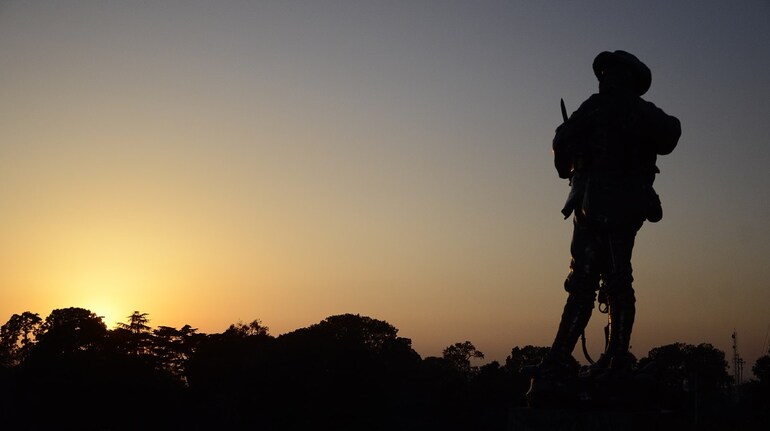
In August 1965, Indian soldiers climbed into the Pir Panjal and took the Hajipir Pass. It was not a place most Indians had heard of. It was not a city or a river crossing. It was a narrow mountain route, important mostly to people who studied maps closely.
Inside the Army, the capture mattered. Hajipir sat astride one of the infiltration routes into the Uri–Poonch sector. Taking it closed a door Pakistan had used for years.
A few months later, India handed it back.
That decision, taken in conference rooms far from the ridgelines where the fighting happened, still unsettles military professionals. Hajipir has since come to stand for a familiar Indian problem: the distance between what soldiers achieve and what diplomacy finally allows them to keep.
Hajipir’s value was not in height but in access. It linked Pakistan-occupied Kashmir to areas that had long been used to move men and supplies across the ceasefire line. In 1965, those routes were central to Pakistan’s planning. Operation Gibraltar depended on them. Pakistani official histories written later say so openly.
Indian intelligence saw the same thing from the other side. As long as Hajipir stayed with Pakistan, infiltration could resume quickly once fighting stopped. Capturing the pass was meant to change the post-war reality, not just the tactical situation.
The operation itself was hard, unglamorous work. Units assigned to Hajipir were moving through terrain that favoured the defender. Tracks were narrow. Forest cover was thick. Artillery support was limited. Supplies went up on men’s backs.
Movement, not firepower, decided the outcome.
By late August, Indian troops had pushed Pakistani defenders back and secured the pass. On the ground, the result was clear. A route was shut. Defensive depth improved. Within the Army, Hajipir was seen as a clean example of mountain warfare done right.
There was also an assumption, rarely said aloud but widely held, that the position would be kept. Ground taken at that cost usually was.
That assumption did not survive the war’s expansion.
By early September, fighting had spilled out of Kashmir into Punjab and Rajasthan. Tank battles near Lahore and Sialkot drew global attention. Major powers began pressing for a ceasefire. Escalation was the concern now, not which side held which hill.
The United Nations intervened. The guns fell silent. Diplomacy took over.
At Tashkent, the logic was blunt. India and Pakistan would return to positions held before August 5, 1965. Status quo ante. No rewards for aggression. No redrawing of maps.
Hajipir, captured after the cutoff date, fell on the wrong side of that line.
There is little sign that New Delhi pushed hard for an exception. The agreement was treated as a package. Prime Minister Lal Bahadur Shastri spoke of restraint and stability. The political objective was to end the war, not argue over passes most diplomats could not locate on a map.
Inside the Army, the reaction was quieter and colder.
Officers who had planned and led the assault saw a useful position surrendered without compensation. In later memoirs and conversations, Hajipir keeps returning — a battle won, a gain lost. Not in anger, but with a certain resignation.
The lesson stuck. Capturing ground is only half the task. The harder question is whether the political system is prepared to defend that gain once negotiations begin.
Did returning Hajipir change the course of Kashmir? Most people disagree. Some argue it would have made infiltration harder in the years that followed. Others point out that routes multiply and tactics adapt.
What is harder to dismiss is the psychological effect. The belief that international pressure could neutralise Indian battlefield success found reinforcement. For India, Hajipir became a reminder that even well-executed operations can be overtaken by diplomacy.
Hajipir never entered popular memory the way the 1965 tank battles did. But it has endured in professional military education. It appears in discussions about mountain warfare, and more pointedly, about civil–military alignment.
Regimental histories remember the soldiers who took the pass for their endurance and discipline. The decision to give it back is remembered less comfortably.
Six decades later, Hajipir lies quietly across the Line of Control. Its relevance is no longer tactical. It is instructive. Wars do not end where battles end. They end where political decisions are taken.
That, finally, is what Hajipir represents.
Discover the latest Business News, Sensex, and Nifty updates. Obtain Personal Finance insights, tax queries, and expert opinions on Moneycontrol or download the Moneycontrol App to stay updated!
Find the best of Al News in one place, specially curated for you every weekend.
Stay on top of the latest tech trends and biggest startup news.