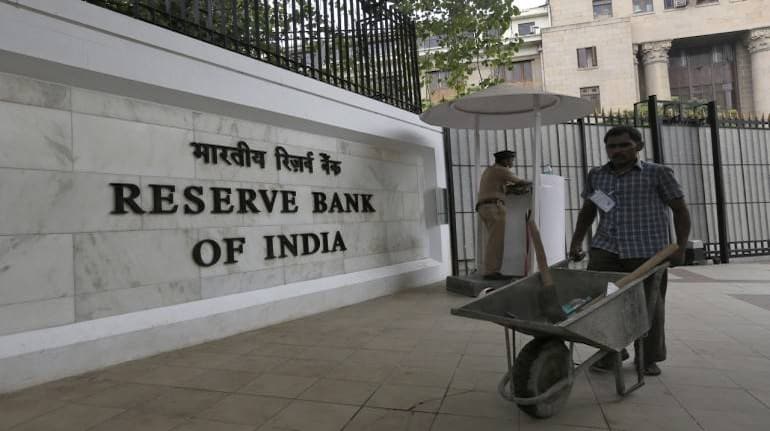
The Reserve Bank of India (RBI) has asked big non-banking finance companies (NBFCs) if they can lend to smaller NBFCs and microfinance institutions (MFIs) to ease liquidity constraints. RBI Governor Shaktikanta Das and deputy governors, in a meeting with NBFC industry associations on May 4, asked the representatives to come with suggestions on how a window can be opened for smaller NBFCs not directly depending on banks.
“The RBI has asked us to come back with a set of suggestions on whether larger NBFCs can lend to smaller ones to ease the liquidity problem,” said the head of an NBFC who attended the meeting.
To be sure, big NBFCs already lend to smaller ones but if the central bank offers a liquidity push for larger NBFCs for this purpose, transmission to smaller ones will be quicker in the current environment, the industry representatives told the RBI. NBFCs have also made a case for a separate liquidity window to the industry through NABARD and SIDBI by way of three-year loans as against the present scheme that offers loans up to one year to NBFCs and MFIs with minimum BBB- rating.
In the meeting the industry also informed the RBI about the reluctance of some banks to extend the moratorium facility to NBFCs. The RBI has noted that not all banks are extending the moratorium scheme to NBFCs. This has created a liquidity problem for NBFCs since these firms have extended the moratorium to their customers for all EMIs falling between March 1 and May 31.
“We do expect the RBI to come with a clarification soon on the issue of back-to-back moratorium to NBFCs from banks. This is because some banks want clarity from the regulator,” said the official quoted earlier.
Liquidity transmission a worry
The RBI is concerned about banks' reluctance to pass on the benefit of RBI schemes to small NBFCs and MFIs. Despite the measures the central bank has announced to make liquidity available to small companies including two rounds of targeted long term repo operations (TLTROs), banks have limited lending to AAA-rated big companies. This is because lending to small firms is risky. In a slowing economy, banks fear that high exposure to these firms will boomerang on them later. “The RBI said it is a concern that liquidity transmission is not happening. They have taken note of this and will do the needful,” said another industry official who attended the meeting.
The RBI, on March 27 and April 17, announced a series of measures to help the banking system with liquidity availability. These included a three-month moratorium on all term loans and liquidity measures worth Rs 3.74 lakh crore including the TLTROs and a Rs 50,000 refinance scheme through SIDBI and NABRAD. In the first TLTRO, the RBI infused Rs one lakh crore and through the second it plans to do another Rs 50,000 crore to begin with. While the first round was used by banks fully to lend to big firms, the RBI made rules stricter in the second round TLTRO 2.0 by asking banks to make sure at least half of the money went to small NBFCs and MFIs too. But in the first tranche of TLTRO 2.0, for an offered amount of Rs 25,000 crore, there were bids worth only Rs 12,850 crore. The RBI is concerned about the lack of participation by banks in taking the benefit of liquidity measures to the end beneficiaries.
Moratorium to get extended?
There is a possibility that the RBI may extend the moratorium for another quarter given that lockdown was extend till May 17 and companies will require time to get back on their feet, industry officials said. “The moratorium was announced when March was almost over. Hence we told the RBI that there should be relaxation for the month of June as well. There were some people asking to extend it even further considering the current environment,” said an official. The RBI has taken note of these points.

Discover the latest Business News, Sensex, and Nifty updates. Obtain Personal Finance insights, tax queries, and expert opinions on Moneycontrol or download the Moneycontrol App to stay updated!
Find the best of Al News in one place, specially curated for you every weekend.
Stay on top of the latest tech trends and biggest startup news.