On November 16, the Reserve Bank of India (RBI) asked banks and non-banking finance companies (NBFCs) to increase the risk weight for consumer credit citing a sharp growth in this loan segment in recent past.
There is no surprise in the action. In fact, a Moneycontrol Banking Central column on October 9 highlighted the central bank’s concerns regarding sharp growth in unsecured loans and yesterday the RBI cracked the whip.
What exactly the central bank did yesterday? The central bank asked banks and non-banks to increase risk weight and strengthen the credit standards while issuing such loans. These rules pertain to consumer loans including credit card loans and not asset backed loans such as housing, vehicle or gold loans. The risk weight has gone up by 25 per cent.
Also Read: Banks, NBFCs may raise rates after RBI’s action on consumer loans, experts say
What will this action do to banks and consumers? For banks, this will force them to allocate more capital to risky loans thereby increasing minimum capital ratios based on asset classification. In simple words, for consumer credit, banks will have to now set aside a higher amount of capital.
For consumers, this isn’t good news. Because when banks are forced to set aside more capital on certain loans, they tend to increase the rate of interest charged to the borrowers for such loans to make up the potential loss. Secondly, banks and non-banks will be more careful now while issuing such loans. Natually, lenders will put a break on the pace of issuance.
Also Read: Banks see sharp growth in unsecured loans even after RBI caution
That’s what exactly the RBI wants. The message to banks is clear: Go slow and be careful on risky loans so that banks don’t end up in another round of bad loan crisis tomorrow. Clearly, the regulator has learned the hard lessons from the past cycles. When economic recovery gets delayed or when a global crisis strikes, loans that aren’t backed by assets will go bust first. The regulator knows this.
And the numbers have been signaling a sharp growth of late. In the last two years, unsecured retail credit has spiked 23 percent as against an overall credit growth of 12-14 percent in the system, making it an "outlier" segment. Credit to the segment surged 30.8 percent by end-August this fiscal, as against 19.4 percent recorded in the comparable period last year. Credit card loans have outpaced others with an over 30 percent jump from 26.8 percent a year back, while education loans grew 20.2 percent from 11 percent last year, the RBI data shows.
In the earlier bad loan cycles, Indian banks have seen a sharp rise in unsecured loans during economic downturns when job losses and income losses hit the borrowers. In its Financial Stability Report released on June 28, the RBI had said that the share of large borrowers in gross advances of banks declined successively over the past three years, as retail loans grew faster than borrowings by corporates. The share of big borrowers declined from 51.1 percent in March 2020 to 46.4 percent in March 2023.
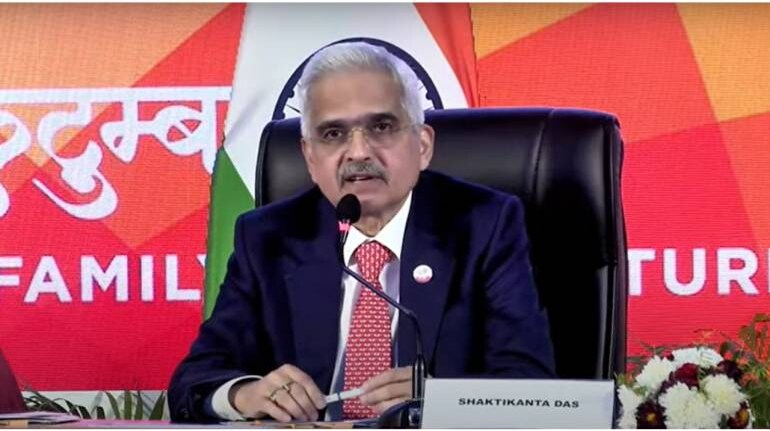
This is the reason why the RBI Governor warned about such loans during the October monetary policy presser. "We would expect, as the first layer of defence, the banks, NBFCs and fintechs, to take appropriate internal controls," Shaktikanta Das had said. Further, banks and NBFCs would be well advised to strengthen their internal surveillance mechanisms, address the build-up of risks, if any, and institute suitable safeguards in their own interest, Das added.
So, what happened yesterday—the RBI move on risk weights—was no surprise. The writing was on the wall.

Discover the latest Business News, Sensex, and Nifty updates. Obtain Personal Finance insights, tax queries, and expert opinions on Moneycontrol or download the Moneycontrol App to stay updated!
Find the best of Al News in one place, specially curated for you every weekend.
Stay on top of the latest tech trends and biggest startup news.