






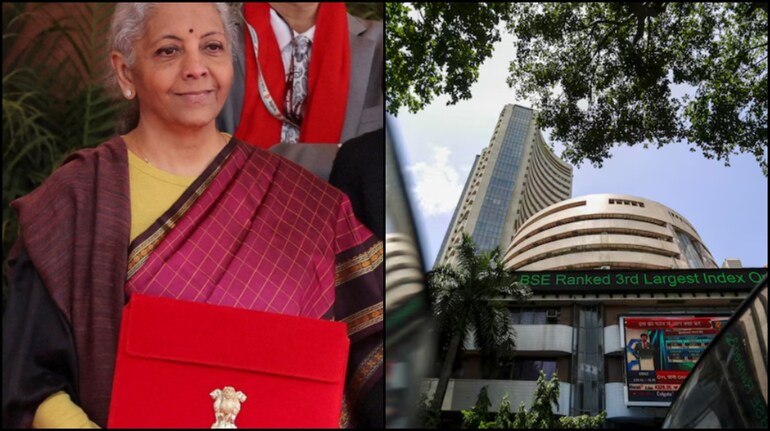

Even as Indian equity markets had their worst fall in six years after the Budget announcement on the 1st of February of increasing STT on futures from 0.02% to 0.05% and on option premiums from 0.1% to 0.15%, senior sources in finance ministry say that there were other factors bogging the markets besides the increase in STT and that the ministry responded to pleas of parents who approached the ministry with their concerns of youngsters losing money on account of quick trades.
The day of the presentation of Budget 2026-27, a Sunday trading session wiped out approximately Rs 9.4 lakh cr to Rs 11 lakh crore of investor wealth, one of the reasons being attributed for the fall was the increase in Securities Transaction Tax on Futures and Options.
Several have questioned the timing of the move, saying it couldn’t have been worse, since the hike comes at a time when the markets are battling uncertainties on several counts – a weakening rupee, FPIs exiting, uncertainty around the trade deal with the US but sources in finance ministry say that the fall of the markets on the first of February, which was on a Sunday, was because Sunday traditionally being a trading holiday had more short term trade activity and that the markets were betting on a cut in Long Term Capital Gains tax, the fall was driven more by the disappointment of a lack of cut in LTCG. “Seasoned market voices have told us this, we spoke to a few people from the markets after the budget,” said a senior source in the finance ministry.
“Markets is not the whipping boy of the government,” the source added. Another senior source added that the ministry had a representation from several parents whose children were indulging in short term trades and were losing money at alarming levels. “Moreover, the STT is only on Futures and Options,” the source reiterated.
A report by the Securities and Exchange Board of India showed that 91% of retail individual traders incurred net losses in the Futures and Options (F&O) segment during FY 2024-25. Aggregate losses for individual traders reached Rs 1.06 lakh crore in FY 25, a 41% increase from Rs 74,812 crore lost in FY 24. Over a four year period from FY 2021-22 to FY 2024-25, retail investors have collectively lost Rs 3 lakh crore in equity derivatives.
Futures and Options trading typically requires traders to bet on the future market direction to make quicker profits. However market players have questioned the efficacy of the move to curb F&O trades, saying that by increasing transaction costs, it only marginally may impact or could even drive investors to riskier, unregulated or alternate instruments.
On the increase impacting investor sentiment, a senior source added “ Markets is far away from the real economy.”
In a post shared earlier by the Income Tax Department, the government flagged the scale of derivatives activity, noting that the total volume of transactions in the futures and options segment is more than 500 times India’s gross domestic product, emphasising concerns over excessive speculation.


Discover the latest Business News, Sensex, and Nifty updates. Obtain Personal Finance insights, tax queries, and expert opinions on Moneycontrol or download the Moneycontrol App to stay updated!
Find the best of Al News in one place, specially curated for you every weekend.
Stay on top of the latest tech trends and biggest startup news.





