






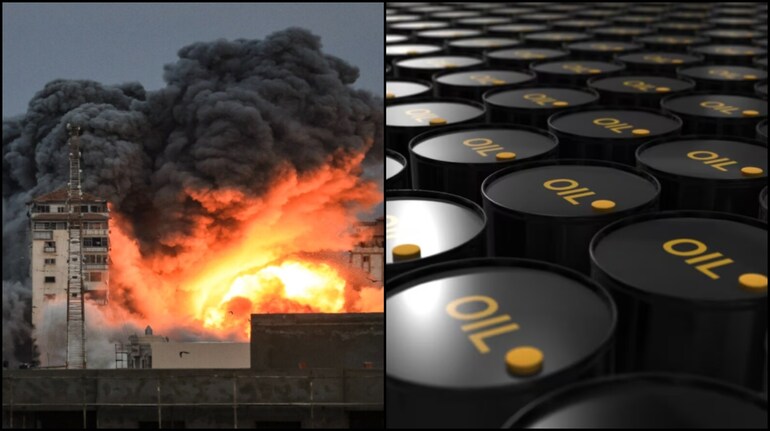
Oil prices soared on Monday, with West Texas Intermediate (WTI) jumping as much as 30.04% to $118.21 per barrel, while Brent crude climbed about 27.54% to $118.22, marking their highest levels since July 2022 as the expanding conflict involving the United States, Israel and Iran rattled global energy markets.
Earlier in the session, Brent crude futures rose as much as $18.35, or 19.8%, to $111.04 a barrel, before trading around $107.07, still up 15.5%. The sharp rally reflects growing fears of tighter supplies and prolonged disruptions to shipping through the Strait of Hormuz, one of the world’s most important oil transit chokepoints.
Since the conflict began, oil markets have seen dramatic gains. WTI has surged more than 75%, while Brent crude has climbed over 60%, highlighting the scale of the supply shock triggered by the war.
Meanwhile, in a major political development, Iran announced that Mojtaba Khamenei will succeed his father Ali Khamenei as the country’s supreme leader, signalling that hardliners remain firmly in control in Tehran a week into its confrontation with the United States and Israel.
The conflict is also beginning to disrupt energy production across the region. Attacks on oilfields were reported in southern Iraq and in the autonomous Kurdistan region, forcing a US-run oilfield to halt output. Meanwhile, the United Arab Emirates and Kuwait have begun reducing production.
Israel’s military said it targeted Iranian commanders in Beirut early Sunday, expanding the scope of its campaign into the Lebanese capital after several days of strikes that have reportedly killed nearly 400 people.
Tensions have escalated further as Israel’s military warned it could target any successor to Khamenei, while US President Donald Trump said the conflict may only end once Iran’s military forces and leadership are eliminated.
Even if the fighting ends quickly, analysts warn that damage to infrastructure, disrupted logistics and heightened risks to shipping could keep fuel prices elevated for weeks or months, affecting businesses and consumers worldwide.
Top oil exporter Saudi Arabia has increased shipments through the Red Sea, but shipping data shows the additional volumes are far from enough to offset the supply disruption caused by the crisis around the Strait of Hormuz.
(With inputs from Reuters and AFP)
Discover the latest Business News, Sensex, and Nifty updates. Obtain Personal Finance insights, tax queries, and expert opinions on Moneycontrol or download the Moneycontrol App to stay updated!
Find the best of Al News in one place, specially curated for you every weekend.
Stay on top of the latest tech trends and biggest startup news.









