




In the run-up to the 2024 general elections, Moneycontrol looks at key economic metrics that have traditionally influenced voter choices in India. The first in the series focusses on food prices, primarily of essential vegetables.
In India, food prices are known to sway election mandates. In the 1998 assembly polls in Delhi, BJP Chief Minister Sushma Swaraj’s loss was widely attributed to a surge in the cost of onions at the time.
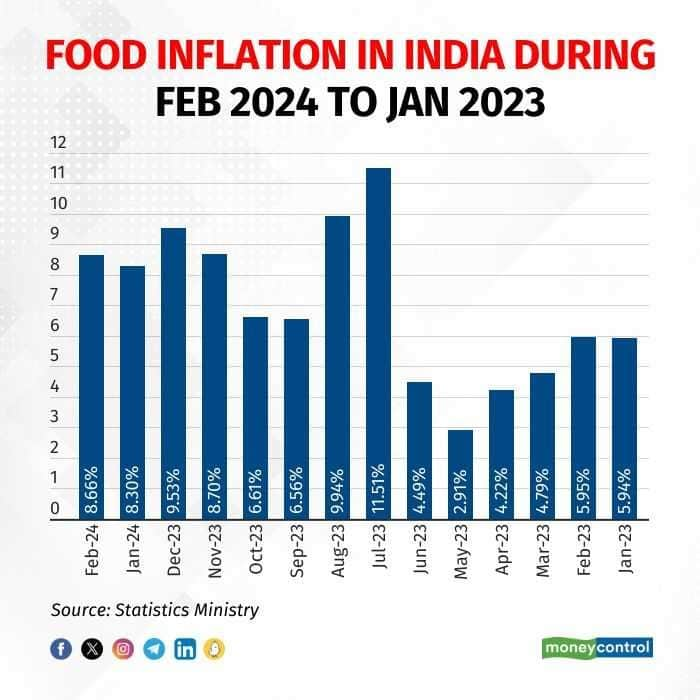
Ahead of this year's elections, India’s food inflation has hovered at around 7 percent on average from January 2023 to February 2024. Cereals, vegetables and pulses have primarily contributed to the price pressures.
Even though India's headline retail inflation rate was largely unchanged at 5.09 percent in February, food and beverage prices edged up 7.8 percent from 7.5 percent on-year.
Comparatively, inflation in neighbouring Pakistan came in at 23.1 percent in February from 28.3 percent a month ago, while in the US, it was 3.2 percent in the same period.
Thali cost
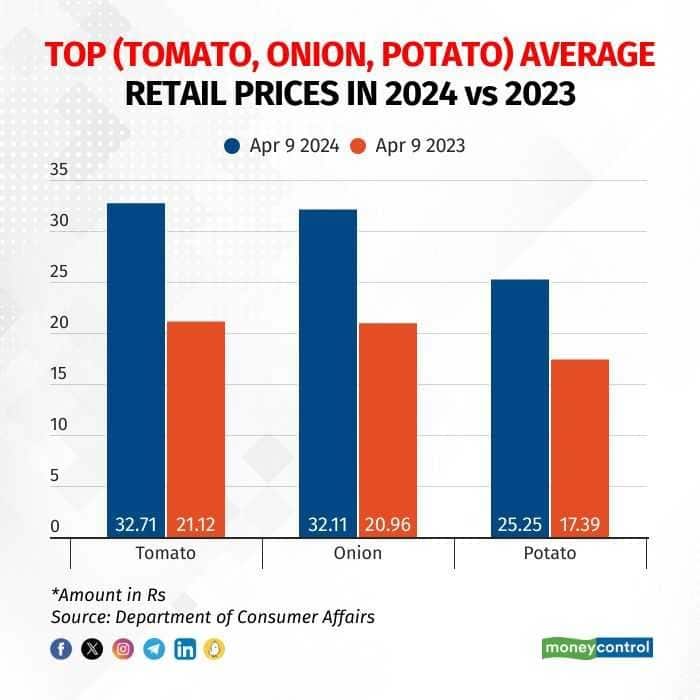
Among vegetables, TOP - tomato, onion and potato - are the three staples in India. Though the production of these vegetables usually exceeds their consumption, in the event of an adverse supply shock, their demand-supply balance is disturbed, leading to price increases.
Data from the Department of Consumer Affairs showed that average retail prices of tomato more than doubled on April 9, 2024, compared to the same day last year, while those of onions and potatoes rose 53.2 percent and 45.2 percent, respectively.
This led to the cost of a home-cooked vegetarian thali increasing by 7 percent during March, as per Crisil’s monthly indicator of food plate costs. An uptick in the prices of pulses, rice, onion, potato and tomato in March pushed up the cost of a vegetarian thali, which primarily comprises roti, vegetables (onions, tomatoes, and potatoes), rice, dal, curd and salad.
Since higher vegetable prices directly pinch the wallets of consumers, it can be quite a headache for the government that's trying to fight inflation.
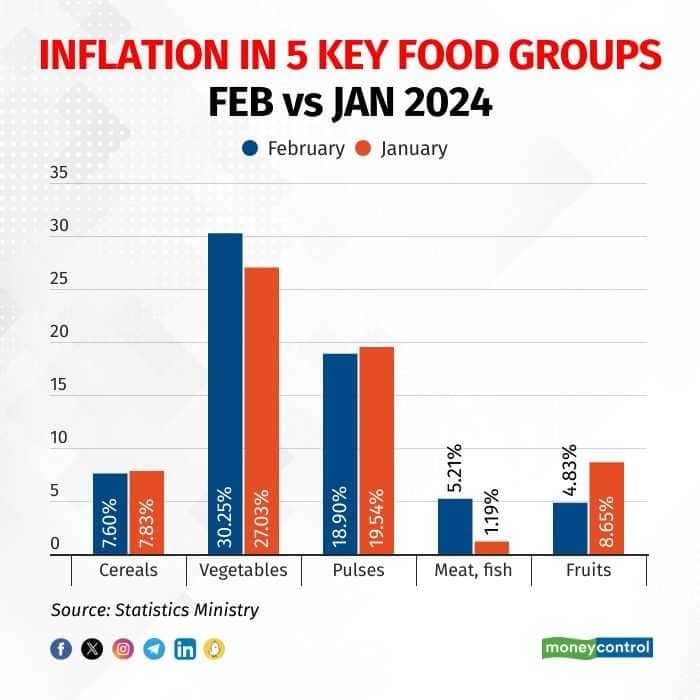
Vegetable prices rose 30.25 percent in February 2024 compared with a contraction of 11.61 percent in February 2023.
Beyond vegetables, the price dynamics of five key food groups are mixed. While cereals and pulses inflation eased slightly in February from a month earlier, the cost of meat and poultry rose 5.2 percent from a 1.2 percent in January.
Government interventions
To be sure, the BJP-led central government implemented a raft of measures to keep a lid on food prices - ranging from a ban on the export of onions and certain varieties of rice to offering subsidised tomatoes to consumers.
India’s headline retail inflation has largely been on a downward trend since September 2023, when it came in at 5.02 percent, dropping 181 basis points versus a month ago.
The Union government has consistently taken steps to limit cost pressures, including prohibiting the export of non-basmati white rice from July 20, 2023, to ensure sufficient stock in the domestic market.
Since July 2023, several measures have been rolled out to contain prices – from selling rice and wheat under the Open Market Sale Scheme, subsidising the retail cost of tomatoes, to the latest indefinite extension of the export ban on onions, which was announced last month.
Beyond this, the Centre ensured consumers are protected from price fluctuations through the ‘Bharat’ brand variants of wheat flour and pulses. Products such as Bharat Atta and Bharat Dal (chana dal), launched in the latter half of 2023, are sold by government agencies at fair and affordable prices.
India’s central bank has also kept its eye firmly on inflation. Despite lower Consumer Price Index numbers of late, the Reserve Bank of India has left interest rates unchanged, citing the need to bring inflation down to the mandated target of 4 percent.
While CPI inflation has stayed within the RBI’s tolerance range of 2 to 6 percent for the sixth consecutive month, it has spent 53 months in a row above the medium-term target of 4 percent.
On April 5, RBI Governor Shaktikanta Das raised the issue of considerable vulnerability in food inflation, adding that such price pressures have been interrupting the ongoing disinflation process, posing challenges for the final descent to the target.
In February, finance minister Nirmala Sitharaman said India’s retail inflation is now stable, adding that steps taken by the Centre have worked.
"Prices of essentials like atta, dal, onions and also rice have come down,” she added.
Discover the latest Business News, Sensex, and Nifty updates. Obtain Personal Finance insights, tax queries, and expert opinions on Moneycontrol or download the Moneycontrol App to stay updated!
Find the best of Al News in one place, specially curated for you every weekend.
Stay on top of the latest tech trends and biggest startup news.