







Wall Street’s risk complex is booming anew. In the first full week of 2026, a synchronized cross-asset rally — from meme stocks and high-yield bonds to small-company shares — shows no sign of slowing.
US stocks closed at all-time highs, marking a heady start to the year, fueled by signs of fresh economic momentum, productivity gains and a benign inflation outlook. That backdrop has powered advances in cyclical sectors, commodities and speculative assets alike.
No single event triggered the move. But a run of stronger-than-expected data has helped shape a growing sense that economic conditions are improving. It’s a view echoed by strategists at the likes of Nomura Securities International, who cite resilient employment, rising shipping rates and firm auto demand, among other factors, as drivers of the shift. Investors are moving out of last year’s safe bets and tech giants into riskier parts of the market that typically lead in early economic upswings.
Even without firm signals on major policy questions — from Trump-era tariffs to the Federal Reserve’s next move — markets rallied sharply on the week. Shares tied to industrial growth jumped. Metal prices climbed. And demand for semiconductors — used in cars, appliances and factory equipment — remains strong, suggesting broad economic vigor.
The rally has also been fueled by Washington. President Donald Trump unveiled new support for the housing market, giving fresh momentum to already-strong credit and property sectors.
“It really doesn’t work to be overly defensive,” said Julie Biel, portfolio manager at Kayne Anderson Rudnick. “There’s too much sugar coming into the economy.”
Still, buoyant speculative spirits — three years into a bull market in which the S&P 500 has nearly doubled — strike some as oddly timed. The good cheer seems wishful, said Michael O’Rourke, chief market strategist at JonesTrading.
“You have Intel up 10% and registering new highs because the CEO met with the president,” said O’Rourke, who also pointed to Friday’s run-up in mortgage originators following Trump’s plan to bolster credit markets. “On a daily basis stocks are rising 10% to 20% on tertiary news developments or the recycling of themes that have been playing out for months.”
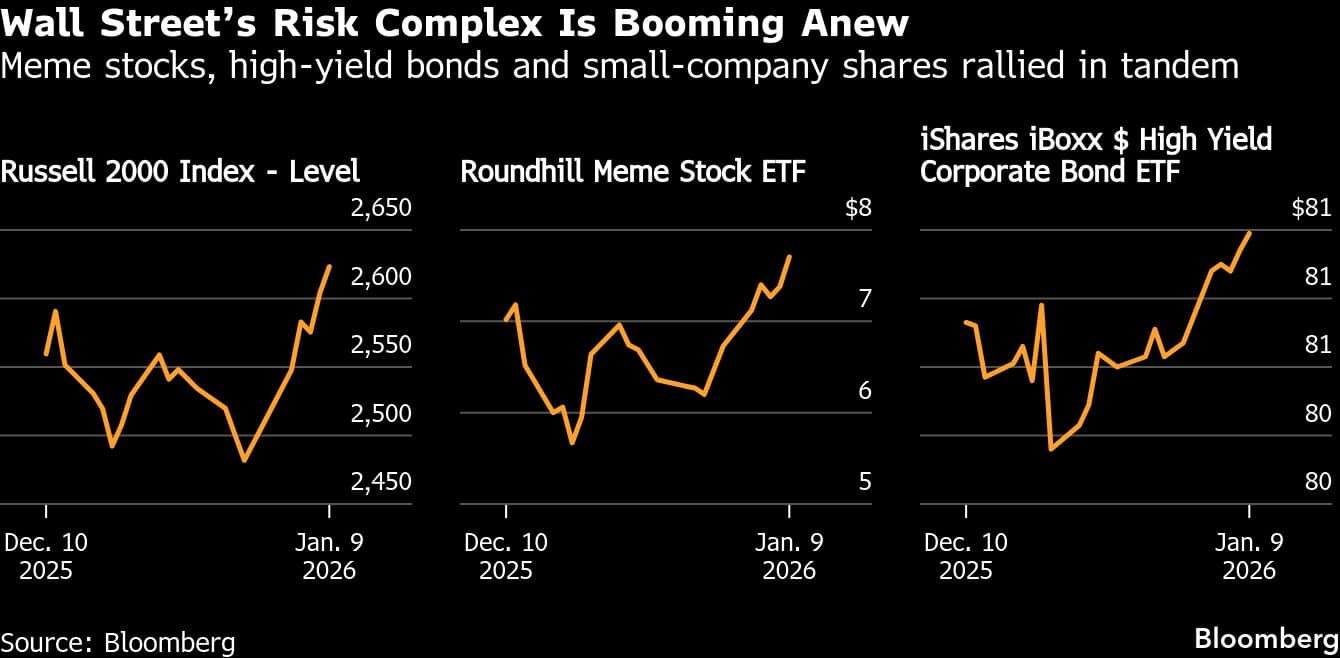
Investors’ hunger for risk has been visible across the board. The S&P 500 gained 1.6% this week and the Russell 2000 jumped 4.6%. The Vanguard S&P 500 ETF (VOO) attracted $10 billion in just a few days — a blistering pace for a passive fund. A meme-stock ETF soared nearly 15% while a basket of the most-shorted companies advanced 7%.
Credit markets joined in. Junk bond spreads narrowed by 10 basis points, juicing fresh corporate borrowings. Even some memecoins — long seen as a bellwether for speculative excess — are rebounding after last year’s collapse.
“The broadening is justified given the better economic data, especially with respect to more sectors and countries across the world performing well,” said Sameer Samana, head of global equities and real assets at Wells Fargo Investment Institute. “We are still a little skeptical on going too far down the market-cap stack.”
Rather than confining themselves to a handful of all-weather tech megacaps, investors are betting on real economic strength. Industrial production is picking up. Car sales beat expectations in December, even as dealership inventory shrank and automakers offered fewer discounts — a sign of firm demand.
US services activity expanded in December at the fastest pace in more than a year, defying gloomier readings elsewhere. Labor productivity rose at the fastest rate in two years, helping to contain employment costs. And in semiconductors, long a proxy for industrial demand, Microchip Technology raised its forecast, citing stronger-than-expected sales of chips that power the physical economy.
“Accommodative monetary policy along with robust fiscal support continues to provide a favorable backdrop,” said Nathan Thooft, chief investment officer at Manulife Investment Management, which oversees $160 billion. “We are expecting economic activity to improve in the second quarter and beyond in 2026 driven by the previously mentioned drivers, the lag effect of monetary stimulus, and tax refunds benefiting the lower income cohort.”
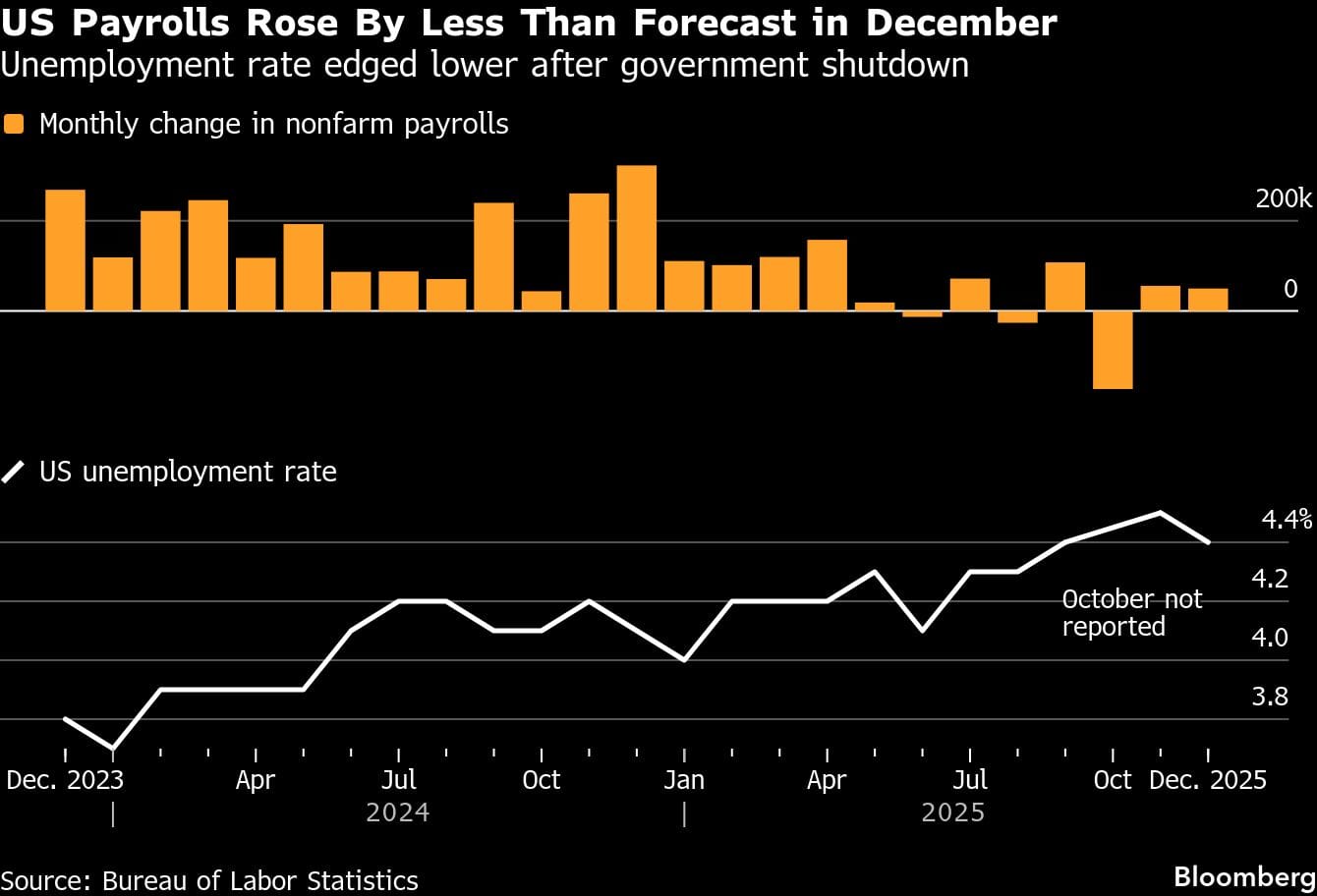
While Friday’s employment report spurred another bout of buying in stocks, the data was soggy enough to keep some market observers from declaring a full-blown revival in growth. Nonfarm payrolls rose by just 50,000 last month, missing forecasts, after the prior two months were revised lower, according to Bureau of Labor Statistics data. The unemployment rate edged down to 4.4%, settling back after the record-long government shutdown.
“I don’t think I would go as far as to say ‘re-acceleration’ in the economy, since hiring trends are still weak,” said Priya Misra, a portfolio manager at JPMorgan Asset Management. “However, GDP of 2-3% and a stable unemployment rate this year should be cheered by markets.”
Discover the latest Business News, Sensex, and Nifty updates. Obtain Personal Finance insights, tax queries, and expert opinions on Moneycontrol or download the Moneycontrol App to stay updated!
Find the best of Al News in one place, specially curated for you every weekend.
Stay on top of the latest tech trends and biggest startup news.





