






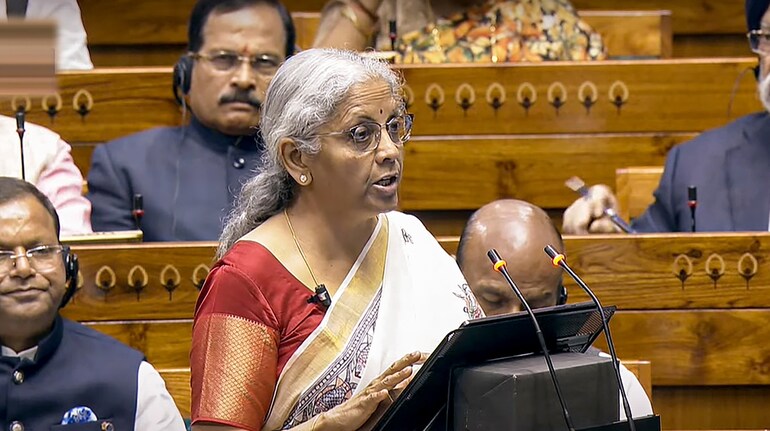

Union Finance Minister Nirmala Sitharaman will present her ninth consecutive Union Budget on February 1, at 11 am in the Lok Sabha. The annual Budget outlines the government’s revenue and expenditure plans and sets policy priorities for the upcoming fiscal year.
To be noted, with the assembly elections scheduled later this year in West Bengal, Tamil Nadu, Kerala, Puducherry and Assam, these states are expected to be closely watched for sectoral allocations and development-focused announcements.
What is India expecting from Union Budget 2026? Follow live updates here.
West Bengal
West Bengal, one of the largest poll-bound states, has featured prominently in recent Budgets through allocations for road, highway and urban transport projects. Recent announcements have included economic corridors connecting Kolkata and Siliguri, national highway expansion, metro rail projects and port-linked infrastructure.
Railways have also been a key area of investment.
Earlier this month, Prime Minister Narendra Modi flagged off India’s first Vande Bharat Sleeper Train connecting Howrah and Guwahati (Kamakhya) from Malda Town railway station. Later in the day, he also virtually inaugurated the return Guwahati-Howrah Vande Bharat Sleeper service, strengthening long-distance rail connectivity between West Bengal and Assam.
Union Railways Minister Ashwini Vaishnaw has said that projects in the state are aimed at "improving passenger experience and enhancing logistics efficiency." Under the Amrit Bharat Station Scheme, 101 railway stations in West Bengal are being redeveloped, with an allocation of around Rs 13,000 crore for railway infrastructure in the state.
Tamil Nadu
In Tamil Nadu, earlier Budgets have emphasised investment in logistics and transport infrastructure. Central funding has backed major highway corridors such as the Madurai–Kollam and Chittoor–Thatchur projects, alongside allocations for industrial parks and manufacturing-linked infrastructure.
Given Tamil Nadu’s role as a major manufacturing and export hub, continued focus on industrial corridors, port connectivity and urban infrastructure is expected.
Kerala
Kerala has received sustained Budgetary support in recent years for highways, urban mobility and coastal infrastructure. Past allocations have included projects linked to the Mumbai–Kanyakumari corridor, metro rail expansion and urban transport upgrades. Announcements related to tourism infrastructure, urban renewal and disaster-resilient development, particularly in coastal and flood-prone areas are expected.
Reinforcing the focus on connectivity, the Prime Minister, this month, inaugurated three Amrit Bharat Express trains and an additional passenger service, improving intra-state rail connectivity and links with neighbouring states. The Centre has said infrastructure planning is increasingly factoring in climate resilience and disaster mitigation.
Assam
For Assam, recent Union Budgets have prioritised highways, railways and flood mitigation, underscoring the Centre’s focus on improving connectivity across the Northeast. Road expansion, railway upgrades and disaster management infrastructure have featured prominently in allocations.
Reinforcing this push, Union Minister Sarbananda Sonowal, along with Home Minister Amit Shah and Assam Chief Minister Himanta Biswa Sarma, on January 30, laid foundation stones for infrastructure projects worth Rs 1,715 crore in Dibrugarh. The projects span transport, logistics and urban infrastructure and are aimed at strengthening regional connectivity and economic activity.
The Centre has said enhanced connectivity in the Northeast is key to integrating regional markets with the national economy and expanding trade with neighbouring countries.
Puducherry
Puducherry, while smaller in scale, has previously received central funding for urban infrastructure, housing and civic amenities. Budget provisions for Union Territories, covering public services, urban development and infrastructure maintenance, are expected to be relevant ahead of elections.
Recent plans in Puducherry include a 4-km four-lane flyover and a 13.5-km arterial road aimed at easing traffic congestion and improving urban mobility. The projects are backed by central assistance and build on earlier allocations for urban development.
Meanwhile, beyond state-specific allocations, Union Budget 2026 is also expected to lay out the government’s broader fiscal and economic strategy. Key focus areas include capital expenditure on roads, railways and urban infrastructure, continued support for manufacturing and exports, and funding for agriculture, healthcare and education.
Finance Ministry officials have repeatedly stated that capital expenditure remains a “key driver of growth and job creation,” even as the government pursues fiscal consolidation.
Ahead of the Budget, the Ministry of Finance released the Economic Survey on January 29, outlining macroeconomic trends, sectoral performance and fiscal conditions. Chief Economic Advisor V Anantha Nageswaran said the Survey aims to provide “an objective assessment of the economy and the policy challenges ahead.”
The Budget documents, prepared by the Department of Economic Affairs, will detail allocations across sectors such as infrastructure, agriculture, healthcare, education and industry, with implications for both national priorities and state-level development.
Union Budget 2026 is expected to present a comprehensive financial roadmap, with allocations and policy measures that will be closely examined in states heading to the polls this year, even as the government balances growth objectives with fiscal discipline.

Discover the latest Business News, Sensex, and Nifty updates. Obtain Personal Finance insights, tax queries, and expert opinions on Moneycontrol or download the Moneycontrol App to stay updated!
Find the best of Al News in one place, specially curated for you every weekend.
Stay on top of the latest tech trends and biggest startup news.





