






Temple, a wearable tech startup, has raised $54 million as founder Deepinder Goyal looks to scale the company and launch it to a wider set of users.
The round comes weeks after Goyal said he's stepping down from day-to-day operations at Eternal and spending more time on other ventures.
While Goyal, also the founder of food and grocery major Eternal, did not shed light on the investors who participated in the round, Moneycontrol’s exclusive report from December 2 had said Steadview Capital, Vy Capital, Info Edge and Peak XV Partners (formerly Sequoia Capital India), and others had invested in the company.
Early employees of Temple also participated in the round.
"More than 30 Temple employees participated in the round, at par valuation. No discount. Their own money. That's the kind of belief you can't buy," Goyal said in a social media post on February 27.
What does Deepinder Goyal's company Temple do?
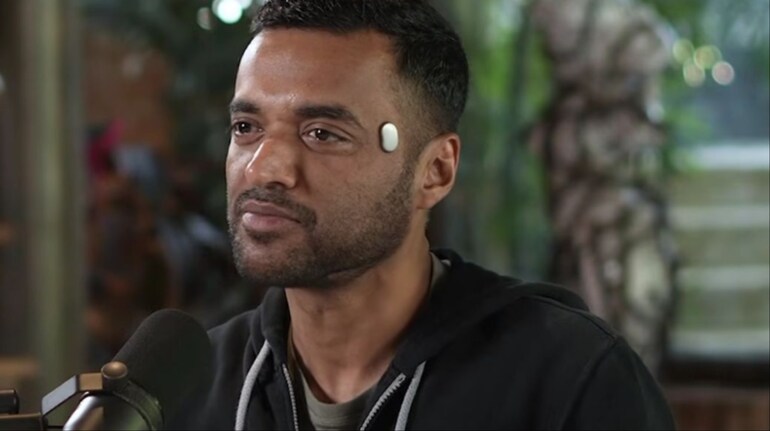
Temple is a new company, started just over a year ago, that makes experimental devices, a patch of sorts that sticks to a person’s temple, and calculates brain flow on a real-time and continuous basis, is Goyal’s latest health tech venture after Continue.
Continue and Temple are both different entities. Continue, which does research, is funded solely by Goyal in his personal capacity. He had even invested around $25 million to fund the research Continue does.
He also runs LAT Aerospace and Eternal. All his four companies are unrelated to each other.
To be sure, Temple is an under-development continuous brain flow monitor, through proxy measurements, which also measures all the other biomarkers similar to what other popular brands like Whoop or an Oura do.
Goyal is also a shareholder in Ultrahuman, which makes smart rings and other devices to track health.
Who all has Temple raised money from?
Interestingly, all the institutional funds backing Goyal's new company Temple are the same ones who invested in Zomato during its early years. From Steadview to Vy Capital and Info Edge to Peak XV Partners, all the funds have been associated with Goyal during the early years of Zomato.
Info Edge's Sanjeev Bikhchandani had invested around Rs 5 crore (about $570k at the current USD/INR exchange rate) in Zomato back in 2010 when the company needed cash the most as it was staring at a shutdown. Bikhchandani was Zomato's first backer.
Similarly, Bhatnagar from Peak XV Partners (the Sequoia Capital India) – who cancelled his trip to the US and called an urgent meeting over a weekend – led Zomato’s $35 million Series A round in November 2013, making it one of Sequoia Capital India’s largest investments at that point in time, valuing the food tech company, then a mere restaurants listing platform, at around $500 million.
The story is the same with Steadview Capital and Vy Capital and their relationship with Goyal.
What will Temple use the funds for?
If the talks between the investors and Goyal fructify, Temple will use the funds for further development of the device. "The funds should last until the device is made public to the users at large," a source had told Moneycontrol on December 2.
As Temple raises the money to potentially, in Goyal’s words, “shape into an important wearable the world needs” it is likely to remain “be a small cute company” and “nothing compared to Eternal” Goyal had said earlier.


Discover the latest Business News, Sensex, and Nifty updates. Obtain Personal Finance insights, tax queries, and expert opinions on Moneycontrol or download the Moneycontrol App to stay updated!
Find the best of Al News in one place, specially curated for you every weekend.
Stay on top of the latest tech trends and biggest startup news.






